XRP Ledger Emergency Fix: Who Really Decides the Rules?
An XRP Ledger bug could have created 18 trillion XRP. The fix shipped in three days without an amendment vote. Here is how, and who holders were really trusting.
Key takeaways
- Veria Labs, the security firm whose AI found it, says an overflow bug in the XRP Ledger could have let one transaction create about 18.45 trillion spendable XRP. The October 9, 2026 disclosure report says only that it was 'far beyond the total supply.'
- The xrpld 3.4.1 fix (the server software formerly called rippled) shipped on September 25, 2026, three days after the bug was reported on September 22. It skipped the normal amendment vote, which requires more than 80% validator support for two weeks.
- More than 80% of default UNL validators ran the fix on release day, before its source code was public.
- The video argues that the trusted validator lists published by the XRP Ledger Foundation and Ripple decide whose votes count. The XRPL docs say list publishers 'wield significant power' over which validators are widely trusted.
- The report found no evidence the bug was exploited. According to the video, no written threshold sets when a fix may skip the vote.
The XRP Ledger closed a bug that, according to security firm Veria Labs, could have created about 18.45 trillion spendable XRP in one transaction, roughly 184 times the total supply. The fix, xrpld 3.4.1 (the server software formerly called rippled), went live on September 25, 2026. That was three days after the bug was reported, and the fix skipped the usual amendment vote.
This matters to holders because many were told that nobody changes the rules on the XRP Ledger without a vote. That is true on a normal day. A Bullrunners video walks through the ledger’s disclosure report, published October 9, 2026, along with the ledger’s rule book and Ripple’s validator list. The video’s conclusion is that in an emergency, the operators on two trusted lists decide, and they can act within a day.
What was the 18 trillion XRP bug?
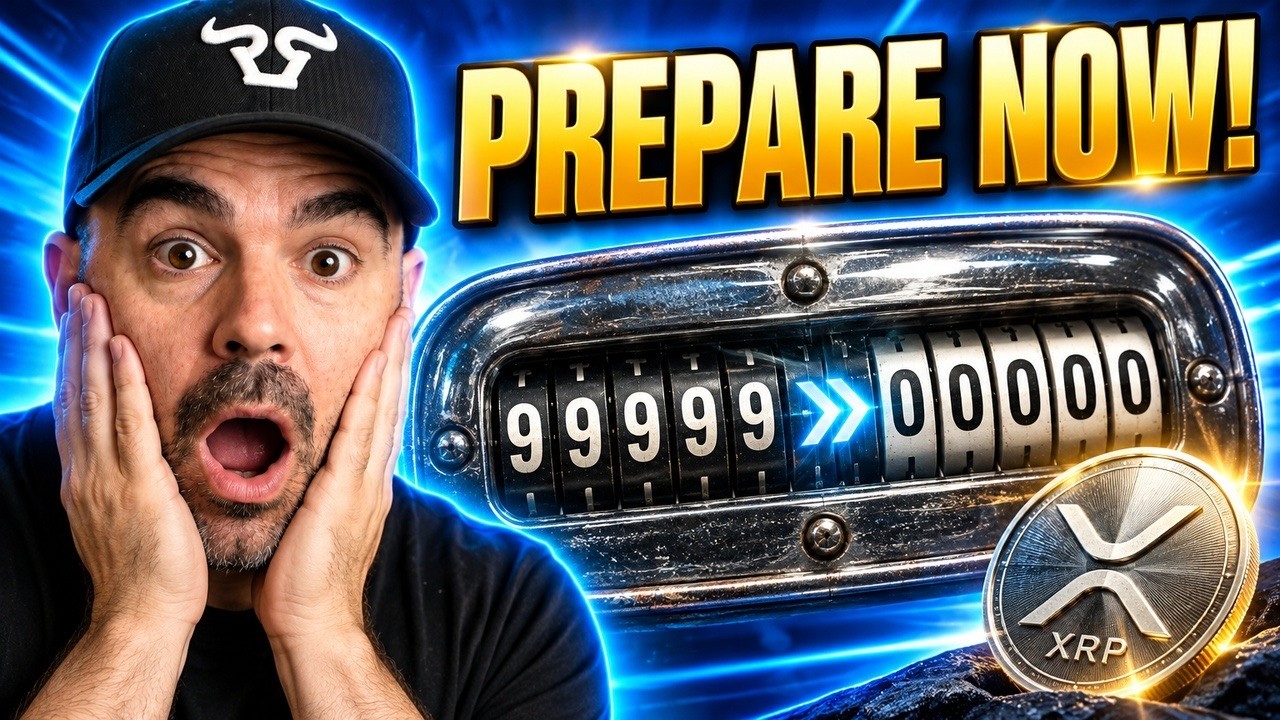
The bug was an overflow in a counter the XRP Ledger used when one payment bought through many sell orders at once. The video compares it to an old truck odometer. Drive past the top number and the dial rolls back to zero, so the truck looks like it barely moved.
The ledger added up what the buyer owed. If that total went past the top, it rolled over to a tiny number. Every seller got paid in full, but the buyer was charged only the rolled-over amount. The difference was brand-new XRP. The safety check meant to catch newly created XRP used the same kind of counter, so it rolled over too and saw nothing. The disclosure report says an attacker could have created spendable XRP “far beyond the total supply” in a single validated transaction.
According to the video, the report says an attacker would not have needed a large balance. The real cost was a few hundred XRP set aside to open accounts and place orders, plus normal fees. Veria Labs, the security company whose AI found the bug, says about 256 accounts would have been enough. No special access was needed, and the attacker did not have to run a validator. The flaw had sat in the code since 2015. For a fuller walk-through of the mechanics, see Bullrunners’ earlier piece on how the 18 trillion XRP bug worked.
What would it have meant for an ordinary holder?
The bug would have shrunk every holder’s share of the total supply to a sliver. The video’s example is a holder with 50,000 XRP out of a supply of about 100 billion. If 18.45 trillion new coins had appeared, that 50,000 XRP would make up the same share of the whole that about 270 XRP did before.
Veria Labs puts the market value at risk at about $94 billion, spread across every holder at once. For comparison, the video plays a 2025 congressional hearing clip describing the $1.5 billion Bybit theft by North Korean hackers as the largest crypto heist in history. That attack hit one exchange.
How do XRP Ledger rules normally change?
XRP Ledger rules normally change through amendments. An amendment needs support from more than 80% of trusted validators for two straight weeks before it activates. Validators are the servers that check payments and agree on what goes into the ledger. During those two weeks, validators can change their vote.
Ripple’s recommended list has 35 validators, according to the video, so more than 80% means at least 29. The XRPL documentation also says that “bug fixes that change transaction processes also require amendments.” A fix like this one is a rule change, and rule changes normally wait for a vote.
The two weeks is the voting window. Once an amendment is enabled, the docs say it applies to all later ledgers. A server that doesn’t support it becomes “amendment blocked” and can no longer follow the network.
Why did the xrpld 3.4.1 fix skip the vote?
The fix skipped the vote because publishing a fix for open-source software also shows attackers where the hole is. The timeline below combines Veria Labs’ account with the disclosure report:
- September 21, 2026: Veria Labs says its AI flagged the bug on a Monday night.
- September 22: The bug was reported through the bug bounty program and confirmed the same day.
- September 23: The fix was merged.
- September 25: xrpld 3.4.1 was released.
- October 9: The source code and the disclosure report were published.
A normal vote would have taken at least two weeks. The report says the bug would have stayed visible and exploitable on mainnet, the live ledger, for that whole time. According to the video, the fix instead took effect on each server as soon as that server installed it.
The video says this is the first time since the amendment system was introduced more than 10 years ago that a change to transaction processing was deliberately shipped this way. The host says he is glad the emergency push went through, and that in normal situations validators should always get a vote.
Who protected XRP holders that week?
According to the video, the operators of validators on the default UNL protected holders that week. UNL stands for unique node list, the list of trusted validators. The report says that because the issue was so serious, more than 80% of default UNL validators were running 3.4.1 on the day it was released, even though the fix’s source code had not been published yet.
The release page says 3.4.1 first went out as binary-only packages, so operators installed a program whose code they could not yet read. The video’s point is that they did it because they trusted whoever wrote it.
The docs also explain where that trust comes from. Anyone can run a validator, but only trusted validators’ votes count. According to the XRPL docs, the default setup uses one list from the XRP Ledger Foundation and one from Ripple. The docs say: “Typically, these lists are very similar to one another or even identical.” The same page says list publishers “wield significant power in selecting which validators are widely trusted.” Bullrunners covers this structure in more depth in how XRP Ledger validators and the UNL work.
The video also plays older clips of David Schwartz, whom it describes as one of the ledger’s designers. In one, he says the way to change a blockchain’s rules is to convince other people to run different software. In a clip the video dates to 2021, he says no one is going to give central banks a kill switch on a public blockchain, because that would defeat its purpose. The video says September was not a kill switch. Nobody’s coins were frozen or moved, and the fix only blocks payments that should never have worked. In the video’s view, the episode still shows that the vote is not the only route. In an emergency there is a faster one.
What were the risks of skipping the vote?
According to the video, the main risk was a split. While some servers had the fix and others didn’t, they were following two different rule books. If someone had attacked during that window, the two groups could have disagreed about what was on the ledger.
The worst case was the network halting. According to the video, the report accepts that trade-off and says a network halt “would actually be preferable to processing an exploited transaction.” In other words, the developers would rather have the ledger stop than record fake XRP.
A second fix in the same release, which the report names fixBatchV1_2, went through the normal vote and was enabled on October 9. According to the video, servers still on the old version became amendment blocked until they upgraded. Bullrunners has a separate explainer on how the Batch amendment works.
What the disclosure report doesn’t say
The video points to several gaps a careful holder should notice:
- No written threshold. According to the video, no published line says how severe a bug must be to skip the vote. The video says the report limits this path to the most severe bugs, as judged by people at the XRPL Foundation, Ripple’s engineers at RippleX and the validators, but doesn’t name those people or say how many agreed.
- “No evidence” is not proof. The report says: “We have found no evidence that this issue was exploited on any public network.” The host says he believes it, but notes that the statement goes no further than that.
- The bounty figure. Veria Labs’ founder, Cayden Liao, has said Ripple paid the maximum $250,000 bounty. The video notes that this figure comes from Veria Labs’ own posts, and that the ledger’s report thanks Veria Labs by name but prints no dollar amount.
- AI cuts both ways. Veria Labs says ordinary coding AI pointed at the same code still couldn’t find the bug. The video’s concern is that an attacker’s AI could find a decade-old flaw just as fast and might not report it.
What to watch next
On a normal day, the 80%-for-two-weeks vote decides how the XRP Ledger changes. In this emergency, about 30 operators on two trusted lists made the change in a day. Holders who want to follow how that power is used can:
- Read the XRPL disclosure report and the amendments documentation linked below. Both are public.
- Check Ripple’s recommended validator list to see which validators are trusted and how many there are.
- Watch whether the XRPL Foundation or Ripple publishes a written standard for when a fix may skip the vote.
- Follow future amendment votes to see whether the normal process stays the default.
Sources
Frequently asked questions
What was the 18 trillion XRP bug?
It was an overflow bug in how the XRP Ledger added up what a buyer owed when one payment crossed many sell orders. According to the October 9, 2026 disclosure report, it could have let one transaction create spendable XRP far beyond the total supply. Veria Labs, the firm that found it, put the figure at about 18.45 trillion XRP.
Was the XRP Ledger bug ever exploited?
The disclosure report says the team found no evidence that the issue was exploited on any public network. The video notes that this describes the evidence found and is not proof.
Why did the fix skip the amendment vote?
The software is open source, so publishing a fix also reveals the hole. A normal vote takes at least two weeks, and the report says the bug would have stayed visible and exploitable on mainnet for that whole time.
Who decides which XRP Ledger validators are trusted?
Most servers use the default setup. According to the XRPL docs, that setup uses one validator list from the XRP Ledger Foundation and one from Ripple, which are typically very similar to one another or even identical. The docs say list publishers wield significant power over which validators are widely trusted.
Did the emergency fix freeze or move anyone's XRP?
No. According to the video, nobody's coins were frozen or moved. The fix only blocks payments that should never have worked.
Full video transcript
From the video's captions, lightly formatted. Captions can mishear names and numbers, so check figures against the article above.
18 trillion XRP. That's how much one transaction could have created on the XRP ledger. About 184 times every XRP there is. The whole sat in the code since 2015. Nobody used it.
And when they closed it on September 25th, 2026, they did it without the vote. If you hold a real stack of XRP, you were told what I was told. Nobody changes the rules on this ledger without a vote. By the end of this video, you'll know who changed the rules that week, how fast, and the one line in their own report that tells you who you really were trusting. Now, I know what you're thinking.
Every few months somebody says the XRP sky is falling, and the ledger keeps running. Fair enough. But this one isn't off of social media. It's the ledger's own report published on October 9th, 2026. Their words, "An attacker could have created spendable XRP far beyond the total supply in a single validated transaction.
Spendable coins that you could move, trade, or send to an exchange." Here's how one crypto news channel took it.
A developer was able to identify this and flag it, and it was fixed. So, I want you guys to understand this thing was fixed. But could you imagine if uh that person didn't uh you know, do the right thing. What could have happened? They could have exploited this, or they could have sold it to like the highest black market bidder, if you know what I mean, to go exploit and take down the XRP ledger.
Cuz needless to say, this could have been catastrophic, guys. So,
He's right about the black market. Remember that when we get to how fast they moved. So, how do you create coins on a ledger that isn't supposed to create anything? Think of an old truck odometer. Drive past the top number and then it rolls back to zero.
The truck went a long way. The dial says it barely moved. The ledger had a counter like that. When one payment buys through a pile of sell orders at once, the ledger adds up what the buyer owes. Push that total past the top and then it rolled over to a tiny number.
So, every seller got paid in full. The buyer got charged the rollover number. The difference was brand new XRP. And the safety check that's supposed to catch new XRP, it used the same kind of counter. It rolled over, too.
It saw nothing. Here's the part that should bother you. The report says the attacker didn't need a big balance. The real cost was a few hundred XRP set aside to open accounts and place orders plus normal fees. Very Labs, the security company whose AI found it, says about 256 accounts was enough.
No special access. No need to run a validator. Their number for one hit is 18.45 trillion XRP. They call it 184 times the total supply. So, that's the paperwork.
Now, put it on your own stack. Say you hold 50,000 XRP. That's 50,000 out of about 100 billion. And 18.45 trillion new coins and on paper your 50,000 would be the same percentage of the whole that about 270 XRP was before. Same coins, a sliver of what they were.
For scale, here's what a member of Congress called the biggest crypto theft ever back in 2025.
If we have liquid liquidity under underpinning these things. Like stable coins need to be boring to work. Um we don't want fractional banking and blow this thing up. And Mr. House, correct me if I'm wrong, dollars deposited in European accounts are not insured by the FDIC, correct?
Um uh I want to turn now to the the fact that we just witnessed the largest cryptocurrency heist in history when North Korean hackers um stole 1.5 billion dollars from Bybit. Mr. Cascarilla, I I understand Maybe you can just share what is Paxos's policy for freezing funds um that have been used for illicit activity.
1.5 billion dollars from one exchange. Various says this bug put the whole XRP market at risk. 94 billion dollars by its count, every holder at once. So, who can change the rules? Well, here's the XRP Ledger Foundation.
Because the XRP Ledger is an open and decentralized network, no one individual or entity can unilaterally make a change that would impact how it operates. So, how does a change get made?
[snorts]
There's an established governance process that's enforced by all the participants and nodes on the ledger. These rules are important to understand for both general knowledge about how the ledger functions and for those who might want to add new functionality that the ledger doesn't currently have.
And here's how.
Network changes go through what's called an amendment process. Essentially, this means the desired changes are proposed to the network for review. And then the validator nodes vote on whether or not to accept. You might remember validator nodes from an earlier episode and their role in the consensus mechanism confirming the order of transactions. Just like in that process, 80% of the validators need to agree to the proposed changes.
With amendments, the approval level needs to remain above 80% for 2 weeks. During that time, validators are free to change their vote. But once this 80% agreement is achieved for 2 weeks, the amendment is ratified and ready to go live.
Validators are the computers that check every payment and agree on what goes into the ledger. A rule change is called an amendment. More than 80% of the trusted validators have to back it for 2 weeks straight. I pulled Ripple's own recommended list. It has 35 validators on it.
More than 80% of 35 is at least 29. And the ledger's own rule book says this, "Bug fixes that change transaction processes also require amendments." So, a fix is a rule change, and a rule change waits for a vote. And before we get deep into the vote situation, everything that I just showed you came out of the ledger's own report and rule book. And reading that is the job that we do for people inside of the SGS system at Altcoin Pro. Most people who get this far into video close out the tab and then do nothing with this information.
So, if you're the one who won't, the first link in the description allows you to book a call with our team. You're going to watch a quick video, fill out a form, spend a couple minutes on the call with our team. Bring a pen and paper because it's going to give you a ton of information. And also, we're going for 400,000 subscribers on the channel. Make sure you smash that subscribe button.
So, this fix specifically did not wait. And here's their own timeline. On September 22nd, 2026, the hole was reported through the bug bounty program and confirmed the same day. The next day, the fix was merged. On September 25th, version 3.4.1 went out.
3 days, not 2 weeks. Their reason makes sense. The software is open. So, the moment you publish a fix, you've published a map to the hole. Then the vote, then 2 weeks of waiting.
For all that time, the report says the bug would have been both visible and still exploitable on the mainnet. And mainnet is the live ledger where your coins are. So, the fix switched on for each server the moment that server installed it. No vote. This is the first time a change to transaction processing has deliberately shift this way since the amendment system was introduced more than 10 years ago.
So, if the vote didn't protect your XRP that week, what did? The default UNL just means the trusted list. Because of how serious this issue was, operators of validators on the default UNL upgraded to 3.4.1 right away, and more than 80% of them were running it on the day that it was released, even though the source code for the fix was not yet published. Those operators installed a program they couldn't read yet. The release page says it first went out as binary only packages.
The code itself came out with the report on October 9th. Here's David Schwartz, one of the people who designed the ledger years ago.
Yeah, so what you would have to do is you would have to convince people to run software that enabled you to do those things. Now, how would you do that as a practical matter? It's so it's not impossible. So, like if I asked the same question, like how would you get there to be 50 million Bitcoin instead of 21 million? You'd have to get other people to run software.
Right? You can't just do it yourself. You have to convince other people to run that software that allows that. And and that's not necessarily impossible. So, for example, if all of the miners switched more hash power to it they said, "Look, we're going to double spend on the the Bitcoin blockchain unless you guys run this other chain that has these more That could pressure people as a practical matter.
You change the rules by getting people to run different software. That's what happened on September 25th in a day instead of 2 weeks. As an XRP holder, when it comes to situations, you would always want to be able to take a vote on it. Validators should always be able to take a vote on it. But on this one, this was an emergency push, and I'm glad it went through this way.
And here's the question that I'd be asking. If about 30 operators can push a change in a day to stop a thief. Could they do it for some other reason? Schwartz was asked about that kind of control in 2021.
We are talking to central banks and they are not expressing interest in actually issuing assets directly on a public like censorship resistant ledger. And their concern is if something goes wrong with the ledger, which you know, there could be a like the Bitcoin blockchain had a catastrophe in 2013. There could be another one. Like I don't It's not something that I worry about on a daily basis, but central banks are not at the point where they're willing to take that level of risk. And so, what they want is they want something that they have a kill switch on.
And obviously, no one's going to give central banks a kill switch on a public blockchain. That would defeat the logic of the public blockchain.
No kill switch and September wasn't one either. Nobody froze anything. Nobody's coins moved. The fix only blocks payments that should never have worked. But it shows the vote isn't the only way in.
In an emergency, there's a faster one. Here's who Ripple said in 2018 runs this thing.
So, the concern with centralization is whether there's [music] one party that gets to determine what the rules are, that calls the shots, that can stop the system, that controls it, that can change the systems in ways that [music] harm its users. The software is all open. Anyone can run a server. Anyone can run a validator and they do. Exchanges [music] are stakeholders, people who hold XRP and run a server to process their own transactions.
[music]
They're all stakeholders in the system. And if Ripple were to disappear, nothing would prevent them from continuing to operate the system exactly the way it operates today.
Anyone can run a validator, which is true. Yet the only votes from trusted validators count and most servers get their trusted list from two places. The ledger's own docs say that the default setup uses one list from the XRP Ledger Foundation and one from Ripple. Usually very similar or even identical. Same page.
The list publishes wield significant power in selecting which validators are widely trusted. It's written in the open, but it means the honest answer to who can change your ledger is whoever those two lists trust and how fast they move. Back in 2018, Ripple said this was the plan.
As I've said publicly, one of my top priorities for 2018 is improving the decentralization of the XRP ledger. Through 2018, we'll be adding additional validators and you'll look to see landmarks where the network will be increasingly independent of Ripple's operations.
Skipping the vote wasn't free, either. While some servers had to fix and some didn't, they followed two different rule books. If somebody had tried to attack them then, the two groups would have disagreed about what was on the ledger. The worst case was the network stopping, and the report says that they take that. A network halt would actually be preferable to processing an exploited transaction.
They'd rather the ledger stop than record fake XRP. Here's what happens to a server that falls behind on the rules.
The other important thing to know is that once ratified, every participant on the ledger has another 2 weeks to upgrade to the new version of the code base. Anybody who fails to adopt the change will automatically become amendment blocked, meaning that any server running on a previous version will no longer understand what is happening on the network. This amendment process applies to every individual or organization without exception that wants to make a change to the ledger, leaving it to the validators to accept or reject a proposed amendment.
That happened here, too. A second fix in the same release went through the normal vote and switched on October 9th. Every server still on the old version got blocked until it upgraded. Now, what the documents don't tell you, there's no written line for how bad a bug must be to skip the vote. The report says it's only for the most severe bugs judged by people at the XRPL Foundation, Ripple's engineers at RippleX, and the validators.
It doesn't name them or say how many agreed. No evidence isn't proof either. Their words, "We have found no evidence that this issue was exploited on any public network." Now, I believe them. That's what it says and no more. And the $250,000 bounty in the headlines, that comes from various own posts.
The Ledger's report thanks them by name, but prints no dollar figure. Here's Schwartz on a bug from the very early days.
We We made a lot of that data public um because we had an incident after 32,000 ledgers where data got lost. There was a bug in the software that caused history to get lost, and we were we we could have restarted the ledger just for that, but it didn't require a ledger restart, and we just sort of assumed that there'll probably be a need for a ledger restart, and so we didn't do anything about it. And so there was some early ledgers that are lost, and we made a lot all of the data we had at the time public in the hopes that people would be able to assist us in recovering the lost data, and some
So, why did this one sit there for about 10 years? Varius says it's AI flagged it on a Monday night, September 21st, and after they reported it, they say ordinary coding AI pointed at the same code still couldn't find it. So, that cuts both ways. If a good guy's AI can find a 10-year-old hole in a night, a bad guy's can do it as well, and might not report it. So, here's the real downside of a network nobody owns from the man who designed it.
So, this is the downside of decentralization. The one of the upsides of centralization is you can sue a bank. If a bank does violate a contract You can have a contract with a bank, and if they violate it, you can sue them. You cannot have a contract with Bitcoin. You cannot sue Bitcoin.
If the rules of Bitcoin change in ways that harm you, there is nothing you can do. Now, the sort of ecosystem has to agree to that change of rules. It's not going to happen unless like that So, you're ultimately it's very democratic because there is no coercive force that can sort of force people to accept anything but what they agree.
It's going to be interesting to see how over the next several years these things play out because there's white hat hackers, black hat hackers. Now they have these AI tools that literally can find loopholes and bugs that nobody else could ever have found before or maybe they could have if they were doing the right thing, but these AIs are so much stronger. So, lots of good guys out there, hopefully. So, go back to the clip at the start. There's no way to create XRP.
The rule was right. The code had a hole in it for about 10 years. And the 80% for 2 weeks vote is real. It's how the rules change on a normal day. But on September 25th, what protected your stack was about 30 people installing a program that they couldn't even read yet the same day because they trusted who wrote it.
That's the real answer to who can change your ledger. On a normal day, the vote. In an emergency, the people on those two lists in a day this time that saved you. So, here's my question before this video. Did you know the fix went live before anybody could read the code?
Just a yes or a no in the comment section. Everything in this video has come out of the ledger's own disclosure report, its own rule book, its release page, and Ripple's validator list. They're public. They're long and they're technical, and that's exactly why almost nobody has read them. Reading the paperwork that decides how your coins are really protected and making sure what you hold is set up and sitting where it should be, well, that's the job of being a crypto investor.
And that's what the SGS system inside of Altcoin Pro helps you learn how to do properly. If you're holding $50,000 or more and no one has ever sat down with you and mapped out where it actually lives, well, that's a conversation you need to be having. And if you're not there yet, keep watching these videos, they're free, and we're not going to stop making them. So, you don't have to read these reports yourself. That part we do for you.
And if that is the money that you and your spouse decide on together, bring them with you onto that call. The first link is in the description. Make sure you click the more button if you're on the phone, it'll drop it down for you there. Book the call, watch the video real quick, it'll go over all the details, bring a pen and paper, and as always, crypto carries risk and past performance doesn't guarantee future results. This video is educational purposes only, not financial advice, and you know what to do.
Stay bullish. I'll see you at the top. Boom.
[music] [music]
Education and commentary only, not financial advice. Crypto is volatile and you can lose money. Do your own research and speak to a qualified advisor before making investment decisions. Figures and quotes are as reported in the video on October 23, 2026 and may have changed since.