XRP vs Bitcoin Energy Use: What Steve Keen's Warning Means
Economist Steve Keen says energy costs could end Bitcoin. Here is how XRP Ledger energy use compares, and what that argument does and does not prove.
Key takeaways
- Economist Steve Keen told Diary of a CEO he thinks this may be 'the beginning of the end' for Bitcoin because of its energy use. That is his opinion, not an established outcome.
- Figures cited in the video put Bitcoin at about 951 kWh per transaction and the XRP Ledger at about 0.0079 kWh, a gap of roughly 120,000 times.
- Bitcoin's proof of work spends energy as its security model. The XRP Ledger reaches agreement between trusted validators without mining.
- The video frames Bitcoin as a store of value and XRP as a settlement rail. Lower energy use alone does not guarantee adoption or price gains.
- Mining restrictions in China (2021), New York (2022) and Kazakhstan (2022) are real precedents, but a US crackdown is speculation.
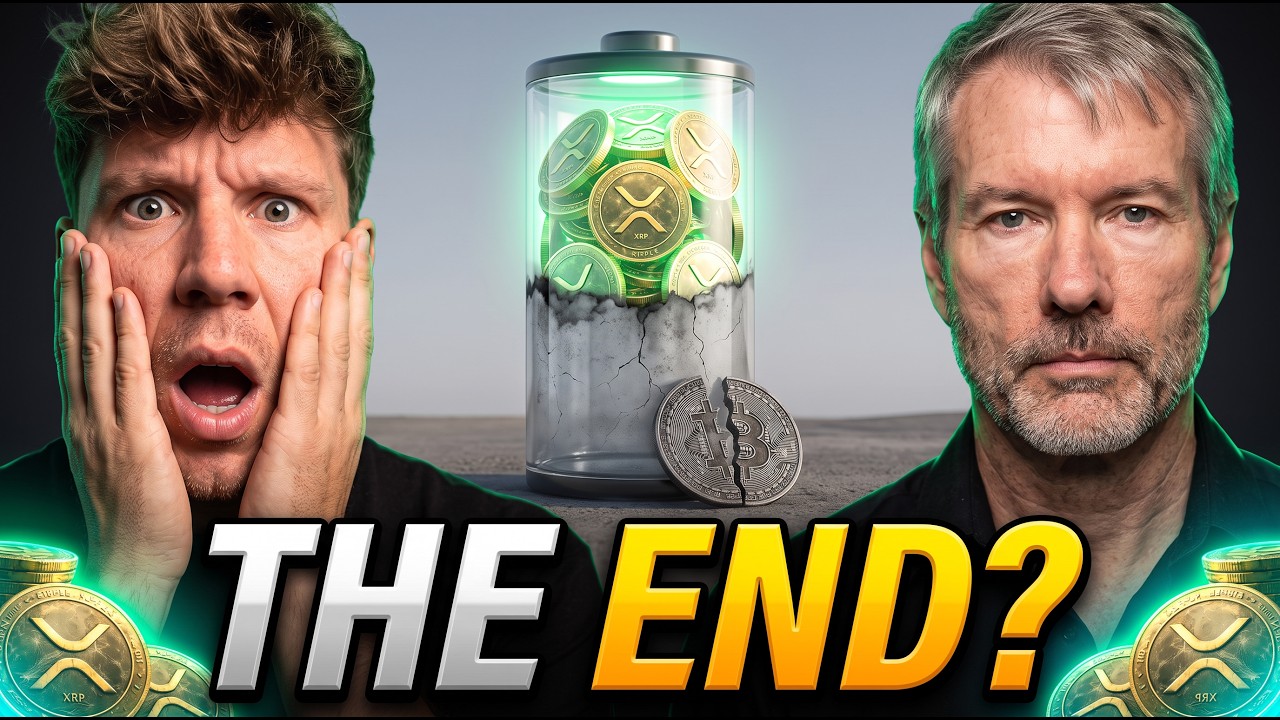
Steve Keen, the economist known for warning about the 2008 financial crisis before it happened, told the Diary of a CEO podcast that this “may be the beginning of the end for Bitcoin.” His reason is energy: he argues the cost of running Bitcoin’s network will eventually become impossible to justify. According to the video, Michael Saylor responded about two weeks later by buying another $2.5 billion of Bitcoin.
For XRP holders, the video makes a specific claim: Keen’s argument targets proof-of-work blockchains like Bitcoin, not the XRP Ledger, which uses a different design and a tiny fraction of the energy. This article walks through what Keen said, the numbers the video cites, and where the argument is solid versus where it turns into speculation.
What did Steve Keen say about Bitcoin?
Keen said he thinks Bitcoin may be at the beginning of its end, though it “might last a couple more years.” In the clip, he explains that Bitcoin’s public ledger stays safe because it takes too much energy to attack it. That same security model, he argues, gives Bitcoin a very large energy requirement.
Keen, who lives in Thailand, said Bitcoin burns more electricity each year than that whole country. In a separate interview with Nuggets News shown in the video, he said, “This is not the time to be consuming large amounts of energy for small transactions.” He also said in another clip that “the energy costs are going to kill this thing at some stage.”
Keen also said he was offered Bitcoin when it cost about a pound and passed on it. The video presents this as a sign he has held the same view for a long time.
How much energy does Bitcoin actually use?
Estimates vary, and the video gives two. The Cambridge Centre for Alternative Finance puts Bitcoin’s annual electricity use at about 138 terawatt hours (TWh). Digiconomist puts it above 204 TWh. The video describes the range as roughly between Poland’s and Thailand’s annual electricity use.
The video’s argument is about policy, not morality. When power grids get tight, for example during heat waves or as AI data centers demand more electricity, the host argues governments look for consumption to cut. A network using that much power for about seven transactions per second is, in the video’s words, an obvious target.
The video lists past actions against mining:
- China banned Bitcoin mining in 2021.
- New York passed a mining moratorium in 2022.
- Kazakhstan cut power to miners in 2022.
- The European Union debated proof of work afterward.
The host suggests the next move could come in the United States. That is the video’s interpretation of Keen’s warning. No US policy to that effect is described in the video.
How did Michael Saylor defend Bitcoin’s energy use?
Saylor said he is not concerned. In a clip shown in the video, he described Bitcoin as “protected by a wall of encrypted energy.” The video says Saylor’s company holds about 4% of all Bitcoin.
The host calls this defense fair for a store of value. Gold mining also uses a lot of energy, and nobody shuts down gold mines because gold’s role is considered worth the cost. If Bitcoin’s job is to sit still and be the hardest asset possible, spending energy on security makes sense. The video describes Bitcoin as “gold in code.”
How does the XRP Ledger compare on energy and speed?
According to the figures cited in the video, the XRP Ledger uses far less energy per transaction and handles far more transactions per second.
| Measure | Bitcoin | XRP Ledger | Visa |
|---|---|---|---|
| Energy per transaction | About 951 kWh (TRG Datacenters) | About 0.0079 kWh | Not given |
| Transactions per second | About 7 | 1,500 baseline, up to 65,000 claimed at scale | About 1,700 |
| Settlement time | Probabilistic, around 40 minutes for confidence | 3 to 5 seconds, final | Not given |
| Annual CO2 | About 104 million metric tonnes | About 63 metric tonnes | Not given |
The video says Ledger, the hardware wallet company, puts the XRP Ledger at roughly 120,000 times more energy efficient than Bitcoin per transaction in its XRPL documentation. The Crypto Carbon Ratings Institute reached a figure closer to 4 million times when it factored in full network load. The video also cites about 493,000 kWh as the XRP Ledger’s total annual electricity use.
These are third-party estimates as reported in the video, and different methods produce different results. Per-transaction energy figures for Bitcoin are also debated, because mining energy does not scale directly with the number of transactions.
Why is there such a big difference?
The two networks reach agreement in completely different ways. Bitcoin uses proof of work: roughly every 10 minutes, machines around the world compete to solve a math puzzle. The winner earns the block reward, but every machine that lost still used electricity. That spent energy is what makes the network expensive to attack.
The XRP Ledger uses a federated consensus model. There is no mining and no puzzle. Independent validators, which the video says include universities, exchanges, infrastructure firms and Ripple, each keep a list of validators they trust. Every 3 to 5 seconds they agree on the next version of the ledger, and it closes when about 80% agree. Once closed, it is final.
The video adds that XRPL Labs in Amsterdam runs its validator infrastructure on solar power, to show how little energy the system needs.
Store of value versus settlement rail
The core of the video’s argument is that a monetary system needs two different jobs done, and no single chain does both well:
- Store of value: an asset meant to hold value over time. The video assigns this role to Bitcoin.
- Settlement rail: the network money moves through between institutions. The video assigns this role to the XRP Ledger.
Following this logic, the host argues, Keen’s warning does not lead to Bitcoin going to zero. The host explicitly says Saylor is right that Bitcoin is not going to zero and will keep acting as the vault. The argument instead points to demand for a low-energy settlement layer.
The video lists developments it says support XRP’s settlement role: partnerships with institutions it names as Bank of America, Santander, Standard Chartered, MUFG and SBI Holdings; Ripple’s RLUSD dollar stablecoin running on the XRP Ledger; the ISO 20022 messaging standard that SWIFT is moving to; and the OCC moving Ripple’s national bank charter application into review. These are the video’s claims. Readers should note that a partnership with Ripple is not always the same as using XRP itself.
The host also compares the situation to past shifts such as streaming versus cable, arguing that an incumbent is defended until change happens all at once. That is speculation about how markets will behave, not evidence.
A framework for weighing the energy argument
If you hold XRP, Bitcoin or both, these questions help separate the facts from the narrative:
- What job does each asset do in your portfolio? Decide whether you hold it as a long-term store of value, for its role in payments, or both.
- Is the energy figure an estimate or a measurement? Check who produced it and what it counts. Cambridge and Digiconomist differ by about 66 TWh a year for Bitcoin alone.
- Is a policy real or predicted? China, New York and Kazakhstan acted. A US crackdown has not happened.
- Does efficiency equal adoption? A cheaper, faster network still needs institutions to actually use the asset, not just the company’s software.
- Who is making the claim, and what do they hold? Keen is a long-time skeptic. Saylor holds a large share of all Bitcoin. Crypto channels often hold the coins they discuss.
What to watch next
Keep an eye on whether any US federal or state body proposes new limits on proof-of-work mining, since that is the specific event the video’s argument depends on. Watch for updated electricity estimates from the Cambridge Centre for Alternative Finance, which give a more neutral read on Bitcoin’s footprint than either side of the debate.
For XRP, the developments to follow are the ones the video itself names: progress on Ripple’s national bank charter review, RLUSD adoption, and whether named banks use XRP or only Ripple’s other products. Those will say more about XRP’s settlement role than any energy comparison.
Frequently asked questions
What did Steve Keen say about Bitcoin?
On Diary of a CEO, economist Steve Keen said he thinks this may be the beginning of the end for Bitcoin, though it might last a couple more years. His argument is that Bitcoin's energy costs will eventually become too high to justify.
How much energy does an XRP Ledger transaction use compared with Bitcoin?
According to figures cited in the video, a Bitcoin transaction uses about 951 kWh and an XRP Ledger transaction about 0.0079 kWh. Ledger's XRPL documentation puts the gap at roughly 120,000 times, and the Crypto Carbon Ratings Institute put it closer to 4 million times when full network load is counted.
Why does the XRP Ledger use so little energy?
The XRP Ledger has no mining. Independent validators each keep a list of validators they trust and agree on the next ledger every 3 to 5 seconds, closing it when about 80% agree.
How did Michael Saylor respond to concerns about Bitcoin's energy use?
In a clip shown in the video, Saylor said he is not concerned and described Bitcoin as protected by 'a wall of encrypted energy.' The video says Saylor bought another $2.5 billion of Bitcoin about two weeks after Keen's interview.
Have governments already restricted Bitcoin mining?
The video points to China banning mining in 2021, New York passing a moratorium in 2022 and Kazakhstan cutting power to miners in 2022. Whether the US will follow is speculation in the video, not an announced policy.
Full video transcript
From the video's captions, lightly formatted. Captions can mishear names and numbers, so check figures against the article above.
The economist who called 2008 just walked onto Diary of CEO and gutted Bitcoin to your face on tape. Every dollar of it going to zero. And two weeks later, Michael Sailor doubled down and bought another $2.5 billion dollars of it. Anyway, so the moment Steve Keane said it, your Ripple XRP bag became the only chain on Earth that survives the crackdown and he says it's already loaded and ready to fire. Now, this is a guy who called 2008 before Lemanfell, before Bernay saw it, before Yelen saw it, before the entire Federal Reserve had a clue what was coming.
So, not Peter Schiff, not Rubini, and not another goldber on Twitter. All right, check this clip out.
I think this may be the beginning of the end for Bitcoin. Might last a couple more years.
So, the beginning of the end, all right, not a dip and not a cycle correction and not a we'll be back next bull run cope. So, the end. And here's the part that should stop every Bitcoin holder cold. This is the same guy who literally could have bought Bitcoin when it was worth $1. He passed on it.
Now, watch him say this on tape cuz it is interesting.
When they told me about Bitcoin, I could have bought it for a pound of Bitcoin, which would have been I would have been a bloody would be wealthier than you if I'd done that.
So, he walked away from a generational wealth and on purpose because he saw the receipt back then and that's the receipt that is worse now.
The way that the public ledger is kept safe is that it takes too much energy to break it. So each transaction requires 10 minutes of computer processing time globally by the looks of it to actually create an extra Bitcoin and that means it's too expensive for somebody to try to break the ledger. That means it's got a huge requirement for energy use. Bitcoin burns more electricity than the entire country of Thailand, which is where I live every single year. And I find that mind-blowing.
204 terowatt hours just to shuffle numbers around at seven transactions per second. China already banned mining in 2021. New York passed a moratorum in 2022. Kazakhstan cut the power on their miners the same year. The crackdown is not a keen prediction.
It's a keen call that has already fired three times. And Keen is telling you the fourth strike lands on America. Sailor, the man who owns 4% of every Bitcoin in existence has his defense loaded and ready to go. Check what they got to say. Am I concerned about the use of energy in Bitcoin?
M. No, actually I I've referred to I I feel like Bitcoin is protected by a wall of encrypted energy. A wall of encrypted energy. That is Sailor's answer. And you know what?
For a store of value, that pitch actually works. Now, look, gold burns power to dig it up. But here is the part Steve Keen did not say out loud on the podcast. The part Ripple figured out 15 years ago. There is another chain sitting right next to Bitcoin doing the exact same job that Bitcoin cannot do.
And it burns 4 million times less energy per transaction. That chain is of course the XRP ledger. So the crackdown keen is telegraphing doesn't touch it. So that vault burns down, but the pipe keeps flowing and your XRP bag is sitting exactly where the pipe was built to run. Now guys, let me just say I'm not a financial adviser.
I'm doing all of this purely for education and content purposes. All right, if you're feeling bullish, like this video and if you're going to become the first millionaire in your family tree, just like Nick says, confirm it right now by subscribing to the channel cuz we're about to hit 400,000 subscribers. All right, if you're new to the Bull Runners channel, get ready for the truth. All right, so we're going to go deep into this right now, and I hope you did hit that subscribe button. So, let me show you the receipt behind Keen's death sentence, because this is not vibes.
This is math, and every number lines up with a call he has already made twice on tape in front, by the way, of institutional audiences.
This is not the time to be consuming large amounts of energy for small transactions.
That's Keen at Nuggets News, saying the same thing to a different room. Now stack it against the hard data. Cambridge Center for Alternative Finance, the gold standard research group at Cambridge University puts Bitcoin annualized electricy use at 138 terowatt hours per year. Like Digi Communist puts it at over 204 terowatts an hour. So take the middle.
Bitcoin's network is burning somewhere between the total annual electricity consumption of Poland and where I live Thailand every single year just to keep the ledger safe from attackers who cannot beat the math. Now Keane's point isn't that minor are evil. His point is the policy point. When governments start looking for what to cut when the grid gets tight. Now, when heat waves hit, when the AI data centers start eating power, when Iran shuts a straight and oil goes vertical, they look for the fat, right?
So, what does the fat look like? A network that eats a country's worth of power every single year to shuffle digital numbers around seven transactions per second. Bitcoin, Ethereum, proof of work, Litecoin, Dogecoin, Bitcoin Cash, you name it. Every single chain that mines, it blocks lands on the exact same chopping block. Seven transactions per second.
That's the Bitcoin throughput. So Visa does 1,700 and Bitcoin does 7. So 1,700 versus 7. That is the ratio governments look at when they ask if the wattage is worth it. Now here's the honest test, right?
Sailor's defense of Bitcoin as a vault is not wrong. If your entire job is to sit still and be the hardest asset on Earth, burning power to defend yourself makes sense. It does make sense. You can think about it. That's what makes Bitcoin gold in code.
Gold miners burn power, too. Nobody's shutting down gold miners because gold's job is worth the energy. So that's sailor's tradeoff. And I want to be fair to it, right? Okay, and that's what I tried to do here.
But here's where the argument breaks because Bitcoin's job is to be gold. It was never designed to be the pipe money moves through. It was designed to be the vault money sits in. And that is the crucial distinction that 90% of retail investors have never ever thought about because there are two jobs in a monetary system. One is to store a value and the other is a settlement rail.
No single chain can do both. So that is the speculation argument and that is the argument Steve Keen skipped past on Barlet's podcast because if you actually follow it all the way to the end, you don't land on Bitcoin going to zero. You land on the chain that was purposely built to be the pipe. You land on Ripple. You land on the XRP ledger, the best ledger in my opinion.
Now let's do the math side by side, right? Because this is where it gets almost embarrassing if I would say. Bitcoin 951 kW hour per transaction. That's the number from TRG data centers and confirmed across multiple energy studies. So we're talking yeah nearly 1,000 kwatt hours to move Bitcoin from one wallet to another one time.
Now the XRP ledger 0.0079 kwatt hours per transaction. The same measurement, the same methodology. Now the division XRPL is 120,000 times more energy efficient than Bitcoin per transaction. The engineers at Ledger, the hardware wallet company, put the exact number in their official XRPL document. So 120,000 times.
It goes deeper than this, right? The cryptocarbon rating institute, that's the environmental audit group, pulled a per transaction number close to 4 million times more efficient than Bitcoin when you factor in the full network load. So 4 million the XRPL's whole annual electricity bill is 493,000 kwatt hours. That's one single Boeing 747 doing one transatlantic flight. That's it.
So that is the total annual carbon footprint of the entire XRP ledger. Just 63 metric tonses of CO2. Now bitcoins is 104 million metric tonses. So the Bitcoin network emits 1.6 6 million times more carbon than the XRP ledger. Same data, different chains, and it settles in 3 to 5 seconds for a fraction of a penny per transaction.
So, we're taking 1,500 transactions per second baseline and 65,000 at full scale. Now, Bitcoin does 7, Visa does 1,700. XRPL matches Visa and beats it. Now, stop, right? So, ask the obvious question.
So, why is one chain a country's worth of power and the other one is a light bulb? Because they are doing different jobs. And this is the part Steve Keem refused to explain to Balllet. Bitcoin uses proof of work, which means every 10 minutes, thousands and thousands of machines around the world complete to solve a math puzzle. So, the winner gets the block reward, but the losers burn the electricity anyway.
That's the vault design. So, wasting power is the security. That's sailor's wall. Now, the XRPL uses federated buyin design argument. So, no mining and no puzzles and no burn power.
Independent validators, universities, exchanges, infrastructure firms, Ripple, you name it, right? Each keep a list of validators they trust. Every 3 to 5 seconds they agree on the next ledger. When about 80% agree, the ledger closes. It's done and final.
So there's no probabilistic confirmation and no 40-minute wait like Bitcoin. So just done, right? That is not a Bitcoin killer. That is a settlement layer. That is the pipe and it's where the every institutional partner Ripple has spent the last decade signing suddenly makes sense.
So Bank of America and Santandere and Standard Charter and if you put Mr. Bishu UFJN and SBI holdings as well. They are not partnering with Ripple because Ripple has a better logo than Bitcoin. They are partnering because Ripple built the exact chain that can actually clear an interbank settlement in 3 seconds without burning a country's power grid. That's the entire pitch.
This is why RLUSD exists as Ripple's regulated dollar stable coin sitting on your XRP rails. That is why the ISO 200022, the new global messaging standard the entire Swift network is migrating to, was written to be compatible with XRPPL from day one. That is why the OC just cleared Ripple's national bank charter application into review. So, Bitcoin cannot do any of this. So, not because Bitcoin is bad, but because Bitcoin was never designed for it.
Bitcoin was designed to sit still and be hard. And here is where the whole argument snaps into focus. Remember the crackdown pattern I opened the video with, right? China 2021, New York 2022, Kazakhstan 2022, and the European Union debate that came right after it. Four shots fired.
So, proof of work is the target. And the American shot, the one Keen is telling you is loaded, hits Bitcoin miners the exact same way that the first four hit their miners. But the patent doesn't touch XRPL because there is nothing to shut down. The XRPL doesn't consume enough power for regulator to even notice. You could run the entire XRP ledger off the solar panels on one office building.
And to be honest, that's already happening. XRPL labs in Amsterdam run their validator infrastructure on solar.
The energy costs are going to kill this thing at some stage and I think we're replacing approaching that time.
So that is a guy who called 2008 telling you the energy costs are going to kill Bitcoin. And every word he said applies to proof of work and every word he said does not apply to the XRP ledger. So that is not a coincidence. That is engineering. So the market has not woken up to this yet.
Ripple and XRP have been chopping sideways for months while Bitcoin took the headlines. That's the setup. Every single specialization argument in history. The internet versus AOL, mobile versus desktop, streaming versus cable, you name it, right? The incubent gets defended until it doesn't and then the switch happens all at once.
So, Bitcoin is not going to zero. Sailor's right about that. Bitcoin will actually keep being the vault, but the settlement layer that is completely different asset. That is a completely different job. And your XRP bag is sitting exactly where the settlement layer is being built.
Now, you've watched your bag sit there while Bitcoin took every headline. You've held so much through the years of chop waiting for the market to catch up to what the engineering pretty much already said. I get it and I've watched that same chart so I know exactly how tired you are of the hearing the next month pitch. It's going to happen next month. It's going to land next month.
You don't need to listen to that, right? Let me show you what happens when somebody actually plays both sides of the specialization argument. Bitcoin as the vault, XRP as the settlement rail and the coaches will walk them through the exact rotations. One of our members, okay, actually Addy Pit, walked into the accelerator trusting XLP and holding a Bitcoin position at the exact same time. His words were this.
I'm quoting his post in the members chat directly. Started this game in August and trusted in XRP. So glad I did. Now, here's what the team walked him through, right? I'm going to explain this to you.
It's the exact play the specialization argument tells you to run. Skim profit from the vault while the vault is doing its job. Then let the settlement rail keep positioning underneath. So, he took a £62,000 profit skim off his Bitcoin back after one of our Zoom calls. And he used the skim to pay off a nice chunk of his mortgage and his all-time profit on his XR position right now sitting on his ledger.
101.3,000. Real numbers and documented in the members chat. That is a specialization argument paying out inside one member's portfolio in real time. Now guys, this might not happen to everyone. This might not be the same story you have, but you can guarantee only one thing.
Not your returns, not how much you'll make, but that you will be in a room with people that know what they're talking about. Now guys, I want to be very clear, right? There's no obligation by just watching a 15-minute call. If you watch this call and it's for you, great. As long as we can inspire people to make the right decisions, but you have to be there to make the decision.
So, hit that link down below, guys. And as always, stay bullish.
Education and commentary only, not financial advice. Crypto is volatile and you can lose money. Do your own research and speak to a qualified advisor before making investment decisions. Figures and quotes are as reported in the video on October 6, 2026 and may have changed since.