Trump's Bitcoin Reserve Order: Why Seized XRP Can Still Be Sold
The never-sell line in Trump's March 2025 order covers only Bitcoin. Seized XRP goes into a stockpile the Treasury can sell. What the October wallet moves meant.
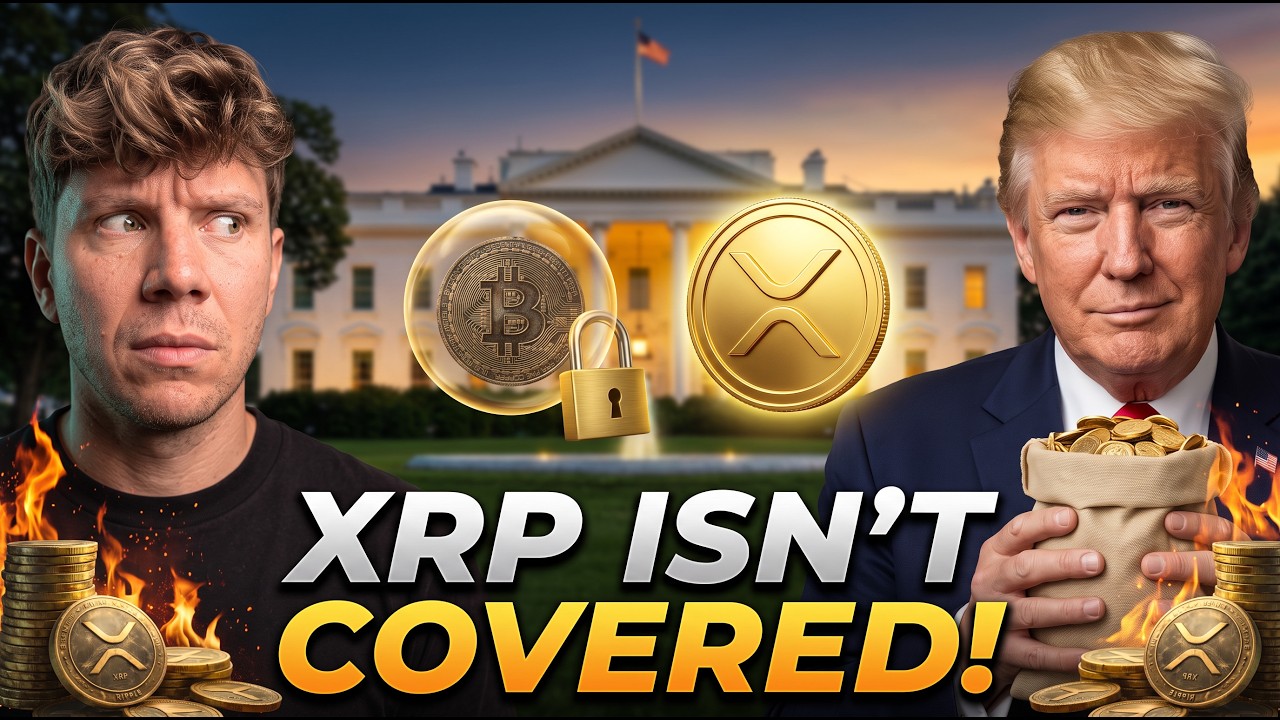
Key takeaways
- The 'shall not be sold' line in the March 6, 2025 executive order applies only to Bitcoin in the Strategic Bitcoin Reserve.
- Seized XRP and other non-Bitcoin coins go into a separate Digital Asset Stockpile, where the Treasury Secretary has discretion to rebalance or sell.
- Coins moving from a government wallet is not the same as coins being sold; the largest October batch came from a wallet labeled as Bitfinex hack funds.
- Most of the damage on the October red day came from forced liquidations of borrowed bets, not from any confirmed government sale.
- Before the next red day, write down your take-profit level and whether you would add, hold or trim.
Trump’s March 6, 2025 executive order says Bitcoin in the US Strategic Bitcoin Reserve “shall not be sold,” but that promise covers only Bitcoin. According to the Bullrunners video, any XRP the government seizes goes into a separate Digital Asset Stockpile, where the Treasury Secretary has discretion to rebalance or sell. No official figure for government-held XRP has ever been published.
That distinction mattered in October 2026, when government-linked wallets moved nearly 17,500 Bitcoin, the market dropped and XRP fell with it. For XRP holders, the episode shows two things: the “never sell” line was never written for their coin, and most of the damage on a red day comes from borrowed money and missing plans, not from Washington.
What happened to the government’s Bitcoin wallets in October?
Between October 6 and 8, wallets belonging to the US government moved nearly 17,500 Bitcoin, worth about $1.4 billion, according to the video. The transfers built up over three days, and on Thursday, October 8, more than 12,000 Bitcoin left in one go. Social media feeds quickly filled with claims that the government was dumping its Bitcoin.
The biggest batch came from a wallet that blockchain tracking firm Arkham labels as Bitfinex hack funds. When Cointelegraph reported the move, nobody knew who owned the receiving addresses.
The video’s point is simple: coins moving is not the same as coins being sold. No official has said the coins were sold. The latest official position is what Treasury Secretary Scott Bessent told Congress in February: “We are retaining seized Bitcoin, keeping it, not selling it.”
Why did the market fall so hard?
The market fell mainly because it was loaded with leveraged bets, not because of any confirmed sale. Bitcoin dropped around 7% from its recent high, and in the 24 hours to Friday morning about $1.1 billion of borrowed positions were closed out by force. Nearly all of them were bets that the price would rise.
That is a liquidation: a trader borrows to bet on a price move, the price goes the wrong way, and the exchange closes the position and keeps the trader’s stake. Even holders who never borrowed saw their XRP dragged down with everything else. For a deeper look at how forced selling spreads, see lessons from the $19 billion liquidation.
The analytics firm cited in the video said the government transfers sparked the pullback, but the market was already vulnerable. CryptoQuant reported that recent buyers sent 45,600 Bitcoin to exchanges in a single day, with 29,000 of that sent at a loss, the most sent at a loss in one day since June. The video’s summary: the government was the match, but borrowed money was the fuel.
It was a smaller repeat of October 10, 2025, when, per the video, a Trump tariff post helped trigger more than $19 billion in forced liquidations across more than 1.5 million trading accounts.
Why does the US government hold so much Bitcoin?
Most of the government’s Bitcoin was seized in criminal cases, and for years it simply sold what it seized. David Sacks, who served as Trump’s crypto czar until March 2026, said the government sold about 195,000 Bitcoin over 10 years for roughly $366 million, coins he said would have been worth more than $17 billion if held.
Sacks also said the government had taken in around 400,000 Bitcoin over that decade and believed it still held about 200,000, but that there had never been a proper order or accounting. The March 2025 executive order was meant to change that.
Bessent has also said he lacks authority to invest US tax dollars in Bitcoin, and the video notes that the order requires any new Bitcoin to be acquired in a budget-neutral way, at no extra cost to taxpayers. In other words, there is no government buyer waiting to support prices on a bad day.
Was XRP ever going to be in the US crypto reserve?
XRP was mentioned, but the order itself treated it differently from Bitcoin. On March 2, 2025, Trump posted that a US crypto reserve would include XRP, Solana and Cardano. Four days later, the signed order said something narrower.
The day after the post, Sacks said people were “reading into this a little bit too much,” that the president had just named top coins by market cap, and that the government was not sure it owned any of the alternative cryptocurrencies. He said it owned Bitcoin and probably some Ethereum.
Ripple CEO Brad Garlinghouse said a couple of weeks later that his understanding was that seized coins other than Bitcoin, including XRP, would go into the stockpile, while adding that “the devil may be in the details” as the Treasury implemented it. That was an understanding, not a published list. For how proposed legislation treats other coins, see what the Bitcoin reserve bill H.R. 8957 means for XRP.
What does the executive order actually say about selling?
The order, which is published on the White House website, creates two separate pots:
| Pot | What goes in | Can it be sold? |
|---|---|---|
| Strategic Bitcoin Reserve | Government-owned Bitcoin | No. The order says it “shall not be sold” |
| Digital Asset Stockpile | Every other seized coin, including any XRP | Yes. The Treasury Secretary decides strategies for “responsible stewardship” |
Sacks explained the difference at the time: for the stockpile, the Treasury Secretary “has the discretion to rebalance the portfolio or to sell items in that portfolio. But that’s not true for Bitcoin.”
The same section lists ways seized coins can still leave government hands, including a court order and returning them to “identifiable and verifiable victims of crime.” The video’s takeaway for XRP holders is that the XRP story never rested on Washington buying or holding the coin.
Were the October coins being returned to Bitfinex?
Possibly. The Bitfinex coins were stolen from the exchange in 2016, and in 2025 the courts moved to return nearly 95,000 of them to Bitfinex, according to the video. On October 6, Crypto Briefing reported that a smaller move from the same case looked like part of that return.
No official has confirmed that the October 8 transfer was part of the return. If it was, the coins that set off the sell-off may have been on their way back to the people they were stolen from, which falls under the order’s own victim-return exception.
A 30-second check for the next red day
The video offers a simple test. Before the next sharp drop, write down two things:
- The price at which you would take some profit on the way up.
- What you would do on a day like October 8: add, hold or trim.
If neither was written down when the drop came, that is the gap. The video then leaves holders with a few further questions to answer while markets are calm:
- Where does your XRP actually sit?
- Could you get to it on a day like that Thursday?
- When would you move in or out?
If you have not decided, the next headline will decide for you. Bullrunners has a fuller hour-by-hour plan for an XRP crash and a guide to writing an XRP exit strategy before you sell.
What to watch next
There is still no published figure for how much XRP, if any, the government holds. Lawmakers are trying to write a Bitcoin reserve into law, so for now the never-sell rule rests on an executive order alone.
Anyone can follow the government wallets: Arkham has a free public page for them. But the video warns that watching is not a plan. On October 8, liquidations happened before anyone knew what the coins were for. The holders who come through days like that best are the ones who decided what they would do before it happened.
Frequently asked questions
Does Trump's executive order stop the government from selling XRP?
No. According to the video, the order says Bitcoin in the Strategic Bitcoin Reserve shall not be sold, but other seized coins go into a Digital Asset Stockpile. David Sacks said the Treasury Secretary has discretion to rebalance or sell assets in that stockpile.
Did the US government sell Bitcoin in October 2026?
Nobody official has said so. Government-linked wallets moved nearly 17,500 Bitcoin between October 6 and 8, but the receiving addresses were unidentified, and the largest batch came from a wallet labeled as Bitfinex hack funds, which may have been part of returning stolen coins.
Does the US government own any XRP?
No figure has been published. In March 2025 David Sacks said the government was not sure it owned any of the alternative cryptocurrencies, and Ripple CEO Brad Garlinghouse described seized XRP going into the stockpile as his understanding rather than a published list.
Can the Treasury use taxpayer money to buy Bitcoin or XRP?
Treasury Secretary Scott Bessent told Congress he does not have the authority to invest US tax dollars in Bitcoin. The video says the order requires any new Bitcoin to be acquired in a budget-neutral way.
Why did XRP fall when government Bitcoin wallets moved?
Posts claiming the government was dumping Bitcoin hit a market full of leveraged positions. About $1.1 billion of borrowed bets, mostly bets on prices rising, were force-closed in 24 hours, and XRP fell along with the rest of the market.
Education and commentary only, not financial advice. Crypto is volatile and you can lose money. Do your own research and speak to a qualified advisor before making investment decisions. Figures and quotes are as reported in the video on October 15, 2026 and may have changed since.