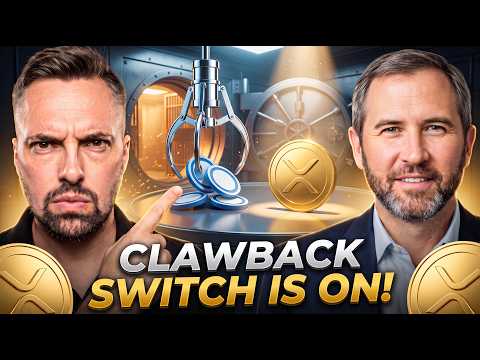
Did Mr. Robot Predict CBDCs? The E Coin Theory Checked
Fans say Mr. Robot's E Coin predicted CBDCs and stablecoins. Five clues checked against real dates, plus what it means for RLUSD and XRP holders.
Key takeaways
- Mr. Robot's E Coin got the politics roughly right: a giant company launched its own digital money, and regulators pushed back hard.
- It got the money itself wrong. The digital dollars that won are tied to the US dollar, and the video says that under the GENIUS Act, issuers are expected to be able to freeze tokens on a lawful order.
- Central banks were researching digital currencies before the show aired, so the 'secret prediction' theory doesn't hold up.
- RLUSD needs little or no XRP. None is needed on Ethereum, and only a small reserve plus tiny fees on the XRP Ledger. A bigger RLUSD supply doesn't automatically mean a higher XRP price.
- Before you trust any digital money, ask what backs it, who can freeze it, and whether you need XRP to use it.
Mr. Robot did not secretly predict CBDCs, according to the video. The TV drama’s fictional E Coin got two things roughly right: big companies tried to issue their own money, and regulators pushed back. It got the money itself badly wrong, because the digital dollars that actually won are tied to the dollar and can be frozen.
That last point matters more than the TV trivia. If you hold a stablecoin, or are watching what Ripple’s RLUSD means for XRP, the useful questions are simple. What backs the token, who can freeze it, and do you need XRP to use it? The video sorts five fan “clues” into three piles: held up, didn’t hold up, and can’t be settled yet.
What is E Coin in Mr. Robot?
E Coin is a fictional digital currency created by E Corp, the giant company at the center of the TV drama Mr. Robot. The show premiered on USA Network on June 24, 2015. It follows Elliot, a young hacker in New York. His group plans to hack E Corp’s data centers and wipe every record of credit card, loan and mortgage debt. In the show, E Corp owns 70% of the global consumer credit industry.
By the end of Season 1 the hack has happened and E Corp is in chaos. Season 2 premiered on July 13, 2016, and E Coin is part of the world from the first episode. The setup is clear: a hack breaks the old money system, and a giant company offers its own digital coin as the replacement.
The scene fans share most aired in mid-September 2016, according to the video. Government officials tell E Corp’s chief executive, Phillip Price, that a company can’t make its own currency, because that is the federal government’s job. Price argues that hard cash is fading and that if Bitcoin takes over, they are all in trouble. He says that with E Coin, E Corp controls the ledger and the mining servers. He promises the officials visibility into every wallet, loan and transaction. They can regulate it however they like, he says, as long as they don’t shut it down.
According to the video, the marketing carried the idea off screen. In July 2017 the show invited fans at Comic-Con in San Diego to a pop-up “Bank of E” to sign up for E Coin. The video also points to a July 2025 post on X that claimed the show had predicted central bank digital currencies (CBDCs, digital money issued by a central bank). The video says that post had passed 260,000 views by October 2026.
The five clues, sorted
The video tests the theory one clue at a time. Here is the scorecard.
| Clue | What the show depicted | What happened in reality | Verdict |
|---|---|---|---|
| 1. Corporate money | E Corp launches E Coin | JPMorgan announced JPM Coin (Feb 2019); Facebook announced Libra (June 2019) | Held up |
| 2. Government pushback | Officials say a company can’t make currency | Fed Chair Powell raised serious concerns; Libra later shut down | Held up |
| 3. Debt wipe | A hack erases the world’s debt records | Nothing like it has happened | Didn’t hold up |
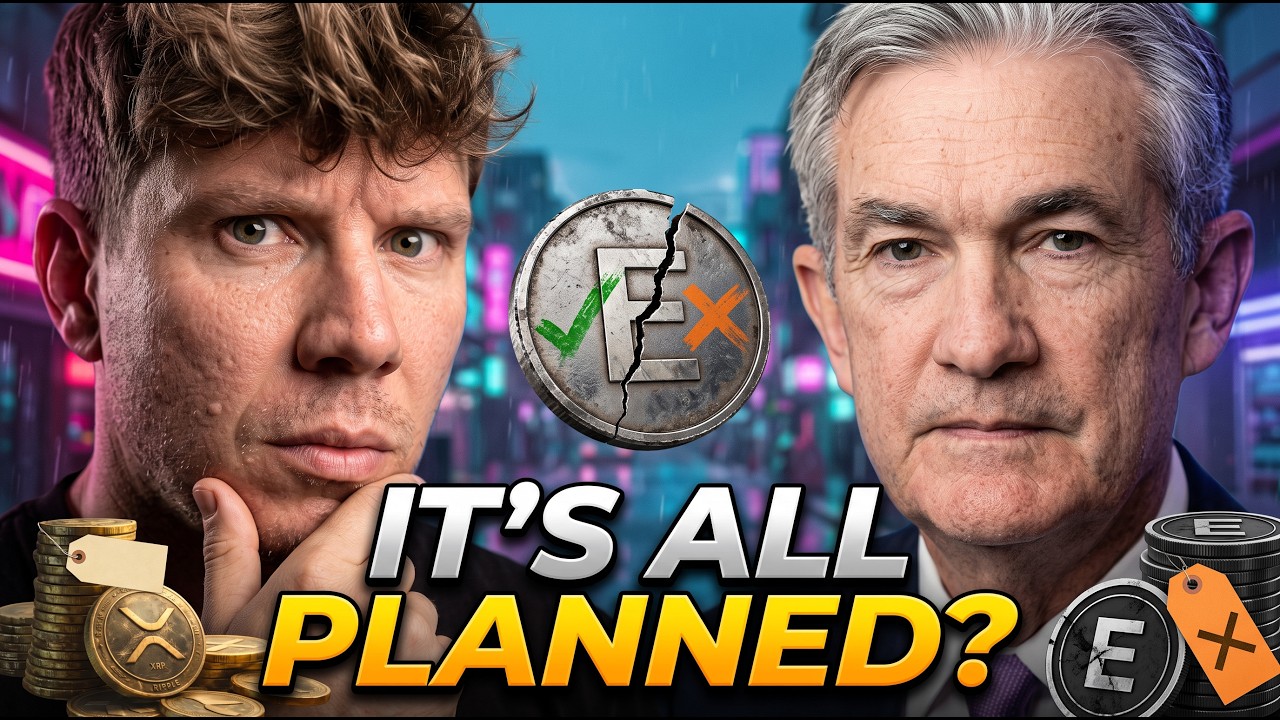
| 4. Irreversible money | E Coin is independent of the dollar, and payments can’t be reversed | Stablecoins are tied to the dollar and can be frozen | Didn’t hold up |
| 5. Total surveillance | Visibility into every wallet | No such state currency in the US or Europe; the privacy debate continues | Can’t be settled |
Did a big company really launch its own money?
Yes. Big companies did try to launch their own digital money, which puts the first clue in the “held up” pile. In February 2019, JPMorgan announced JPM Coin, a digital token for moving dollars between its large clients. On June 18, 2019, Facebook announced Libra. Facebook said the digital currency would make sending money around the world as easy as sending a photo. According to the video, fans noticed within days, and one post on X on June 23, 2019 said, “Facebook’s new Libra is our Ecoin.”
There was one big difference. Libra was planned to be backed by real money held in reserve. E Coin was pitched as a new money separate from the dollar. The corporate coin arrived, but not as a replacement for money.
Did regulators push back the way the show suggested?
Yes, and the video calls this the clue the show got most right. On July 10, 2019, Federal Reserve Chair Jerome Powell told Congress that Libra raised “many serious concerns regarding privacy, money laundering, consumer protection, and financial stability.” He said these should be addressed before the project went ahead.
Those concerns were never really resolved. Libra was renamed Diem, and by early 2022 the project had been sold off and shut down. In the show, E Coin went ahead despite the officials. In real life, the project did not survive.
Has a hack ever wiped out the world’s debt?
No. No hack has ever erased the world’s credit card, loan or mortgage records, so the third clue goes in the “didn’t” pile. The host says he found no serious source suggesting a single hack could do it, because big banks keep backup copies of their records in more than one place. The video calls the debt wipe good drama and nothing more.
Why the show got irreversible money badly wrong
The show’s biggest miss is that real digital dollars are tied to the US dollar and can be frozen. E Coin was neither. Near the end of the final season, in late 2019, Elliot and his sister Darlene take a fortune from the villains and spread it across everyone’s E Coin wallets. Darlene explains that the transactions can’t be reversed, because E Corp insisted E Coin stay independent from the US dollar.
Reality went the other way. On July 18, 2025, the GENIUS Act was signed into law. It is America’s first federal law for stablecoins. A stablecoin is a token designed to hold a steady value, usually $1, because it is backed by real dollars or short-term government debt. The law requires payment stablecoins to be fully backed. According to the video, issuers are also expected to be able to freeze tokens when there is a lawful order.
This is the part that matters for anything you hold. A stablecoin in your wallet is not unstoppable digital cash, and the company behind it can often stop a payment. Bullrunners covers how this works for one issuer in whether RLUSD can be frozen.
Will CBDCs watch every wallet?
That question is still open, so the fifth clue goes in the “can’t be settled” pile. Price’s promise of visibility into every wallet is the fear behind most CBDC theories. The video first makes one point against the prediction idea. China’s central bank says in its own 2021 white paper that it set up a digital currency research team in 2014, a year before Mr. Robot premiered.
In July 2025, Axios reported 49 CBDC pilot projects around the world, citing the Atlantic Council. The two largest Western economies then went in opposite directions:
- January 23, 2025: President Trump signed an executive order banning US agencies from creating a CBDC. The order said such currencies threaten financial stability, individual privacy and American sovereignty.
- October 30, 2025: The European Central Bank announced that its digital euro project would move into its next phase, starting November 1, 2025. The Eurosystem said this phase aims to make it ready for a potential first issuance in the course of 2029. The video notes this depends on the law being agreed in time.
- July 9, 2026: The European Parliament voted to open final negotiations on the digital euro law. Talks started on July 13.
The ECB says the digital euro will protect privacy. Critics are not convinced. A state digital currency that sees every wallet has not arrived in the US or Europe, but the argument over privacy hasn’t finished.
Where do XRP and RLUSD fit?
As far as the host could find, Mr. Robot never mentions XRP or Ripple. Any link between E Coin and XRP is something fans added later. Ripple has, however, stepped into the world the show was talking about.
In May 2023, Ripple launched a platform for central banks to issue their own CBDCs. A Ripple representative described it as a private version of the XRP Ledger. In November 2023, Georgia’s central bank picked Ripple as a partner for a digital lari pilot. The video’s point is that a central bank coin built on a private version of the ledger does not need the public XRP coin. “Ripple works with central banks” and “central banks will use XRP” are two different claims.
Ripple’s own dollar token, RLUSD, launched in December 2024 with approval from New York’s financial regulator. A company issuing its own digital dollar sounds like E Coin, but RLUSD is built the opposite way. It is backed one-for-one by dollars and short-term government debt, and it is regulated. RLUSD had passed $2.5 billion in market value by early October 2026.
For XRP holders, the video is direct about the limits:
- Holding RLUSD needs little or no XRP. On Ethereum it needs none. On the XRP Ledger, a wallet needs a small XRP reserve to exist and to hold an RLUSD trust line. Bullrunners explains how the XRP Ledger trust line reserve works.
- Each XRP Ledger transaction burns a tiny XRP fee, a small fraction of one coin.
- RLUSD doesn’t live only on the XRP Ledger. According to the video, one data account on X put about $1.4 billion of it on the XRP Ledger on October 13, 2026, out of a total above $2.5 billion.
A bigger stablecoin does not automatically mean a higher XRP price. The video cites a widely shared post in which Ripple CEO Brad Garlinghouse speaks at a CoinDesk event. He says stablecoins keep growing because the economy runs 24/7 while payment infrastructure doesn’t. On the same stage, he said XRP “has underperformed where I would expect.” Bullrunners breaks down the difference further in RLUSD vs XRP.
There is one more piece of the picture. On December 12, 2025, the OCC, the US bank regulator, gave Ripple conditional approval to set up a national trust bank. Since the video was made, Ripple received final OCC approval on October 26, 2026. That approval brings RLUSD under federal oversight. Ripple is moving closer to regulated banking, which is about as far from E Corp’s irreversible coin as you can get. Bullrunners covers what Ripple’s final national trust bank approval means.
Three questions to ask about any digital money
The video’s own takeaway is simpler than any theory. Before you trust any digital money, ask:
- What backs it? Dollars and short-term government debt, a company’s promise, or nothing?
- Who can freeze it? According to the video, the GENIUS Act expects stablecoin issuers to be able to freeze tokens on a lawful order.
- Do you actually need XRP to use it? For RLUSD on Ethereum, no. On the XRP Ledger, you need only a small reserve and tiny fees. A central bank coin on a private version of the ledger does not need the public XRP coin, the video says.
What to watch next
The open question from the show is whether state digital money ends up watching every wallet, and Europe will decide it first. Watch how the negotiations on the digital euro law turn out, and whether the 2029 first-issuance target holds. In the US, the executive order against a CBDC and the GENIUS Act set the frame for now. For XRP holders, track how Ripple’s national trust bank operates under its final OCC approval. Also watch how much RLUSD sits on the XRP Ledger compared with other chains. Stablecoin growth and XRP’s price are separate questions.
Frequently asked questions
Did Mr. Robot predict CBDCs?
Not according to the video. China's central bank says it set up a digital currency research team in 2014, the year before the show premiered, so the idea wasn't invented by the show's writers.
What is E Coin in Mr. Robot?
E Coin is a fictional digital currency run by E Corp, the giant company in the show. It appears from the Season 2 premiere in July 2016. The show presents it as independent of the US dollar, with payments that can't be reversed.
Can stablecoins be frozen?
According to the video, the GENIUS Act, signed in July 2025, requires payment stablecoins to be fully backed. Issuers are expected to be able to freeze tokens when there is a lawful order. That is the opposite of how E Coin worked in the show.
Do you need XRP to hold RLUSD?
Not on Ethereum. On the XRP Ledger, a wallet needs a small XRP reserve to exist and to hold an RLUSD trust line, and each transaction burns a tiny XRP fee. Holding RLUSD does not require a meaningful XRP position.
Did Facebook's Libra launch?
No. Libra was announced in June 2019, and Fed Chair Jerome Powell told Congress it raised serious concerns. It was renamed Diem, and by early 2022 the project had been sold off and shut down.
Full video transcript
From the video's captions, lightly formatted. Captions can mishear names and numbers, so check figures against the article above.
You can't make your own currency. That is the federal government's job. Now, that line comes from a TV drama called Mr. Robot in an episode that aired in September 2016. A giant company called E Corp is pushing its own digital money and they call it E coin.
And a government official tells its boss he can't, right? So, XRP holders, this is for you and this is why it matters to us. Fans say Mr. Robot saw digital dollars coming years before banks and big tech started launching their own. They say it saw the whole thing from CBDCs, which are digital money issued by a central bank, stablecoins and tokens.
So, did Mr. Robot predict CBDCs? Well, we sort every clue into three piles, right? The ones that held up, the ones that didn't, and the one that nobody can settle. It's not simple, but if you own XRP, you're going to see what really came true and that Mr.
Robot's E coin got one thing right and one thing badly, badly wrong. Now, the wrong one matters for any digital dollar you hold, all right? You'll also see where XRP and Ripple's own dollar token fit and where they don't. Now, there's a link waiting at the top of the description. I'm going to tell you exactly what it's for in a few minutes.
If there's anyone who has ever bought into a great story before checking what they hold, it's for you. And let's be honest, a lot of us have done exactly that, right? A clip goes round saying a show predicted everything. It feels like a secret map. We start making money decisions off a TV plot.
That's not how we should do it. Meanwhile, the real question for our own money is much more boring. Is the thing we're holding in our wallet a stablecoin or a bank's token? And who can freeze it? And to be honest, guys, I'll be fair.
These are the community theories. They're not mine, right? And I've got no inside line to the writers. I'm only putting what the show said next to what the real world did with dates. So, let's start with what's actually on screen.
Mr. Robot, he premiered on USA Network on the 24th of June, 2015. It follows Elliot, a young hacker in New York. In the very first episode, a mysterious figure takes him up a Ferris wheel. He actually pitches him the plan behind the whole series.
What if I told you that this conglomerate just so happens to own 70% of the global consumer credit industry, huh? If we hit their data center just right, we could systematically format all the servers, including backups.
That would erase all
All the debt we owe them. Every record of every credit card, loan, and mortgage would be wiped clean.
So, what's the premise? Well, hack the company that holds everyone's debt and wipe the records. By the end of the first season in 2015, the hackers happened in the story and E Corp is in chaos. Then comes the money part. Season 2 premiered on the 13th of July 2016 and E coin is part of the world from the first day.
So, during the premiere, the show's own account on X joked, "Cash or E coin only, friend." So, that's the setup. A hack breaks the old money system and a giant company offers its own digital coin as the replacement. Keep that in mind because the scene the fans share most is coming up after this. As always, this is not financial advice, guys. Please do your own research.
Like if you're bullish and let's get deep into this one today.
[music]
So, before we open the case file properly, let me tell you about that link that I mentioned. And I'm not going to tell you to buy XRP. This link isn't telling you, "Hey, you must go and buy this coin." No, there may be better opportunities for your situation and this is how you find out. But, whatever you hold, you should know exactly what it is and why you hold it. You shouldn't hold something because of TV plot, but for a reason that you can actually write down as the reason you should hold.
Now, that's what our altcoin pro course helps with, right? Telling a coin from a stable coin from a bank token, deciding how much of your money each one deserves, and knowing exactly where each one sits. Here's how to get started. Tap the first link in the description, fill in a short form, book your free 15-minute call, and one of the team's going to walk you through your own strategy with your own situation. All right, everything is unique to yourself.
If you're watching this on your phone, hit the more button under the video, the first link you're going to see it. All right, do it before the next "A show predicted it" clip lands in your feed and then come back because the scene the fans love is a strange one. So, here's the scene. It's from an episode that aired in mid-September 2016. E Corp's chief executive, Philip Price, is in a room with government officials and they've told him a company can't make its own currency.
Now, Price doesn't back down. He says hard cash is fading fast and that if Bitcoin takes over, they're all in trouble. Then, he makes his pitch. With E coin, he says, "We control the ledger and the mining servers." And then, he promises the officials visibility into every single wallet, every loan, and every transaction. Then, he tells them they can regulate however they like.
Just don't shut it down. And then, the marketing team took it off the screen and into real life. So, we go to July 2017. The show account invited fans at Comic-Con in San Diego to pop up a Bank of E to sign up for Ecoin, the currency of the future. And on the 22nd of September, 2017, it posted this, "Take control of the global economy." It said that wasn't official marketing as a joke back in 2017.
So, you can see why fans think somebody knew something, right? In July 2025, one post on X said the show had predicted central banking digital currencies. When I checked, all right, not that long ago, this October actually, it showed more than 260,000 views. So, let's test it, one clue at a time, right? First clue is the big one.
Did a giant company really try to launch some money? Yes. In February 2019, JP Morgan announced JPM Coin. That's a digital token for moving dollars between its big clients. Then, June 2019, and it was the 18th, Facebook went much bigger.
Facebook announcing a new digital currency called Libra, and Facebook says this digital currency aims to make it as easy to send money around the world as it is to send a photo. Tech giant with billions of users launching its own digital money. Now, that's about as close to Ecoin as real life has come. Fans spotted it within days, and on the 23rd of June, 2019, one post on X put it simply, "Facebook's new Libra is our Ecoin." Now, there is one big difference, right? Libra was planned to be backed by real money held in reserve.
Ecoin in the show was pushed to a new money separate from the dollar. So, clue one goes in the held up pile, right? Corporate coin really did arrive, it just wasn't the replacement for money that the show imagined. The second clue is the government pushing back. And this is the one thing the show got pretty much right.
On the 10th of July, 2019, the chair of the US Federal Reserve, Jerome Powell, was asked about Libra in Congress.
While the project's sponsors hold out the possibility of public benefits, including improved financial access for consumers, Libra raises many serious concerns regarding privacy, money laundering, consumer protection, and financial stability. Uh these are concerns that should be thoroughly and publicly addressed before proceeding.
That's almost a scene from the show played out in real. Powell said Libra couldn't go forward until those concerns were dealt with, and they never really were. Libra was renamed Diem, and by the early 2022, the project had been sold off and shut down. So, clue two goes firmly in the held up pile. And in the show, the officials said no Ecoin went ahead anyway.
In real life, the officials raised serious concerns, and the project did not survive. Now, the third clue is the one that started the whole story. Wipe the debt records, and the old money system falls over. This one is easy to score. Nothing like this has ever happened.
No hack has ever raised the world's credit card, loan, or mortgage records, and I couldn't find any serious source that says a single hack could. Big banks keep backup copies of their records in more than one place for exactly that reason. So, clue three goes into the didn't pile. It's a great piece of drama, though, and to be honest, that's all it is in my opinion. The fourth clue is the one most people miss, and it's the one the show got badly wrong.
Near the end of the final season, in late 2019, Elliot and his sister Darlene take a fortune from the villains and spread it into everyone's ecoin wallets. Then, Darlene explains why nobody can undo it.
No one got this much. Yeah.
[music]
And due to E Corp's insistence that E Corp remain independent from the US dollar, [music] it is completely impossible for them to reverse the transactions.
So, in the show, ecoin was independent of the dollar, and payments couldn't be reversed. The real world went the opposite way, and on the 18th of July, 2025, the genius act was signed into law. America's first federal law for stablecoins. A stablecoin is a token meant to hold a steady value, usually $1, because it's backed by real dollars or short-term government debt. Now, under that law, payment stablecoins have to be fully backed, and issuers are expected to be able to freeze tokens when there's a lawful order.
So, the digital dollars that won are tied to the dollar, not free of it, and the company behind them can often stop a payment, and that's the opposite of ecoin, and it's worth knowing about any stablecoin you hold. So, clue four goes in the didn't pile. Now, the fifth clue is the one that scares people. Remember Price's promise of visibility into every wallet, right? That's the fear behind most of the CBDC theories.
First, a fair point against the prediction idea. Central banks were studying digital money before the show aired. China's central bank says in its own 2021 white paper that it set up a research team for this in 2014. That's the year before Robot premiered. So, the idea wasn't invented by a TV writer.
In July 2025, Axios, citing The Atlantic Council, reports CBDC pilots in 49 countries. And then, two biggest economies in the West went in opposite directions. Now, on the 23rd of January, 2025, President Trump signed an executive order banning US agencies from creating a CBDC. It said these currencies threaten financial stability, individual privacy, and American sovereignty. So, Europe went the other way.
On the 3rd of October 2025, the European Central Bank moves its digital euro project into its next phase. And they said its first issuance could come in 2029 if the laws agreed in time. Now, in July 2026, the European Parliament voted to open final negotiations on that law with talk starting on the 13th of July. The European Central Bank says the digital euro will protect people's privacy. Critics are not convinced, right?
So, clue five goes into the pile nobody can sell. A state digital currency that sees every wallet has not arrived in America or Europe. But, whether these systems are up protecting privacy or eroding it is a fight that hasn't finished. So, where does XRP fit in all this? Well, let's be straight about it.
As far as I could find, the show never mentions XRP or Ripple. E-coin was made up a coin owned by a made up company. Any link in XRP is something fans have added later. But, Ripple did step into the world the show was talking about. In May 2023, it launched a platform for central banks.
Starting a platform for central banks to issue their own CBDCs. This is sort of a private version of the XRP ledger, uh enabling, you know, uh central bank authorities to issue both wholesale and retail CBDCs down the line.
Notice the words a private version. Now, that matters in November 2023. Georgia's Central Bank picked Ripple as a partner for digital lottery pilot. But, a central bank coin built on a private version of the ledger does not need the public XRP coin. So, Ripple works with the central banks and central banks will use XRP.
They're two different claims, right? Then there's Ripple's own dollar RLYSD which launched in December 2024. That was approved by New York's financial regulator. It's a company issuing its own digital dollar which sounds a lot like e-coin, but it is built the opposite way. Backed one-for-one by dollars and short-term government debt and regulated.
So, on the 6th of October 2026, it passed 2 and 1/2 billion dollars in market value. Now, according to a widely shared post, Ripple's boss Brad Garlinghouse spoke at a CoinDesk event in a video posted on the 30th of May 2026 about exactly why stablecoins keep growing.
The economy is not The economy is 24/7, 365 days a year, but our payment infrastructure isn't. Stablecoins are 24/7, 365. Stablecoins are going to continue to grow not just domestically, but outside the United States giving people access to a more trusted currency like the US dollar is very compelling if you are in Peru as the example we were using earlier.
Here's the honest part for XRP holders. You do not need any XRP to hold AR USD. Every transaction on the XRP ledger burns a tiny fee in XRP, but it's a tiny fraction of one coin. And AR USD doesn't only live on the XRP ledger. So, according to one data account on X, on the 13th of October, 2026, about 1.4 billion dollars of it sat on the XRP ledger, which is less than half of the total.
So, a bigger stablecoin doesn't automatically mean a higher XRP price, all right? On the same stage, Garlinghouse admitted XRP has not done as well as he expected. Check this out.
The people say, "Yes, that's true, Brad, but you know, Bitcoin's down 50% or whatever, 42%." Yeah, I get it. Uh and XRP has underperformed where I would expect.
That's refreshingly honest, right? And there's one more piece of the picture. On the 12th of December, 2025, Ripple said it had one conditional approval from the US bank regulator, the OCC, to set up a national trust bank. So, Ripple is moving closer to the regulated banking world, not away from it, which is about as far as e-corp's coin that nobody could reverse as you can get. So, let's add it up.
The ones that held up are these two. Giant companies did set out to make their own digital money, and governments did push back hard. The ones that didn't are these two. No hack wiped out the world's debts, and the digital dollars that won are tied to the dollar, and they can be frozen. And the one nobody can settle is whether the state digital money ends up watching every wallet.
So, the show was sharp about power and about how regulators react, but it got money itself badly wrong. And the theory that it secretly predicted to CBDCs doesn't stand up, cuz central banks were researching them before the first episode. So, for us, this lesson is simpler than any conspiracy. Before you trust any digital money, ask three questions. What it backs, who can freeze it, and do you actually need XRP to use it?
Which clue would you move into a different pile and tell me why? Let me know in the comments, guys. Give me a reasoning, and if you like theories, check with the dates and sources on screen, hit subscribe. As always, stay bullish.
Education and commentary only, not financial advice. Crypto is volatile and you can lose money. Do your own research and speak to a qualified advisor before making investment decisions. Figures and quotes are as reported in the video on October 27, 2026 and may have changed since.