Crypto Scam Losses: Why Frozen Funds Aren't Refunds for Victims
FBI figures show over-60s lost $7.7 billion to online crime in 2025. What the White House said about frozen funds, and a call-back habit that helps prevent scams.
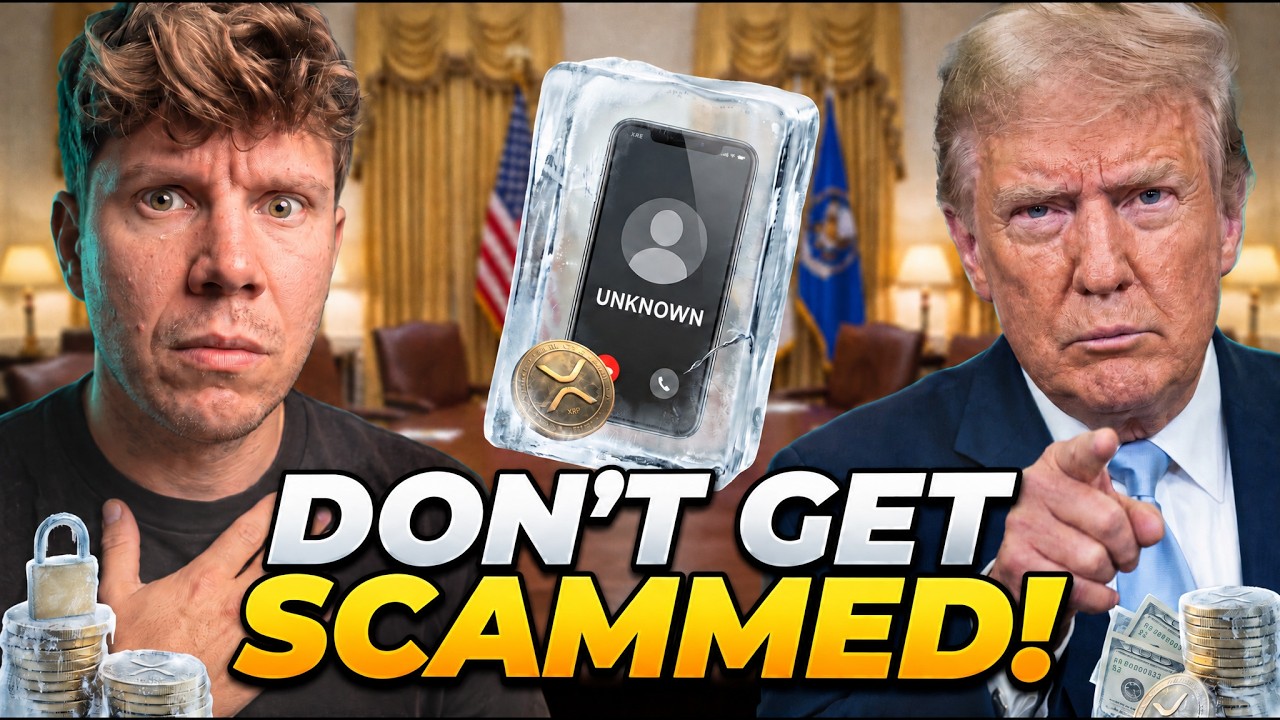
Key takeaways
- According to the FBI's yearly report, people over 60 reported losing $7.7 billion to online crime in 2025, out of nearly $21 billion in total.
- A freeze is a pause, not a refund. Frozen or seized money often reaches victims only after a forfeiture and claims process that can take years.
- Officials at the round table warned about a call saying a loved one has been arrested and money must be sent right away by wire, gift card or crypto.
- Hang up and call back on a number you found yourself: the back of your card, the exchange's website, or your grandchild's own phone.
- XRP in your own wallet has no issuer who can freeze it, so if it is sent to a scammer, reporting quickly to ic3.gov and to exchanges matters.
People over 60 reported losing $7.7 billion to online crime in 2025, according to the FBI’s yearly report, out of nearly $21 billion in total. At a White House round table on October 21, 2026, officials said nearly $1 billion tied to foreign scammers had been frozen. A freeze, though, is not a refund.
For crypto holders, the details matter. More than half of reported losses involved crypto, and coins like XRP held in your own wallet have no bank fraud team behind them to stop a payment. The video covers five things: who the scam gangs target, what the government says it has done, what “frozen” and “seized” really mean, the scam call it says to watch for, and a simple call-back habit it recommends.
How much money did Americans lose to online crime in 2025?
Americans reported losing nearly $21 billion to online crime in 2025, according to the FBI’s yearly report published in April 2026. At the round table, President Trump cited a figure of more than $20 billion, which matches the FBI report.
The main figures from the report:
- Total reported losses: nearly $21 billion
- Losses reported by people over 60: $7.7 billion
- Losses involving crypto: more than $11 billion, which is over half the total
- Costliest crime type: investment schemes
These are only reported losses. Many victims never report at all, often out of embarrassment. According to the video, Trump made that point himself and said the real number was probably much higher.
Who is running these scams?
Officials at the round table said the scams are largely run from scam centers. The video describes these as large compounds, mostly in Southeast Asia, with hundreds of people working phones and apps all day. According to the video, many of the workers are trafficked and forced to do it. The centers run like call centers, with scripts, targets and managers.
Not every scam is a single panicked call. The video says one of the most common routes is slow:
- It often starts with a “wrong number” text.
- Over weeks, the stranger becomes a friend.
- The friend shows off an investment app that seems to be making them a fortune.
- The victim puts in a little, sees good gains on screen, and puts in more.
- When the victim tries to withdraw, there is a fee, then a tax, and then the app and the friend disappear.
Bullrunners has covered this pattern in more depth in how romance and investment scams target crypto holders.
What does it mean when the government freezes crypto?
A government freeze means the money cannot move. According to the video, it usually stays at an exchange or with the company that issued the token while lawyers work out who it belongs to. The video calls a freeze a pause button, not a refund.
Trump said he signed an executive order in March 2026 that set up what he called a victim restoration program, meant to recover as much money for victims as possible. He was also candid about the limits. He said the government often can’t get it all back because scammers spend the money before it is caught.
Many freezes depend on a company in the middle agreeing to act. In September 2026, the government restrained $52 million linked to a criminal marketplace called Xinbi Guarantee. That was the same day the Treasury sanctioned the marketplace, and the Justice Department credited the stablecoin issuer Tether for its help. A stablecoin is a token designed to stay at $1, and its issuer can lock tokens. The wider difference between coins that can and can’t be frozen is covered in why XRP can’t be frozen but stablecoins can.
Do the government’s numbers add up?
Not entirely. Officials gave different prevention figures within the same hour, and nobody in the room explained the gap.
| Claim | Who said it | Americans warned | Losses prevented |
|---|---|---|---|
| Prevention figure | President Trump | Over 10,000 | $1.6 billion |
| Prevention figure | FBI Director Kash Patel | 11,000 | $675 million |
The video notes they may be counting different things. Patel then gave the largest number of the day. He said the FBI and its Justice Department partners had seized over $17 billion from scam compound fraud centers. He called it “money we got back” and said it would be returned to victims after prosecutions.
Patel did not break that figure down. The video suggests most of it likely comes from one case. In October 2025, US prosecutors charged Chen Zhi, chairman of Cambodia’s Prince Group, with wire fraud and money laundering conspiracy in a case tied to forced-labor scam compounds. They also went to court to take about 127,000 Bitcoin, worth around $15 billion at the time. The Justice Department called it the largest forfeiture action in its history.
Seized means the government holds the money. It does not mean victims have been paid. In the US, money forfeited through the courts can go back to victims through remission. This is a claims process run by the Justice Department. Each victim files a claim and has to show what they lost. According to the video, it works but it is slow, it only covers money that was actually caught, and an unreported loss is much harder to prove.
Who is going after the scam gangs?
According to officials at the round table, the effort is broader than most people would guess:
- Operation Blackout: Patel said this FBI operation has dismantled more than 20 scam compounds across Southeast Asia, Africa and the Middle East.
- Dubai: Attorney General Todd Blanche said that in April 2026 the FBI and Dubai police announced at least 276 arrests and nine scam centers shut down.
- Ghana and Nigeria: By Patel’s account, a push in early October 2026 led to further arrests and seizures.
- Tech companies: Patel named Meta, Google, Microsoft and IBM as shutting down networks the gangs rely on. Blanche thanked Meta and X.
- Offensive cyber operations: White House Deputy Chief of Staff Stephen Miller said that for the first time, the government is using offensive cyber capabilities against foreign scam centers. The video notes this is his claim and can’t be checked from outside.
What is the scam phone call to watch for?
The call the video highlights says someone you love is in trouble, there is no time, and money has to be sent immediately by wire, gift card or crypto. Miller described the classic version. A grandparent is told a family member has been arrested and must wire $10,000 right away to get them out of jail. Nobody was arrested, and the money goes to a foreign scam center.
Blanche described a second version, where callers impersonate police or FBI officers and describe fictitious arrests. According to the video, others pose as a bank’s fraud team.
This is where it gets tricky. Patel said the FBI itself contacted 11,000 Americans to warn them they were being scammed. So there are real calls from real officials and fake calls from people pretending to be those officials. On the phone, they can sound exactly alike. The video’s point is that you cannot judge a call by how official it sounds. You need a rule that works either way.
What does this mean for XRP holders?
Nobody at the round table mentioned XRP or Ripple, but the video draws a direct lesson. XRP has no issuer who can freeze it. If a scammer talks you into sending XRP to their wallet, no company sits in the middle to stop the payment. According to the video, investigators can follow it on the public ledger, but it can usually only be stopped if it lands at an exchange that agrees to freeze it.
That makes speed important. If it happens, the video says to:
- Report it straight away to the FBI at ic3.gov.
- Contact your local police fraud reporting service if you are in the US.
- Notify every exchange the money touched.
For a fuller checklist, see what to do if your crypto is stolen. Be wary of anyone who then contacts you offering to recover the funds for a fee, a pattern covered in crypto recovery scams.
The hang-up-and-call-back rule
Trump’s own advice at the round table was to talk to trusted family members before acting and then go to law enforcement. The video adds one habit it says is worth sharing with every relative who might get one of these calls:
- Hang up. Whoever is calling, whether the bank, police, FBI, an exchange or a grandchild in trouble, put the phone down.
- Find the number yourself. Use the number on the back of your card, the number on the exchange’s official website, or your grandchild’s own mobile number.
- Never use the number or link they gave you.
- Call back and check. A real official won’t mind. A real bank will wait.
- Talk to someone you trust before any money moves.
As the video puts it, the only person who needs you to stay on the line is the scammer, because the trick only works while you are rushed and scared. The same applies to crypto. Nobody genuine will ever need you to send coins to keep them safe, and nobody genuine will ask you to share or read out your recovery words.
What to watch next
Watch how the victim restoration program and the remission process actually pay out, since seized money is not the same as money returned. Look for any official breakdown of the $17 billion figure and an explanation of the gap between the two prevention numbers. Most practically, check that the people in your family, especially older relatives, know the hang-up-and-call-back rule. They should also know who to call before money leaves an account or a wallet.
Frequently asked questions
How much did people over 60 lose to online crime in 2025?
According to the FBI's yearly report, published in April 2026, people over 60 reported losing $7.7 billion to online crime in 2025. Total reported losses were nearly $21 billion, and more than $11 billion involved crypto.
Does frozen crypto mean scam victims get their money back?
No. A freeze stops the money from moving while ownership is worked out. In the US, money forfeited through the courts can be returned through remission, a Justice Department claims process where each victim files a claim and must show what they lost.
What scam phone call did White House officials warn about?
Stephen Miller described a call claiming a loved one has been arrested and that money must be wired right away to get them out of jail. Attorney General Todd Blanche described another version, where callers impersonate police or the FBI and describe a fictitious arrest.
Can stolen XRP be frozen?
XRP itself has no issuer that can freeze it. According to the video, investigators can follow it on the public ledger, but it can usually only be stopped if it lands at an exchange that agrees to freeze it.
Where do I report a crypto scam in the US?
The video says to report it straight away to the FBI at ic3.gov, contact your local police fraud reporting service, and notify every exchange the money passed through.
Full video transcript
From the video's captions, lightly formatted. Captions can mishear names and numbers, so check figures against the article above.
Federal law enforcement has also frozen nearly $1 billion of cyber currency and tied to foreign scammers.
Nearly a billion dollars frozen and did you catch the word he used for it? Cyber currency. Now, that was President Trump at the White House on the 21st of October 2026 at a round table on cybercrime and fraud with the Attorney General, the head of the FBI, and several cabinet members around the table. So, Trump says nearly a billion dollars was frozen from scammers. And here's a funny detail.
He never actually said the word crypto. CoinTelegraph spotted that within hours, but crypto is what a lot of his money moves in and that matters for the coins we hold because the officials in that room put some big numbers on the table. According to the FBI's own report in 2025, people over 60 lost $7.7 billion to online crime in that year. Those are our parents, our grandparents, and for plenty of people watching, it's us, right? So, if you own XRP, here are the two things I want you to leave with.
First, frozen isn't refunded. Frozen money isn't the same as getting it back. And second, most of the money goes missing after one kind of phone call and I'll show you the call to watch for. To be honest, there's one habit that beats that and I'm going to show you that, too. And I've also left something for you in the description like I do in every video.
It's the very first link. I'll explain it once we've seen how these gangs work and it's aimed at people who hold crypto but have never sat down and planned for a bad day. And I think that's a lot of us, right? We spend whole evenings choosing a coin and barely 10 minutes thinking about how we'd protect it. We'd assume we'd spot a scammer a mile off and then the call comes at that moment from a voice that sounds official.
And there's no bank fraud team at the other end of our crypto to stop the payment. So, here's where we're going, who those gangs are going after, what the government says it's done about them, what a freeze actually is, and the call that empty savings, and what it all means if the coins are XRP. Now, Trump opened up the round table by describing what these gangs do to ordinary families. Check this out.
Countless American victims have had their life savings, bank accounts, college funds, and more emptied by these thieves. And that's exactly what they are and they're often part of a sophisticated criminal syndicate operating scam centers all around the world.
Scam centers are exactly what they sound like, guys. Big compounds mostly in the Southeast Asia with hundreds of people working the phones and the apps all day. Many of them trafficked and forced to do it. They run like call centers with scripts and targets and managers and it isn't always one frantic phone call. One of the most common routes is slow.
Someone starts chatting to you online maybe after a wrong number text and over weeks they become a friend and then they show you an investment app that seems to be making them a fortune and they help you put a little in. Now, the app shows lovely gains so you put more in and the day you try to take it out there's a fee. Then a tax and then the app and the friend are gone. Now, investment schemes were the costliest crime in the FBI's figures and Trump said Americans reported losing more than 20 billion dollars to online crime and the FBI's yearly report backs that up. So, published in April 2026, they put the total for 2025 at nearly 21 billion dollars.
People over 60 reported 7.7 billion of that and according to the reporting on the same report more than 11 billion dollars of the losses involved crypto. That's more than half of the total and that's only what got reported. A lot of people never reported at all and often because they're embarrassed, right? Trump made that point himself and said the real number was probably a lot higher. As always, this not financial advice, please do your own research, guys.
Like if you're bullish and let's get deep into this video.
[music]
Now, I promised I'd come back to the link in the description. I'm going to do that right now, okay? It's going to take a couple of minutes. So, we just talked about exactly why it's there and I'm going to explain it more to you now. I'm not going to tell you to buy XRP.
No, because there might be better opportunities for you. There there probably is better opportunities for you. I wouldn't know because I don't know your situation and it should be made on a calm day, right? Not when someone's shouting down the phone at you. So, that's what this is for.
Which coins you'd never sell in a hurry, [snorts] who in the family knows you hold them, which numbers you ring if someone fell off, how much you're comfortable keeping with any one company. Very few of us have ever put that much information on paper and our altcoin pro course helps you build that plan around your coins from how much each one of should get to how you keep the whole lot safe. How to get started, all you got to do is click the link in the description, fill in the short form, book your free 15-minute call and then one of the team will walk you through your own strategy and your own situation, all right? If you're watching this on your phone, all you got to do is tap more under the video and it's the first thing you'll see. Book it while things are quiet, while nothing's wrong, and you've got a clear head, and that's exactly when a plan like this is easiest to make.
So, let's go back to that billion dollars. What does it actually mean when the government says money has been frozen? Well, a freeze means the money can't move and it's stuck where it is, usually an exchange or with a company that issued the token. While the lawyers work out who it belongs to, that's what they do, and it's a pause button. It's definitely not a refund, right?
Earlier in the round table, Trump said he had signed an executive order in March 2026 that set up what he called a victim restoration program to recover as much money for victims as possible. And then, he was refreshing the honest about how it goes. Check out this clip.
I wish we could get it all, but it oftentimes doesn't work that way because they spend it. They spend it before they get it.
That's the honest version. Frozen money isn't the same as getting it back. So, by the time anyone catches up, a lot of it has been spent, swapped, or moved on. And when you put the numbers from the room side by side, they don't quite line up. Trump said federal law enforcement had warned over 10,000 Americans and prevented 1.6 billion dollars in losses.
Now, later in the same hour, the FBI director, Cash Patel, we all know very well, put it at 11,000 Americans and 675 million dollars. They may be counting different things, but nobody in the room explained the gap. So, then Patel gave the biggest number of the day.
The Federal Bureau of Investigation, along with our partners at DOJ and the United States Attorney's Offices, have seized over 17 billion dollars from these scam compound fraud centers. Seized it. That means that's money we got back. We're going to use it with our DOJ partners to prosecute these individuals and then get that money back to the American people from which it was stolen.
17 billion dollars. He didn't break that number down, but most of it very likely comes from one case. Now, in October 2025, American prosecutors charged Shenji, the chairman of Cambodian business group called Prince Group, over forced labor scam compounds. Now, at the same time, they went to court to take about 127,000 Bitcoin, worth around 15 billion dollars, in October 2025. Now, the Justice Department called it the largest forfeiture action in history, but here's the thing to know is Tell said that's money we've got back.
And when he went to describe his plan to get back to victims after prosecutions. Now, that's a process that runs through the courts and could take years. So, seized means the government holds it. It doesn't mean the people who've lost it have been paid. In the US, money that's forfeited through the courts can be paid back to victims through a process called remission where every victim files a claim and has to show what they've lost.
Now, it works, but it's slow and it only covers money that was actually caught. And if loss was never reported, it's way harder to show it was yours. So, who's actually going after these gangs? Well, according to the people in that room, it's a bigger operation than most of us would guess. Patel said the FBI's Operation Blackout has dismantled more than 20 scam compounds across Southeast Asia, Africa, and the Middle East.
And the Attorney General, Todd Blanche, said that in April 2026, the FBI and the Dubai police announced that at least 276 arrests and the nine scam centers shut down. And by Patel's account, a pushing Ghana and Nigeria in early October 2026 led to about 300 more arrests and $50 million seized. Now, Blanche also mentioned a crackdown in September 2026 on a criminal marketplace called Zinbi. That's X I N B I. Where the government restrained $52 million on the day the Treasury sanctioned Zinbi.
Now, according to the reports in September 2026, the Justice Department credited the stablecoin company Tether with freezing those funds. A stablecoin is a token built to stay on $1. All right? And the firm behind it, lock it. So, that's how a lot of frozen money gets frozen.
Somebody with a switch in the middle has to agree to flip it. And the tech companies are in, too. Patel named Meta, Google, Microsoft, IBM. They're all shutting down networks the gangs rely on. And Blanche actually thanked Meta and Elon Musk's X.
Trump's Deputy Chief of Staff, Stephen Miller, went further, right? He said that for the first time, the government is using offensive cyber capabilities against foreign scam centers. Which actually means going after the computer systems directly. Now, that's his claim. And nobody outside can check what he's done in secret, but it shows how serious the White House wants it to be seen.
So, how does the money go missing in the first place? Well, Miller described the call that a lot of families will recognize.
Your your grandmother, your grandfather, your parents, they get a phone call saying a loved one has been arrested. Wire $10,000 right away to get them out of jail. Except nobody was arrested, nobody's in jail, and the money goes to a foreign scam center, and then that that pension, that retirement account that senior citizen has saved for their entire lives is gone.
That's the call to watch for. Someone you love is in trouble, there's no time, and the money has to go straight away, by wire, by gift card, or by crypto. Now, Blanche also added another version. He said that these centers impersonate law enforcement officers on the phone with fictitious arrests. So, the voice on the line said the police or the FBI and your bank's fraud team.
Here's where it gets tricky, though. Patel said the FBI contacts people first.
Mr. President, to date, your administration has prevented 11,000 Americans from being fleeced of $675 million. That means they were not scammed. We went out to them through our interagency partners and our relationships, and we said, "We think you are being scammed," and we shut it down before it even happened.
Now, that's good news for those 11,000 people, but think about what it means for everyone else. These are real calls from real officials warning you about a scam and fake calls from scammers pretending to be those officials. Now, on the phone, they can sound exactly alike, so you can't judge a call by how official it sounds. You need a rule that works either way, and I'll give you one at the end. So, what has any of this got to do with XRP?
Well, nobody at the round table mentioned XRP or Ripple, but there is a flip side for us. XRP in your wallet has no issue at the call. So, if a scammer talks you into sending it to their wallet, there's no switch in the middle. Investigators can follow it on the public ledger, but it can usually only be stopped if it lands at an exchange that agrees to freeze it. That's why speed matters.
If the worst happens, report it straight away to the FBI at ic3.gov, and if you're in the US, call the police fraud reporting service where you live, and to every exchange the money touched. So, what can we actually do? Well, Trump gave one piece of advice at the round table, and it's a good one.
And if you think you may be a victim, seek out help from trusted family members, and often times they're going to know exactly where to go, but you start heading for law enforcement.
Talk to someone you trust before the money moves. And I'll add to that rule and say I'd ask you to share it with anyone in your family who might get one of these calls. Hang up and call back. Whoever rings, whether it's the bank, the police, the FBI, an exchange, or a grandchild in trouble, you put the phone down. Then you call back on a number you found yourself.
The number on the back of your card, the number on the exchange's website, or grandchild's own mobile number. Never the number they gave you, right? And never a link they send you. A real official won't mind. A real bank will wait.
The only person who needs you to stay on the line is the scammer because the whole trick only works while you're rushed and scared. And it works for XRP the same way. Nobody genuinely will ever need you to send coins to keep them safe, and nobody genuine will ever ask you to keep your secret recovery words or speak them out loud. And if anyone does, that's your answer. So, that's the round table, a government taking scam gang seriously.
Some big numbers that don't all agree in a freeze that is a pause, not a payout. And for XRP holders, coin nobody can freeze on a ledger, which means the best protection is the plan you make and the habits that you you keep. So, here's my question. Have you or someone in your family ever been on the end of these calls? And what was the thing that gave it away?
Tell me in the comments because it will help everyone. And you could help someone spot the next one, right? So, if you want to stay one step ahead of the people trying to take it, hit subscribe. And we're going to be doing a few videos like this throughout the campaign to make sure that we are safe in this market. Now, crypto carries risk and past results are no guarantee of future ones, guys.
As always, stay safe, stay bullish. Bullish.
Education and commentary only, not financial advice. Crypto is volatile and you can lose money. Do your own research and speak to a qualified advisor before making investment decisions. Figures and quotes are as reported in the video on October 29, 2026 and may have changed since.