Solana's Comeback: How It Survived FTX and Years of Outages
How Solana went from FTX-linked 'Sam coin' and repeated outages to a US spot fund and a 30-month uptime streak, plus three lessons for judging any coin.
Key takeaways
- Separate a network's technology from the people around it. Solana's worst crisis came from its ties to FTX, not a bug in its code.
- Check a project's repair record, not just its failure record. Solana's outages were real, and so is the 30-month run without one that the video cites.
- Watch who stays during a bear market. If builders leave, that is the real warning sign.
- Look up the worst thing that ever happened to a coin you hold and how the team responded.
- Solana still faces criticism over validator hardware costs, meme coin activity and a partial stall in August 2026.
In late 2022, many people wrote Solana off. Its biggest backer, FTX, had collapsed. Critics called SOL a “Sam coin” after FTX’s founder, the token had lost more than 90% from its peak, and the network had a history of stopping for hours at a time.
By October 2025, Solana had a spot fund trading in New York. By August 2026, according to the video, it had gone 30 months without a network-wide outage. This Bullrunners video traces how that happened. It argues that how a project behaves at its lowest point tells you more than any bull run, whichever coins you hold.
Where did Solana come from?
Solana started with a sleepless night in 2017. Its best-known founder, Anatoly Yakovenko, known online as Toly, spent years as an engineer at the chip company Qualcomm, working on technology inside mobile phones. In a clip shown in the video, he says he had two coffees and a beer with a co-founder, couldn’t sleep, and had a “eureka moment” at 4 a.m.
The idea came from radio. When two Bitcoin block producers make a block at the same time, the network forks and has to sort out what happened. Toly calls this “noisy.” Radio engineers solved a similar problem with time division multiple access (TDMA). Each tower gets a clock, and towers take turns so they never transmit at once.
Toly applied that to blockchain and called his clock proof of history. The video describes it as people taking turns to speak using a shared clock, instead of everyone talking at once and arguing about who went first. It gives the network an agreed order of events, which is a large part of how Solana gets its speed.
When Bloomberg later asked what made Solana better than other blockchains, Toly said: “It’s cheaper and faster. That’s about it.” The video contrasts this with Ethereum, which leans on extra network layers built on top of it to handle more traffic. Solana tried to do everything on one very fast chain, processing many transactions side by side.
The Solana network went live in beta on March 16, 2020.
Why did Solana keep going down?
Solana’s speed came with reliability problems. During its early rise, the network stopped several times. The video draws on an infrastructure company that wrote up the history of every outage:
| Date | What happened, per the video |
|---|---|
| September 2021 | Main network stopped for about 17 hours after bots flooded it with transactions |
| 2022 | More outages than in 2021, including one in September 2022 caused by bugs rather than congestion |
| February 2023 | Outage lasting around 19 hours |
| February 6, 2024 | Last full network outage |
The video compares it to your bank app freezing for most of a day. A fast chain is no use if it stops.
In June 2022, Toly told Bloomberg the congestion came from bots, not humans. He said three fixes were rolling out: QUIC (a newer networking protocol), stake-weighted quality of service (QoS), and, most importantly, localized fee markets. Localized fee markets are meant to keep a rush of activity in one application, such as an airdrop, from raising costs for everyone else on the network. The video says he was right about the congestion fixes, but other bugs still caused major outages afterward.
How did the FTX collapse hit Solana?
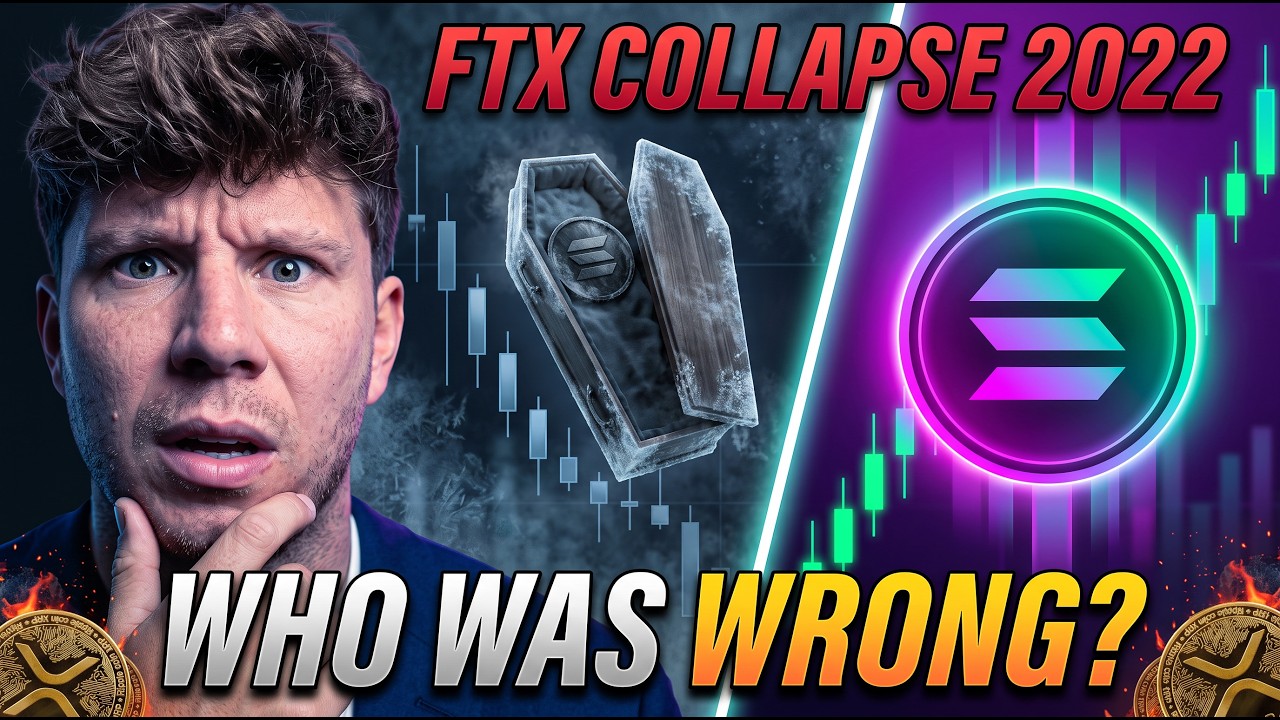
The FTX collapse in November 2022 did the most damage, because Solana was so closely tied to Sam Bankman-Fried. FTX and his trading firm, Alameda Research, were deeply involved in the ecosystem. Bankman-Fried also created Serum, one of Solana’s main trading platforms.
According to the video, Fortune reported that FTX’s balance sheet showed nearly a billion dollars worth of SOL. In one week the token fell 58%, leaving it down 93% from its all-time high.
In an interview clip, Toly says his biggest fear was that founders building on Solana had kept their funds on FTX, which would have wiped out the ecosystem’s runway. He says it turned out to be a small percentage overall, but some teams, including Backpack, had just raised money and had their funds locked on FTX.
There was a second danger. Serum’s upgrade keys, which control its code, were held by FTX, and FTX had just been hacked. Within days, developers copied Serum’s code into a new community-run version called OpenBook, cutting FTX out.
What turned the mood around?
The recovery came from a series of small events during the bear market, not a single rescue. The video lists them in order:
- December 2022: Toly kept posting, calling the downturn an opportunity to build the next generation of decentralized exchanges and noting that Binance was also built in a bear market.
- Christmas Day 2022: A meme coin called Bonk was handed out for free, with half the supply going to Solana users, from NFT holders and traders to developers and artists. The video calls it silly, but says it gave a depressed community something to talk about.
- Four days later: Ethereum co-creator Vitalik Buterin publicly wished Solana well. Many credit that post with changing the mood. Toly says he is “50/50” on that.
- April 2023: Backpack, the team whose money was stuck on FTX, launched the Mad Lads NFT project. It was popular enough to overload the launch. The Helium blockchain also moved to Solana, three days apart from Mad Lads.
Toly says that period was when he knew the design worked. The localized fee markets held up, and users, content and developers were active without much support from him. He also says Backpack’s lack of runway forced it to stay small and work harder.
What has changed since?
The video describes several steps that strengthened Solana after 2023:
- 2024: The FTX bankruptcy estate sold much of its SOL to two investment firms in private deals, with most of it locked up for years, so it wasn’t sold on the open market.
- October 28, 2025: A Bitwise fund began trading on the NYSE. Bitwise called it the first US fund to hold SOL directly. The fund also stakes its SOL, locking it up to help secure the network in exchange for rewards.
- December 2025: Firedancer, a second, independent version of Solana’s validator software built by Jump Crypto, went live on the main network. Validators are the computers that process and confirm transactions. With two separate versions running, a bug in one is less likely to take down the whole network.
- August 2026: According to Solana Compass, the network had gone 30 months, more than 900 days, without a network-wide outage.
The next upgrade, Alpenglow, is designed to cut the time it takes for a transaction to become final to a fraction of a second. As of late September 2026 it was running on test networks, and developers said they won’t rush it onto the main network. Given Solana’s history, the video calls that the right instinct.
What do critics still say about Solana?
The video notes that Solana still has critics and that trust takes time to rebuild after major outages. On August 12, 2026, a problem at a data center company knocked nearly 30% of the network’s stake offline for about half an hour. The network kept running but stalled at points.
Other criticisms the video raises:
- Running a Solana validator requires serious hardware, which some say limits who can take part.
- Much of Solana’s activity comes from meme coins, which some see as a casino rather than a financial system. Supporters say that activity shows people use the network and that it kept running under the load. The video’s view is that both can be true.
Toly always saw trading as the key use case: a fast, open, public place where markets can run with transparent rules. Whether that becomes Solana’s main use, or meme coins and apps take over, will be decided by its users.
Three lessons for judging any coin
The video closes with a framework that applies beyond Solana:
- Separate the technology from the people around it. Solana’s worst crisis came from its ties to FTX, not a bug in its code. When a coin’s biggest backers fall, ask whether the network itself is broken or just its friends.
- Check the repair record, not just the failure record. Solana’s outages were real, and so is the streak since. Before writing off a coin for past problems, or trusting it because of a good run, look at what was actually fixed.
- Watch who stays in a bear market. When Solana was at its lowest, builders kept building. Backpack still shipped Mad Lads with its funds stuck on FTX. If the builders leave, the video says, that is the real warning sign.
The suggested habit: pick one coin you hold, look up the worst thing that ever happened to it, and see how the team responded.
What to watch next
For Solana specifically, the video points to a few things to follow. Watch whether Alpenglow moves from test networks to the main network, and how carefully. Track whether the run without a network-wide outage holds, and how many validators adopt Firedancer. And watch whether usage shifts toward trading and apps or stays weighted toward meme coins. The video argues these are worth more attention than any single headline.
Frequently asked questions
Why did Solana crash in 2022?
According to the video, Solana was closely tied to Sam Bankman-Fried, FTX and Alameda Research. When FTX collapsed in November 2022, SOL fell 58% in one week and was down 93% from its all-time high. Fortune reported that FTX's balance sheet showed nearly a billion dollars worth of SOL.
When was Solana's last full network outage?
The video says the last full outage was on February 6, 2024. By August 2026, citing Solana Compass, the network had gone 30 months, more than 900 days, without a network-wide outage.
What is proof of history on Solana?
Proof of history is Solana's shared clock. It gives the network an agreed order of events, so computers don't have to keep checking with each other about what happened when. Founder Anatoly Yakovenko based it on a radio technique called time division multiple access, where towers take turns using a clock.
What is Firedancer?
Firedancer is a second, independent version of Solana's validator software, built by Jump Crypto. The video says it went live on the main network in December 2025. As more validators run it, a bug in one version becomes less likely to bring the whole network down.
What is Solana's Alpenglow upgrade?
Alpenglow is an upcoming upgrade designed to cut the time it takes for a transaction to become final to a fraction of a second. As of late September 2026 it was running on Solana's test networks, and developers said they won't rush it onto the main network.
Education and commentary only, not financial advice. Crypto is volatile and you can lose money. Do your own research and speak to a qualified advisor before making investment decisions. Figures and quotes are as reported in the video on October 13, 2026 and may have changed since.