XRP Ledger Explained: How the XRPL Works in Plain English
How the XRP Ledger works: validators and the UNL, accounts, burned fees, reserves, tokens and the built-in DEX and AMM, explained in plain English for holders.
Video coming soon.
Key takeaways
- XRP Ledger validators agree on each new ledger version by consensus, not mining. A validated ledger is final.
- Each server picks the validators it trusts, its Unique Node List. Most use a default list published by the XRP Ledger Foundation and Ripple.
- Transaction fees are destroyed, not paid to validators. The standard minimum is 10 drops, or 0.00001 XRP.
- Reserves are locked, not spent: 1 XRP per account and 0.2 XRP per object, such as a trust line or an open offer.
- The ledger has had a built-in exchange since 2012 and AMM pools since March 2024. Anyone can issue a token, so always check the issuer.
The XRP Ledger (XRPL) is a public, open-source blockchain, running since 2012, that XRP lives on. Validators agree on a new version of the ledger every few seconds without mining. The ledger’s rules decide how fast payments settle, what an account costs to open, who can freeze what, and how tokens are issued.
This guide covers the mechanics: how validators agree, what an account is, why fees are burned, how reserves work, how tokens are issued, and how the built-in exchange and AMM pools trade. For the basics of XRP versus Ripple versus the ledger, start with what XRP is and how it works. Facts here come from the official documentation at xrpl.org.
What is the XRP Ledger?
The XRP Ledger is a decentralized, open-source blockchain that has run continuously since 2012. Every server on the network keeps an identical copy of the ledger’s data. The network moves forward in ledger versions: each version holds the current state of every account, the transactions applied since the last version, and some metadata.
The reference server software is open source, and anyone can download it, compile it and run it. Ripple employs engineers who contribute to it, but the xrpl.org FAQ says Ripple does not own or control the ledger.
How do validators agree on transactions?
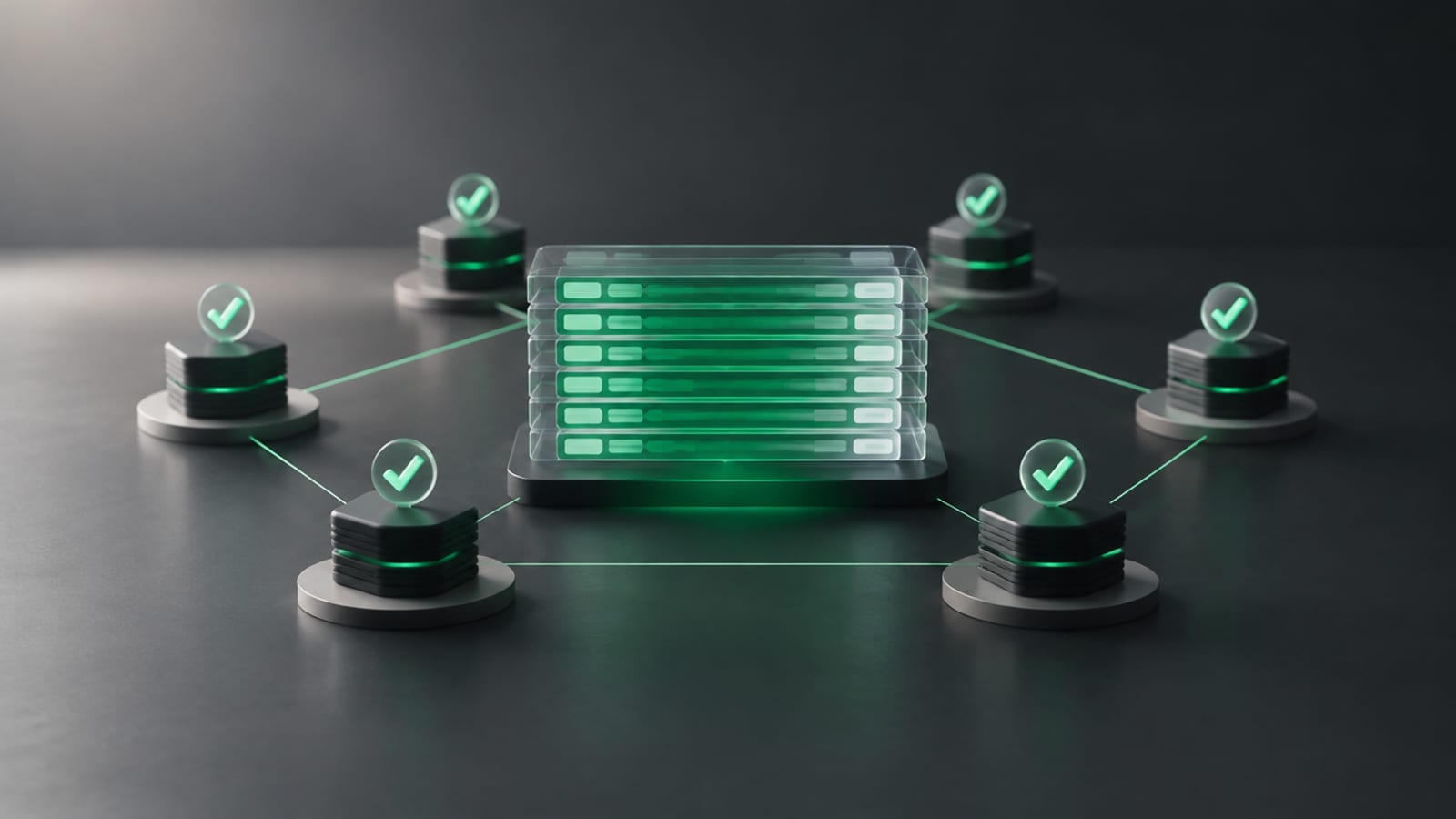
Validators agree through a consensus process with no mining. A validator is a server configured to vote on which transactions go into the next ledger version. They exchange proposals over several rounds, adjusting toward what the validators they trust are proposing, until they agree. Each server then applies the same transactions in the same order and checks that everyone got the same result. That ledger version is then validated and final.
According to xrpl.org:
- As long as fewer than 20% of a server’s trusted validators are faulty, consensus continues.
- Confirming an invalid transaction would require more than 80% of trusted validators to collude.
- Between those levels, the network stops making progress rather than confirming something wrong.
- A new ledger version closes roughly every 3 to 5 seconds.
The UNL. Each server chooses which validators it trusts. That list is its Unique Node List (UNL). By default, servers use two recommended lists, one published by the XRP Ledger Foundation and one by Ripple, which are usually very similar. Operators can change their list, but xrpl.org notes that a list very different from everyone else’s raises the risk of a fork. As of October 2026, the xrpl.org FAQ says the network has more than 150 validators, with more than 35 on the default list, and that Ripple runs one of them. We cover the decentralization debate in XRP Ledger validators and the UNL.
What is an XRP Ledger account?
An account is an address with an XRP balance, a transaction history and keys that authorize transactions. Addresses typically start with “r”.
- Creating one. There is no “create account” transaction. An account comes into existence when someone sends enough XRP to a new address to meet the account reserve, 1 XRP as of October 2026.
- Keys. Whoever holds the secret key controls the account. An account can also add a regular key that can be rotated, or a signer list that requires several keys to approve a transaction.
- Sequence numbers. Each transaction carries a number that must match the account’s current one, so transactions apply in order and only once.
- Deleting one. An account can be deleted and most of its XRP sent elsewhere. The deletion burns a special fee of at least 0.2 XRP, and the account must have no blocking objects such as open escrows.
Why are fees burned?
Fees on the XRP Ledger are destroyed to stop spam, not to pay anyone. The standard minimum transaction cost is 10 drops, which is 0.00001 XRP (1 XRP is 1,000,000 drops). xrpl.org states that “the XRP is irrevocably destroyed.”
The cost rises when the network is under heavy load. Each server refuses to relay transactions that pay less than its current threshold, which makes deliberately overloading the network expensive. Some transaction types cost more, such as creating an AMM pool.
How do reserves work?
A reserve is XRP your account must hold but can’t spend. It exists because every server stores every account and object indefinitely, so taking up space has a price.
| Reserve | Amount on Mainnet (October 2026) | What it covers |
|---|---|---|
| Base reserve | 1 XRP | The account itself |
| Owner reserve | 0.2 XRP per object | Each trust line, open offer, escrow, check, payment channel, signer list, NFT page and similar object |
Reserves are not fees. When you remove an object, such as closing a trust line, its 0.2 XRP becomes spendable again. Validators can change reserve levels through a fee voting process, which last cut them on December 2, 2024. Our trust line reserve explainer has the history.
What can you hold on the ledger besides XRP?
Anything someone issues as a token. The ledger supports three types:
- Trust line tokens, the original standard, used for stablecoins and most tokens today. To hold one, your account opens a trust line to a specific issuer.
- Multi-purpose tokens (MPTs), a newer standard that xrpl.org says was designed for greater efficiency and ease of use, based on lessons from trust line tokens.
- NFTs, for unique items.
Anyone can issue a token and give it any currency code. A token called “USD” from an unknown account is not a dollar. Issuers can also choose settings such as freezes and clawback for their tokens. Those settings never apply to XRP itself.
How do the built-in DEX and AMM work?
The ledger has its own exchange built into the protocol, so you can trade without sending funds to a company. It works in two ways.
| Order book | AMM pool | |
|---|---|---|
| Live since | Ledger launch in 2012 | March 22, 2024 |
| How you trade | Place an offer, which works like a limit order | Swap against a pool that holds two assets |
| Who provides the price | Other traders’ offers | A formula based on the pool’s balances |
| Who earns | Nobody earns a fee from the order book | Liquidity providers share a trading fee of 0% to 1%, set by their vote |
The two are connected. A payment or offer can fill through the order book, an AMM pool or both, whichever gives the better rate. When you trade one token for another, the ledger can also auto-bridge through XRP if that is cheaper. Trades execute when a ledger closes, every few seconds.
Liquidity providers who deposit into a pool receive LP tokens, which represent their share of the pool and their votes on its fee. Providing liquidity carries its own risks, including losses when the two assets’ prices move apart.
A checklist for using the XRP Ledger directly
- Keep the reserve in mind. 1 XRP for the account, plus 0.2 XRP for every trust line or open offer.
- Check every issuer address character for character against the issuer’s own website before opening a trust line or buying a token.
- Close what you don’t use. Removing an unused trust line or cancelling an old offer frees its reserve.
- Read the pool before you deposit. Check which two assets it holds and its current trading fee.
- Send a small test first. Validated transactions are final.
- Never share your secret key or recovery phrase. No validator, exchange or support team needs it.
What to watch next
The ledger changes through amendments: new features that turn on only after more than 80% of trusted validators support them for two weeks straight. Following which amendments are proposed and enabled, as with the 3.4.0 upgrade, is the most reliable way to know what the ledger can do next. The status of each one is listed publicly at xrpl.org.
Sources
Sources
- AMM Status Update, XRP Ledger Foundation (xrpl.org)
- Consensus Protocol, XRP Ledger Foundation (xrpl.org)
- Unique Node List (UNL), XRP Ledger Foundation (xrpl.org)
- XRP Ledger: Reserves, XRP Ledger Foundation (xrpl.org)
- Transaction Cost, XRP Ledger Foundation (xrpl.org)
Frequently asked questions
What is the XRPL?
XRPL is short for XRP Ledger, a public, open-source blockchain that has run since 2012. Its native asset is XRP, and it also supports issued tokens, NFTs, a built-in exchange and AMM pools.
How does the XRP Ledger reach consensus?
Validators exchange proposals about which transactions to include until they agree, then sign the result. According to xrpl.org, consensus continues as long as fewer than 20% of a server's trusted validators are faulty.
Do XRP Ledger validators earn rewards?
No. Fees are burned rather than paid to anyone, and there is no block reward. According to the xrpl.org FAQ, anyone can run a validator, and doing so requires no fees or XRP.
What is a UNL on the XRP Ledger?
A Unique Node List is the set of validators a server trusts not to collude. By default, servers use lists published by the XRP Ledger Foundation and by Ripple, but each operator can change theirs.
Does the XRP Ledger have a DEX?
Yes. The ledger has had a built-in order-book exchange since its 2012 launch, and automated market maker pools were added when the AMM amendment went live on March 22, 2024.
Education and commentary only, not financial advice. Crypto is volatile and you can lose money. Do your own research and speak to a qualified advisor before making investment decisions. Figures are as of October 25, 2026 and may have changed since.