
ALGO vs XRP in 2017: Algorand's $3B USDC and $29,000 Fee Gap
The video says Algorand carried $3 billion in USDC in early 2026 but earned about $29,000 in fees. What that means for ALGO and the XRP 2017 comparison.
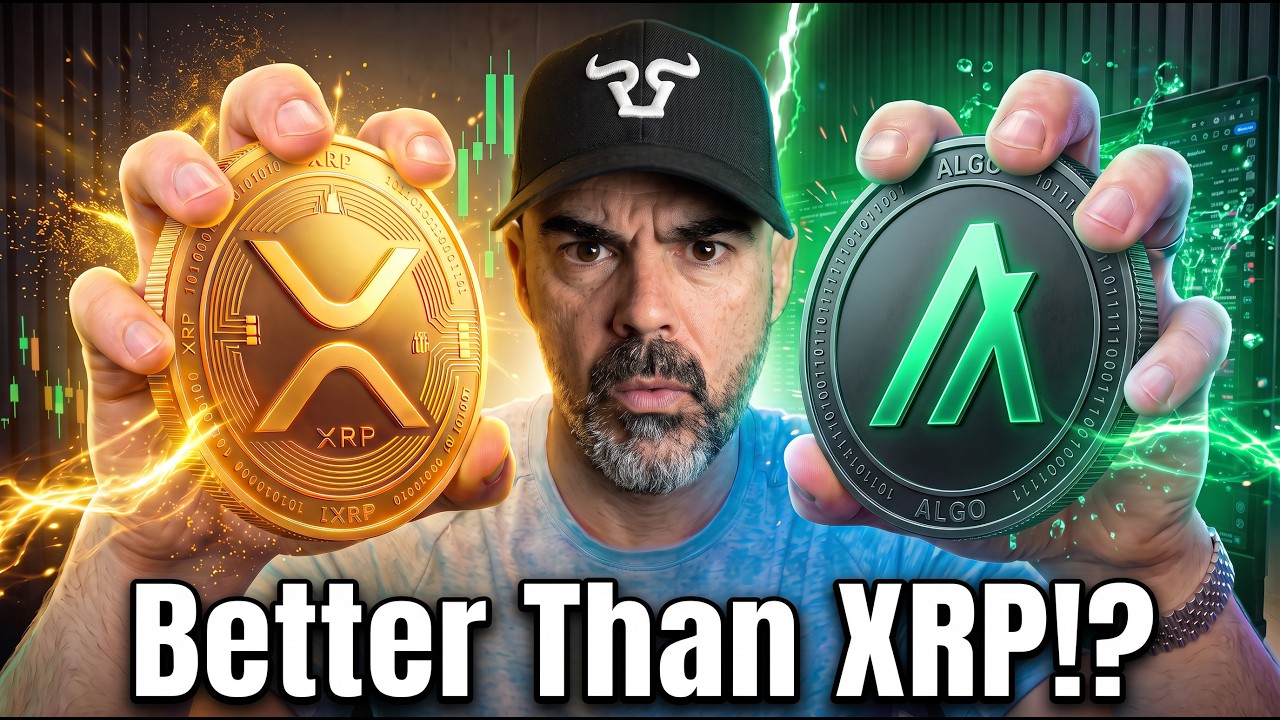
Key takeaways
- According to the video, $3 billion in USDC crossed Algorand in the first half of 2026, but the network collected only about 277,000 ALGO (roughly $29,000) in fees.
- The video says staking rewards of about 40 million ALGO over the same six months far outweighed fees, which covered less than 1% of them.
- Per the video's math, ALGO at $1 would mean a market value of about $9 billion, roughly a 10x from its end-of-October price.
- The video says XRP's 2017 run came as the whole crypto market grew about 30 times, so the comparison depends on a similar market-wide wave.
- The video's three signals to watch: the Algorand Foundation's selling, who brought October's new stablecoins, and whether quantum upgrades ship by the end of 2027.
Algorand (ALGO) trades under 10 cents, and the video puts its market value at about $873 million, close to XRP’s size on April 1, 2017. The video says Algorand carried $3 billion in USDC in the first half of 2026 but collected only about $29,000 in fees. It argues a repeat of XRP’s 2017 run is far from automatic.
That gap matters to anyone holding a so-called bank coin, including XRP, HBAR, XLM or Quant. Real usage on a network does not always reach the coin’s price. The fee bill is one of the clearest ways to see whose pocket the value lands in first.
Why are people comparing ALGO to XRP in 2017?
People compare ALGO to XRP in 2017 because the two coins share a pitch and a starting size. Both aim to be payment rails for real money.
According to the video, XRP traded at about 2 cents on April 1, 2017 and was worth about $818 million in total. That is roughly where ALGO sits today. XRP reached its all-time high of $3.84 on January 4, 2018, according to CoinMarketCap. The video says that by January 7, 2018, XRP was worth about $130 billion, around 160 times more.
The video points out what usually gets left out. It says the entire crypto market went from about $26 billion to more than $800 billion over the same stretch, roughly 30 times over. XRP was also one of the first coins with a real bank story. In 2026, ALGO is one of dozens of coins making a similar case, so it does not get noticed just for showing up.
The video’s conclusion is that the 2017 math only works if the whole market gets a similar wave again. Even then, ALGO would need something of its own to stand out.
How did Algorand start, and why did ALGO crash?
Algorand was founded by Silvio Micali, an MIT professor who won the Turing Award, often described as the Nobel Prize of computer science. The video says ALGO first sold at $2.40 in June 2019 and hit its all-time high of $3.56 the next day, so it launched right at its peak. Price trackers differ slightly on the exact peak.
The video says ALGO, like many 2019 launches with most of their supply still locked, fell about 94% in three months as new coins kept unlocking. According to the video, fewer than 1 in 20 of the 10 billion coins were trading at the time. A small slice set the price while the rest arrived over years. Anyone who bought near that top is still down more than 97%. For more on that history, see the Bullrunners breakdown of why Algorand is down 90% and where quantum fits.
2026 brought more setbacks:
- March: the Algorand Foundation cut a quarter of its staff.
- July 29: ALGO hit the lowest price in its history.
- August 31: William Herkelrath took over as CEO.
- Within about six weeks: the chief technology officer resigned, and so did chief marketing officer Marc Vanlerberghe, on October 14.
What has changed for ALGO since 2019?
The video argues that the main thing that crushed ALGO in 2019, unlocking supply, is mostly gone. It says about 91% of all ALGO that will ever exist is already in circulation.
The video also lists several developments in Algorand’s favor:
- Regulatory label: the SEC’s guidance on March 17, 2026 listed ALGO as a digital commodity.
- Stablecoin traffic: the video says the $3 billion that crossed Algorand in the first half of 2026 was all USDC, the stablecoin Circle issues. It says June alone set a record at $751 million. Algorand’s own report describes June as the highest month of the first half.
- Institutional access: in August, Flow Traders, described in the video as one of Europe’s biggest trading firms, began offering ALGO to institutions around the clock.
- Aid payments: the UN refugee agency has paid more than $35 million to over 625,000 Afghans returning home through HesabPay, a payments app built on Algorand.
- New deposits: according to the video, stablecoins on Algorand rose from about $49 million to about $107 million in October, and no one has said who brought them.
- AI agent payments: the video says that in October, 115 teams finished a contest by putting tools live on Algorand that AI agents pay for in USDC, one request at a time.
Why did $3 billion in USDC earn only $29,000 in fees?
Algorand’s fees are tiny by design. A basic transaction costs one-thousandth of an ALGO, so at roughly 10 cents per ALGO, about 10,000 transactions pay a combined $1.
According to the video, the network processed 233 million transactions in the first half of 2026 and collected about 277,000 ALGO in fees. That is roughly $29,000, or about $160 a day for a network moving billions. The video adds that the dollars moving across Algorand belong to Circle, so all that traffic only needs small amounts of ALGO to pay its fees.
Over the same six months, people who stake ALGO were paid about 40 million ALGO in rewards. By the video’s math, fees covered less than 1% of that. The Foundation’s own transparency report also lists accounts used for structured selling, meaning planned sales of ALGO.
Algorand’s leadership has acknowledged the problem. On Algorand’s own show in September, Herkelrath said the Foundation needs “to make us net buyers rather than net sellers.” The host of that episode asked how the Foundation can become sustainable without selling ALGO, which at some point it cannot keep doing. Bullrunners asks the same value-capture question about other projects in its test of whether bank money ever reaches the token.
Is Algorand more quantum resistant than XRP?
According to the video and an outside ranking Algorand cites, Algorand has shipped more quantum-resistant features than XRP so far, but its work is not finished. A large enough quantum computer could break the signatures that protect most crypto wallets today, including Bitcoin, Ethereum and XRP wallets.
The video says Algorand has signed part of its system with quantum-resistant cryptography since 2022. In August, it let regular users open quantum-resistant accounts. Herkelrath told Yahoo Finance in October that his answer to people who say AI is a bigger threat is “why do it twice?” Algorand’s head of product called quantum migration “security debt” that grows every quarter it goes unfixed.
The video says Algorand’s core is not fully quantum-proof yet. It says the roadmap aims for broad protection by the end of 2027, and that Algorand’s product team cites estimates that a capable quantum computer could arrive as early as 2029. Algorand’s own explainer video cites an outside ranking that places it a tier above XRP on post-quantum readiness. The video calls that the kind of claim XRP will eventually have to answer. For the XRP side, see the quantum deadline for XRP wallet signatures.
What would ALGO at $1 or $8.74 take?
The video’s price math works as scenarios, not predictions:
| Target | Approximate market value | Move needed from end of October |
|---|---|---|
| $1 | About $9 billion | About 10x |
| $3.56 (all-time high) | Not stated | About 37x |
| $8.74 | Equal to XRP’s end-of-October market cap | More than double ALGO’s best-ever price |
The video notes that even at $1, ALGO would be worth only about a ninth of XRP’s end-of-October value. It also says ALGO traded above $1 in its first week in 2019, so a dollar is not new territory for the coin.
What risk questions does the video raise?
The video’s closing section is about position size and risk rather than whether to own ALGO. It notes that by November, ALGO was down about 46% over the past year and XRP about half. It argues that a coin under 10 cents is not automatically cheap, as ALGO’s own history shows.
Its framework comes down to a few questions a holder can ask about any speculative coin:
- How big is the position before thinking about timing? The video argues size comes before entry. It says people who put everything into one coin in a falling year often spend the next year trying to get back to even.
- Does the coin do a different job from the rest of the portfolio? The video points out that ALGO and XRP fell together over the past year, so holding both spreads risk less than it looks. Bullrunners covers this in whether holding many altcoins really protects you.
- Is there a plan for a rally before it starts? The video says no one can tell how long a run will last.
- What does the network earn, and who receives it? The video’s core lesson is that a chart of past runs means little without the fee bill underneath it.
What to watch on Algorand next
The video names three signals:
- Foundation selling. Whether the Algorand Foundation moves from net seller to net buyer, visible in the structured selling line of its transparency reports. The video calls this the only version of the story where traffic finally reaches the coin.
- October’s new stablecoins. Who brought the roughly $58 million that arrived in October. The video says it could be a large client testing the network or one trader moving money around.
- The quantum deadline. Whether Algorand’s core goes quantum resistant by the end of 2027. The video says that if the upgrade ships, the edge becomes real. If it slips, the edge shrinks.
For any coin pitched as “the next XRP”, the broader lesson from the video is to check what the network actually earns, and who receives it, before looking at the price chart.
Sources
Frequently asked questions
Can ALGO reach $1?
The video does not predict it. It calculates that ALGO at $1 would be worth about $9 billion, roughly 10 times its end-of-October price. It argues that would likely need a market-wide rally plus something specific to Algorand.
Is buying ALGO now like buying XRP in 2017?
The video says the two are similar in market value: ALGO at about $873 million versus XRP's roughly $818 million on April 1, 2017. But it notes XRP's run came as the whole crypto market grew about 30 times. XRP was also one of the few coins with a bank story then, while ALGO is one of dozens today.
How much did Algorand earn in fees in 2026?
According to the video, Algorand processed 233 million transactions in the first half of 2026 and collected about 277,000 ALGO in fees. That is roughly $29,000, or about $160 a day.
Is ALGO a commodity?
The SEC's interpretive guidance issued on March 17, 2026 lists ALGO as a digital commodity.
Is Algorand quantum resistant?
Partly, according to the video. Algorand has signed part of its system with quantum-resistant cryptography since 2022 and let regular users open quantum-resistant accounts in August. Its core is not fully quantum-proof yet, and its roadmap targets broad protection by the end of 2027.
Full video transcript
From the video's captions, lightly formatted. Captions can mishear names and numbers, so check figures against the article above.
Algo trades under 10 cents right now and just like XRP, its goal is to become the rails real money moves on. Circle's dollar already runs on it and one of Europe's biggest trading firms now offers it to institutions around the clock. So, people have been saying one ALGO can hit $1 and that buying it now could be like buying XRP on April 1st of 2017 before it went from 2 to $3.84. And in dollars, it's close because the whole ALGO market is worth about $873 million. Almost what all of XRP was worth that exact day.
But in the first half of the year, $3 billion in stable coins moved across Algarand and the whole network collected about $29,000 in fees for carrying it. And on July 29th, Algo hit the lowest price in its history. That's why on October 11th, with Algo at 12.4, we said on the channel, if you want some ALGO, probably buy it slowly while it's quiet, not on the day in the news. By the end of October, it was near 9.6. So, if you're holding any coin, betting on the banker coin story like XRP, HAR, XLM, or Quant, watch this because that $29,000 tells you whether all that traffic ever turns into a higher price for the coin and whose pocket it lands in first.
So, if you're feeling bullish, like this video and smash that subscribe button. We're on our way to 400,000 subscribers and we can't get there without you. And if you're going to become the first millionaire in your family tree, confirm that by commenting 777 down below. And also, I'm giving away my 2026 altcoin trading strategies and altcoin research briefing for free to everyone who follows us on Instagram, Bullrunners HQ. The official link will actually be in the description down below this video.
Let's run it.
[music]
All right, bull runners. I'm Ryan Huggin, aka at WinW with Ryan. Welcome back to the channel. To see why that 2017 comparison is trickier than it sounds, you have to go back to how Algo started. Algo was started by Sylvia Macalli, an MIT professor who won the Turning Award, which is basically the Nobel Prize for computer science.
And in 2019, it launched as the chain that was supposed to fix everything wrong with crypto. It sold its first coins at $2.40 in June of 2019 and hit its all-time high of $3.56 the very next day. So, Algo already had its hype top. It launched right at the peak. And like most coins that launched in 2019 with most of their supply still locked, it crashed about 94% in 3 months as new coins kept unlocking.
Anyone who bought near that top is still down more than 97%. At $1, ALGO would only be worth about $9 billion, around 10 times its end of October price, and it already traded above a dollar in its first week back in 2019. The bad news kept coming in 2026, too, because the Algorand Foundation cut a quarter of its staff in March. Algo set its new all-time low in July, and right after a new CEO took over at the end of August, the chief technology officer and the head of strategy and marketing both resigned within about 6 weeks. That's the strongest case against ALGO and a lot of holders have already given up on it, which is a fair reaction to five years of watching it bleed since its 2021 high.
What that case misses is that that thing that crushed ALGO in 2019 is mostly gone. Back then, fewer than 1 in 20 of the 10 billion coins traded. So, a sliver set the price while the rest kept arriving for years. And today about 91% of all ALGO that will ever exist is already out there. The rules change too because the SEC's guidance on March 17th listed ALGO as a digital commodity, which is the label that every coin in America wants and most of them still don't have.
The network also kept working through all of it. And the people using it in 2026 aren't crypto tourists. Remember that $3 billion that crossed Algarand in the first half of the year? All of it was USDC. the stable coin circle issues and June alone set a record at $751 million. In August, Flow Traders, one of the biggest trading firms in Europe, started offering ALGO to institutions around the clock.
And the use most people have never heard of is the UN refugee agency, which has paid more than $35 million to over $625,000 Afghans returning home through Hezab Pay, a payments app that runs on Algarand. In October, the stable coins sitting on Algarand jumped from about 49 million to about 107 million. And nobody has named who brought them. Some of the newest traffic doesn't even come from people. In October, 115 teams finished a contest by putting tools live on Algarand that AI agents pay for in USDC, one request at a time, which is exactly the kind of tiny payment a bank account was never built to handle.
So, the usage is real. And the problem is what the network charges for it. A basic transaction on Algarand cost 1,000th of an algo, which at a price of near 10 cents means about 10,000 transactions pay a combined $1. Over the first half of 2026, the network processed 233 million transactions and collected about 277,000 ALGO and fees, which is that $29,000. That's about $160 a day for a network moving billions.
And the dollars on it belong to Circle. So all of that traffic only ever needs a few crumbs of ALGO to pay its fees. Meanwhile, people who stake ALGO were paid about 40 million ALGO in rewards over those same 6 months. So the fees covered less than 1% of it. And the foundation's own report still lists accounts it uses for structured selling.
The new CEO, William Herkwrath, talked about flipping that on Algoran's own show in September.
We need to shift that narrative. We need to find a way to to make us net buyers rather than net sellers.
Earlier in the same episode, the host, the foundation's marketing chief, until he resigned in October 14th, asked how the foundation stays alive without selling ALGO because at some point it can't keep selling. How do we ensure that the foundation uh becomes sustainable uh without having to um uh sell algos which at some point we cannot do anymore.
So the people running Algorand know exactly where the gap is and closing it is the whole job for the next few years. Until they do the real question is whether buying Algo here is anything like buying XRP in 2017. On April 1st, 2017, XRP traded at about two cents and the whole thing was worth about $818 million, right where Algo sits right now. By January 7th, 2018, XRP was worth about $130 billion, around 160 times more. And that's the move people have in mind when they think they make the 2017 comparison.
What usually gets left out is that XRP wasn't doing it alone because the entire crypto market went from$26 billion to more than 800 billion in that same stretch about 30 times over. XRP was also one of the first coins with a real bank story then. And in 2026, Algo is one of dozens of coins with the same pitch. So, it doesn't get noticed just for showing up the way XRP did. So the 2017 math only works if the whole market gets a wave like that again and Algo would need something of its own to stand out once it does.
The thing that Algarand bets itself on is the quantum computer because a big enough one could crack the signatures that protect most crypto wallets today including bitcoins, ethereums and XRPs. Algoran has been signing part of its system with quantum resistant cryptography since 2022 and in August it let regular users open quantum resistant accounts. Harkle Wrath told Yahoo Finance in October why he won't wait.
So folks tell me quantum resistance isn't our number one problem. We have this AI threat. This is where all we're we're stressed out about it. And then my response to them is simply well why do it twice? And the companies that used to ignore him now come to Algarand on their own.
People who didn't really care too much are picking up our phone calls now. Um,
Algarand's head of product went further on October 27th and called quantum migration security debt that grows every quarter. Nobody fixes it. Algoran's core system isn't fully quantum proof yet and its own roadmap aims for broad protection by the end of 2027. Still, if Quantum Fear ever becomes a headline, the whole market trades on, Algoran is one of the few chains that already ships something. And that's the one real edge it has over coins it gets compared to.
If you hold XRP, that race matters to you, too, because Algarand's own explainer video now cites an outside ranking that puts Algarand a tier above XRP on quantum readiness. And that's the kind of claim XRP will have to answer one day.
Algarand is ranked tier A for postquantum readiness by tectonic, placing it ahead of most major blockchains.
So in dollars, Algo is the size XRP was on April 1st, 2017. But it's one of dozens of coins with that bank story now. And it still has to prove people need to buy the coin. So what would $1 actually take? Algo at $1 would be worth $9 billion.
And that's still only about a ninth of what XRP was worth at the end of October. Getting back to that old high of $356 would take about 37 times. And matching XRP's end of October market cap would need about $8.74 in Algorand, which is more than double the best price it has ever printed. So $1 needs about a 10x with the whole market behind it. and flipping XRP needs ALGO to more than double the best day that it ever had. So, there are three things that we are watching on ALGO from here.
The first is whether the foundation goes from net seller to net buyer because that's the only version of this story where all that traffic finally reaches the coin. So, we're keeping an eye on that structured selling line in its reports. The second is who brought those new stable coins in October? Because $58 million showing up in a month with no name attached could be a big client testing the water or one trader moving money around. The third is whether the quantum upgrade ships by the end of 2027.
Because if Algoran's core goes quantum resistance while the fear grows, the edge becomes real. And if the deadline slips, the edge shrinks with it. Algoran's own product team says some estimates put a computer like that as early as 2029. So the end of 2027 is the date that we've got circled. Until then, the bigger question is how much room a coin like ALGO should get in your plan at all.
The 2017 play was simple. Buy the cheapest bank coin you can find and forget about it. And in a market lifting everything 30 times, it worked. A coin under 10 cents isn't automatically cheap, though, and Algo's own history proves it. Now that we're into November, Algo was down about 46% over the past year and XRP about half.
So, this is a market for building slowly and keeping cash ready. And people who put everything into one coin in a year like this usually spend the next one waiting to get it back to even. Pick the size before you pick the entry. So, ALGO stays a small piece of a portfolio built from coins that do different jobs. Spread your buys over quiet days like the one that we flagged back in October and then set your takerit price before the next wave starts because nobody can tell you how long a run lasts.
Algo and XRP also fell together over the past year. So, holding both spreads your risk less than it looks. and the rest of the plan should hold coins doing completely different job. And if this cycle does turn into a 2017 style wave, the people who do the best will be the ones who were spread across a few coins before it started. That's exactly why a coin like Algo only ever gets a small slice of the plan. However good the 2017 story sounds, and it's why we made the call we did on it last month.
On October 11th, while Algo Videos called for $1, we told you to take a look at it and get into it slowly and not on the day it's in the news. And it's down more than 20 cents then. And that was financial education, not financial advice. If you ever bought a coin because it was cheap per coin and called early and then watched it fall another 20%, it's usually because you were shown the 2017 chart without the $29,000 fee bill underneath it. That fee number never makes the thumbnail and you can't dig through every report on every coin by yourself.
Inside the private intelligence network we run, our research team goes through reports like the one that we showed you that $29,000 before we make any call on a coin. And members see the levels that we watch weeks before a video goes live on the YouTube channel. We also have weekly live coaching on how big a position could be and when if not to take profit. And members learn to keep their coins in their own wallets instead of leaving them on an exchange. And they do all of this in a group of other serious investors who've stopped chasing cheap coins and started building portfolios that can survive a bad year.
When the next coin under 10 cents gets called the new XRP, the people who come out ahead will be the ones who checked what the network earns before they decided how much it gets. Every new member in our system gets one-on-one time with our coaches, so we only take a small number each month. Click the first link in the description below. Watch the free briefing and if it makes sense, book a call and then we'll go through what you hold and we'll tell you whether we can help you or not. And as always, you know what to do.
Stay bullish.
Education and commentary only, not financial advice. Crypto is volatile and you can lose money. Do your own research and speak to a qualified advisor before making investment decisions. Figures and quotes are as reported in the video on November 13, 2026 and may have changed since.


