Clarity Act Failed 49-50 in the Senate: Is the Crypto Bill Dead?
The Clarity Act lost a Senate vote 49-50, but a motion to reconsider keeps it alive. How it compares with the GENIUS Act and what it means for XRP.
Key takeaways
- The Clarity Act failed a Senate cloture vote 49 to 50 on September 15, 2026, but a motion to reconsider was entered, so the bill is not dead under Senate rules.
- Senator Thom Tillis switched his yes to a no only so he could file that motion, because Senate Rule XIII requires it to come from the winning side or a senator who did not vote.
- The GENIUS Act lost the same kind of vote 48 to 49 in May 2025, passed 66 to 32 eleven days later, and became law 71 days after the failed vote.
- Unlike 2025, the November 3, 2026 midterms shrink the calendar, and only Majority Leader John Thune can decide whether the revote is scheduled.
- XRP's digital commodity label comes from a joint SEC-CFTC interpretation, not a law, so a future agency could change it without Congress.
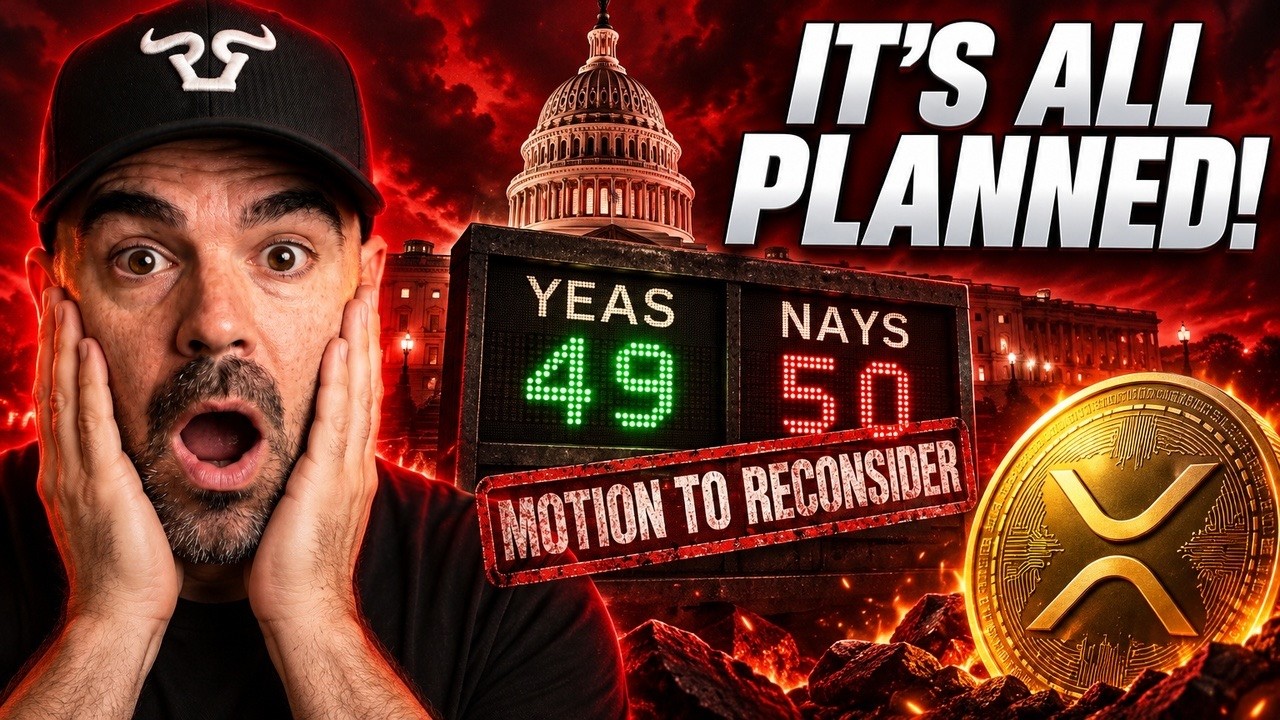
On September 15, 2026, the Clarity Act, formally H.R. 3633, the Digital Asset Market Clarity Act, failed a key Senate vote 49 to 50. Many headlines called the bill dead. The Bullrunners video argues that the public record tells a more complicated story.
The last crypto bill to reach this exact stage, the GENIUS Act stablecoin bill, also lost by one vote. It became federal law 71 days later. For XRP holders, the outcome matters because it decides whether the coin’s current legal label rests on an agency opinion or on a law passed by Congress.
What happened to the Clarity Act on September 15, 2026?
The Senate rejected a cloture motion on the Clarity Act by 49 to 50. Cloture is the vote that ends debate and lets the Senate move forward, and it needs 60 votes. This particular vote was on the motion to proceed, meaning whether the Senate would even start debating the bill.
The Senate’s press gallery floor log, quoted in the video, records that Senator Coons did not vote and that Senators Collins, Hawley, Moran and Tillis voted no. It then adds one important line: “Senator Tillis voted no in order to make a motion to reconsider.” Right after the result was announced, a motion to reconsider was made, and the chair said, “The motion is entered.”
Why did Thom Tillis change his vote to no?
Tillis, a Republican from North Carolina, switched his yes to a no so he could keep the bill alive. It looked like he had turned against it. He had not.
The reason is Senate Rule XIII. A revote can be requested by any senator who voted on the prevailing side or who did not vote. The prevailing side simply means the side that won. Because the no side won, a supporter who wanted a second chance had to be standing with the no votes when the roll call closed. That is what Tillis did.
The video’s point is that the vote reported as the end of the bill is the same vote that preserved a path back under the Senate’s own rules.
How does the Clarity Act vote compare with the GENIUS Act?
The two votes look almost identical on paper. The host says he pulled the Senate’s own vote files and counted.
| GENIUS Act (May 8, 2025) | Clarity Act (Sept 15, 2026) | |
|---|---|---|
| Result | Lost 48 to 49 | Lost 49 to 50 |
| Margin | One vote | One vote |
| Democrats voting yes | 0 | 0 |
| Opposition | 44 Democrats plus 2 independents | 44 Democrats plus 2 independents |
| Who moved to reconsider | Majority Leader John Thune | Senator Thom Tillis |
In 2025, Thune voted no on his own party’s bill. The press gallery log shows that at 2:27 p.m., seven minutes after the vote, he made a motion to reconsider.
Here is what happened next to the GENIUS Act:
- May 8, 2025: Cloture fails 48 to 49.
- May 19, 2025: The Senate votes again, 11 days later. It passes 66 to 32, with 16 Democrats voting yes.
- June 17, 2025: The GENIUS Act passes the full Senate 68 to 30.
- July 18, 2025: The president signs it into law, 71 days after the failed vote.
So a one-vote loss of this kind did not end the last crypto bill.
What is the Clarity Act fight actually about?
According to the video, the dispute is over ethics, not the crypto rules themselves. In both 2025 and 2026, the argument centered on the president and his family’s crypto ventures.
Senator Elizabeth Warren used the same two phrases both times. In May 2025, she said the president and the crypto industry were trying to “jam through” the GENIUS Act because it would “turbocharge” the stablecoin market. On September 15, 2026, a few hours before the Clarity vote, she opposed efforts to “jam through” the Clarity Act, saying it would “turbocharge” what she called the president’s corruption.
One of the Democrats who negotiated the bill, Senator Ruben Gallego, told CNBC before the vote that “the compromise we had was a good ethics compromise that would have bought a lot of Democrat votes.”
Republicans argue Democrats have already been accommodated:
- John Thune said the bill had been changed many times to address Democratic concerns and that it was “time to put up or shut up.”
- Senator Cynthia Lummis said Democrats secured 126 separate concessions and wrote more than half of the bill, which grew from 300 pages to 635.
- On enforcement, the final text lets state attorneys general enforce the ethics rules against federal officials, which the video presents as a response to Democrats asking for enforcement from outside the federal government.
The video’s summary: both sides describe the crypto part as essentially agreed. The fight is over who polices officials who own crypto, including the president. In 2025, a similar fight took 11 days to settle.
What is different this time?
The video is clear that one past case is a pattern worth watching, not a promise. Three things are different from 2025.
The calendar. In May 2025, no election was near. The midterms are on November 3, 2026. The video notes that as that date approaches, senators spend less time in Washington and neither party wants to hand the other a win. One news clip in the video said it was unclear whether market structure legislation had any future in this Congress, and that Democrats could hold majorities in one or both chambers after the midterms.
The swing votes have not moved. Senators Gallego, Gillibrand and Alsobrooks all voted yes to advance the GENIUS Act on May 19, 2025. All three voted no on September 15, 2026. The shape of the vote matches 2025, but the people who flipped it then have not flipped yet, and they have less time to do so.
Who controls the revote. In 2025, the majority leader himself moved to reconsider, which signaled he had already decided to bring the bill back. This time the motion came from Tillis, and whether it returns to the floor is Thune’s call alone. When the video was made, no second vote had been scheduled.
The video’s conclusion: the bill is not dead under Senate rules, and it is not safe either.
What does the vote mean for XRP’s legal status?
XRP already has a label, but it is weaker than a law. Many holders assume XRP’s status is waiting on the Clarity Act. According to the video, it is not.
On March 17, 2026, the SEC and the CFTC issued a joint interpretation, Release No. 33-11412, listing examples of digital commodities. XRP is the last name on that list. So both agencies currently call XRP a digital commodity, not a security.
The same document also says: “The interpretation in this release does not supersede or replace the Howey test, which is binding legal precedent.” The Howey test is the long-standing court test for whether something is an investment contract, and therefore a security.
In practice, that means:
- The interpretation is the agencies’ view. A court does not have to follow it.
- A future SEC with different leadership could change its position without Congress doing anything.
- A law is different. Changing a law takes another law.
The video also plays SEC Chairman Paul Atkins telling the House that the agencies’ approach would be consistent with the Clarity Act. The host stresses the difference: consistent with the bill is not the same as the bill becoming law.
What to watch next
The signal the video points to is not the XRP price or the next headline declaring the bill dead. It is whether the motion to reconsider is called up on the Senate floor. That is the only move in the Senate rulebook that brings this exact vote back, and it is already entered, waiting for the majority leader to schedule it.
A simple way to follow it:
- Check whether Majority Leader John Thune schedules a revote on the Clarity Act cloture motion.
- Watch Senators Gallego, Gillibrand and Alsobrooks, who backed the GENIUS Act on its second try but voted no this time.
- Follow any changes to the ethics section, since that is where both sides say the disagreement sits.
- Note the date. The November 3, 2026 midterms limit floor time and could change the makeup of Congress.
- Remember that until a law passes, XRP’s commodity label rests on Release No. 33-11412, which a future SEC or CFTC could revisit.
The video links the Senate roll call votes, the press gallery log, Senate Rule XIII and the SEC-CFTC release in its description, so readers can check each figure against the primary sources.
Frequently asked questions
Is the Clarity Act dead after the 49-50 Senate vote?
Not under Senate rules, according to the video. Senator Thom Tillis entered a motion to reconsider, which allows the same vote to be held again if Majority Leader John Thune schedules it.
Why did Thom Tillis vote no on the Clarity Act?
The Senate press gallery log says Tillis voted no in order to make a motion to reconsider. Under Senate Rule XIII, only a senator on the prevailing side, or one who did not vote, can ask for a revote.
How did the GENIUS Act pass after failing?
The GENIUS Act lost a cloture vote 48 to 49 on May 8, 2025. Eleven days later the Senate held the vote again and it passed 66 to 32 with 16 Democrats, then passed the full Senate 68 to 30 on June 17 and was signed on July 18, 2025.
Is XRP a commodity or a security right now?
A joint SEC and CFTC interpretation, Release No. 33-11412 from March 17, 2026, lists XRP as an example of a digital commodity. The same document says it does not replace the Howey test, so it is the agencies' view rather than binding law.
What is the main disagreement over the Clarity Act?
According to the video, both sides describe the crypto rules as largely agreed. The dispute is over the ethics section, meaning how officials who own crypto, including the president, are policed.
Education and commentary only, not financial advice. Crypto is volatile and you can lose money. Do your own research and speak to a qualified advisor before making investment decisions. Figures and quotes are as reported in the video on October 14, 2026 and may have changed since.