
XRP and Ripple's Bank Charter: Why Community Banks Are Suing the OCC
Community banks sued the OCC over the rule behind Ripple's trust charter. What the case covers, what it doesn't touch for XRP holders, and a headline risk map.
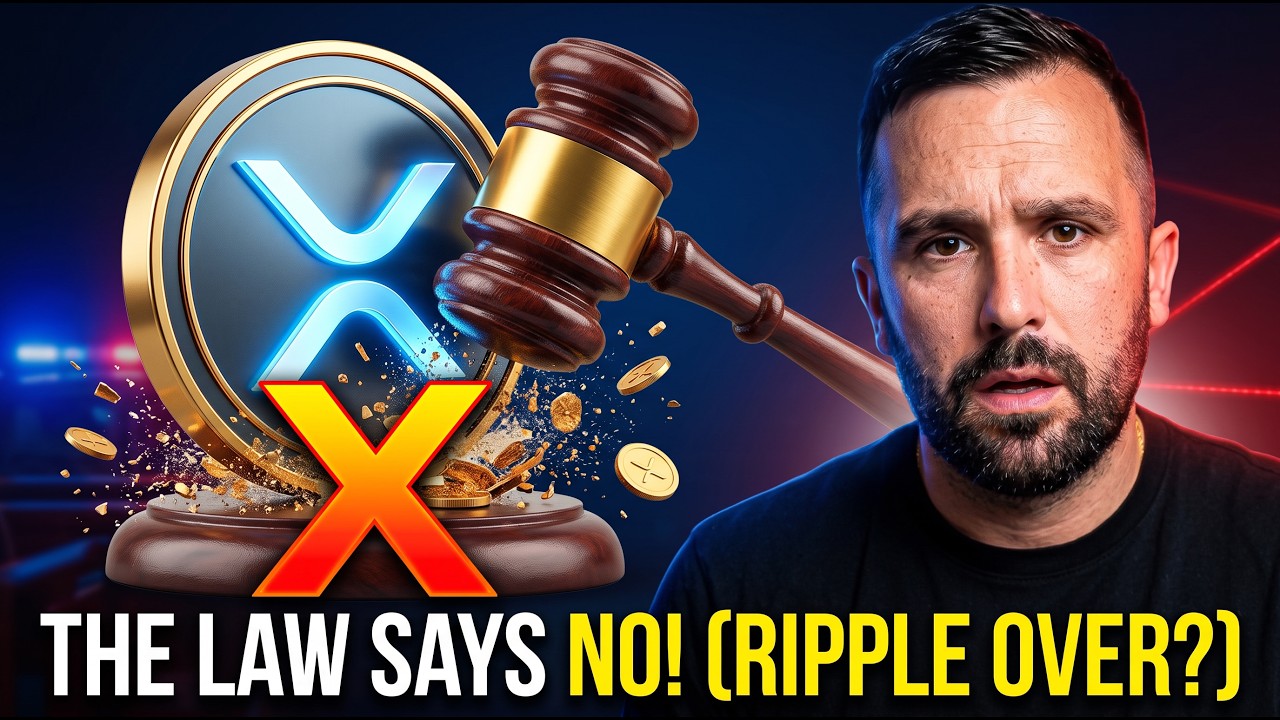
Key takeaways
- The Independent Community Bankers of America sued the OCC, the regulator that grants national bank charters. It did not sue Ripple.
- Per the video, the lawsuit does not touch the XRP Ledger or XRP the asset. It concerns the license behind Ripple National Trust Bank, which Ripple plans to use for things like RLUSD reserves.
- Both sides agree that firms like Coinbase and Ripple do not take FDIC-insured deposits. A trust charter means supervision, not a safety net under your coins.
- The lawsuit does not revoke any charter by itself, and federal cases like this rarely resolve in days.
- Fill in a five-column headline risk map for every holding before the dates when headlines get loud, such as Ripple's Swell conference and the US midterms.
America’s community banks have gone to court over the rule that underpins Ripple’s federal trust bank charter. The headline sounds like banks against Ripple. The actual target is the regulator, and the outcome matters more for some XRP-related products than for others.
In this video, Bullrunners host Josh walks through what is being fought over, who has money at stake, and the one fact both sides agree on. He argues that this fact matters more to holders than who wins. He also shares a four-step plan and a headline risk map that holders can fill in themselves.
What did the community banks sue over?
The Independent Community Bankers of America (ICBA) sued the Office of the Comptroller of the Currency (OCC), not Ripple. The OCC is the US regulator that grants national bank charters.
According to the video, the ICBA filed in early October. It wants a federal court in Washington, DC to throw out a rule the OCC issued in March and the interpretive letter behind it. That rule lets national trust banks do non-fiduciary work. A fiduciary manages assets on someone’s behalf with a legal duty to act in their interest. Non-fiduciary work covers more routine services, such as holding crypto in custody.
The case is not about one company. According to the filing cited in the video, the OCC has approved or conditionally approved 21 trust charters, and at least 13 of them are tied to digital asset firms.
Where does Ripple fit in?
Ripple sits in the middle of the case even though it is not the defendant. In December 2025, according to the video, Ripple received conditional approval for Ripple National Trust Bank. The host points to the word “conditional”: the approval is not final.
If the court strikes down the rule, firms that rely on it could have to restructure how they operate. Per the video, that would include Ripple. Ripple’s plan is for the trust bank to manage things like reserves for RLUSD, its dollar stablecoin.
Why are the banks fighting this now?
The video’s reading is that the fight is about who holds the dollars, not about XRP’s price. When Ripple got its approval, Ripple’s Brad Garlinghouse publicly went after the banks. The host sums up the dispute this way: banks said crypto wasn’t playing by the rules, so crypto joined the rules, and now banks say the rules themselves are the problem.
The host treats the lawsuit as a sign that established banks think newcomers are gaining ground. In a speech cited in the video, the OCC side said the regulator had received 40 charter applications in about 18 months, and 23 involve digital assets. Applicants named in the video include Circle, Paxos, BitGo, Fidelity, Coinbase, Kraken’s parent company and Jack Dorsey’s Block.
The deeper worry, per the video, is deposits. Community banks fear customer money will leave if crypto firms can offer competing products. A related dispute over stablecoins paying rewards was one of the sticking points around the Clarity Act. The video says that bill failed in the Senate last month.
The pressure doesn’t come only from banks. The video plays a clip of Senator Elizabeth Warren from May. She is the top Democrat on the Senate Banking Committee. The crypto industry pushed back hard on her letter at the time.
What is the one fact both sides agree on?
Both sides agree that a trust charter is not deposit insurance. When the crypto industry defended these charters in May, the Digital Chamber pointed out that firms like Coinbase and Ripple are not taking FDIC-insured deposits.
So whoever wins in court, a federal trust charter means supervision, not a safety net under your coins. The video argues this is the assumption the lawsuit really tests: the belief that “federally chartered” means “protected.”
Does the lawsuit affect XRP itself?
No. According to the video, the lawsuit does not touch the XRP Ledger or XRP the asset. It concerns a license held by Ripple the company.
That creates three separate kinds of exposure for holders:
| Box | Examples | Exposed to this lawsuit? |
|---|---|---|
| The asset | XRP on the XRP Ledger | No, per the video |
| Company or license-dependent products | RLUSD reserves managed under a Ripple trust charter | Yes, this is where the case lands |
| Where you hold it | Exchange, custodian, your own wallet | Depends on that platform’s terms |
The video also stresses timing. The lawsuit does not revoke any charter by itself. Firms that hold charters keep operating under them unless a court orders otherwise, and federal cases like this rarely resolve in days. The host reads strong language from the banks’ filing, then makes the point that a frightening headline today is not, on its own, a reason to act tomorrow.
Which dates could bring more headlines?
The video lists two dates when headlines are likely to get louder:
- October 27 to 29: Ripple’s Swell conference in New York.
- November 3: the US midterm elections. Whoever controls Congress next year will shape how this fight ends, per the video.
The host says his job is to know the calendar, not to tell viewers how to vote. His advice is to have a written plan before these dates, not during them.
A four-step plan for headline days
The host offers four steps for handling news like this:
- Separate asset risk from company risk. XRP the asset is one box. Products that depend on a Ripple license, such as RLUSD, are another. Where you hold them is a third. This lawsuit lands in the middle box. Know which boxes your money sits in.
- Check what protection actually applies. Look at where your coins sit and read what the terms say, not what the logo implies.
- Don’t trade the headline. The lawsuit revokes nothing by itself, and cases like this take time.
- Write a playbook for each date on the calendar. Decide in advance what you will and won’t do. When the noise arrives, you follow the plan instead of a feeling.
The host doesn’t ask viewers to pick a side. He says the crypto side may have a fair point and the banks may have one too. A holder doesn’t need to choose a team to manage their own risk.
The headline risk map
The video closes with a simple table for viewers to copy. Fill in one row for every holding. The host estimates it takes about 10 minutes.
| Holding | What it depends on (asset, company license or platform) | Who holds it | What protection actually applies | Your rule on headline days |
|---|---|---|---|---|
| Example: XRP | ||||
| Example: RLUSD |
Once it’s done, you already know your answer the next time a headline lands.
What to watch next
Follow the ICBA’s case against the OCC. Watch for any court order on the March rule, which is the only outcome that would directly affect existing charters. Note whether Ripple’s conditional approval for Ripple National Trust Bank moves forward. Keep an eye on news from Swell (October 27 to 29) and on the November 3 midterms, which the video says will shape how Congress handles this fight. And before any of those dates, check where each of your holdings sits and what protection, if any, actually applies there.
Frequently asked questions
Are banks suing Ripple over its bank charter?
No. According to the video, the Independent Community Bankers of America sued the OCC, the regulator that grants national bank charters. The suit targets a March rule and the interpretive letter behind it, which let national trust banks do non-fiduciary work such as crypto custody.
Does the bank lawsuit affect XRP the coin?
The video says the lawsuit does not touch the XRP Ledger or XRP the asset. It concerns a license for Ripple the company. Products that depend on that license, such as RLUSD reserves, are where the risk sits.
Does Ripple have a bank charter?
According to the video, Ripple received conditional approval for Ripple National Trust Bank in December 2025. The approval is conditional, not final.
Is crypto held under a trust charter FDIC insured?
No. The video notes that both sides agree on this. The Digital Chamber pointed out in May that firms like Coinbase and Ripple are not taking FDIC-insured deposits. A trust charter means federal supervision, not deposit insurance.
How many crypto firms have OCC trust charters?
According to the filing cited in the video, the OCC has approved or conditionally approved 21 trust charters, with at least 13 tied to digital asset firms.
Education and commentary only, not financial advice. Crypto is volatile and you can lose money. Do your own research and speak to a qualified advisor before making investment decisions. Figures and quotes are as reported in the video on October 9, 2026 and may have changed since.


