
Fedwire Weekend Hours: What the Fed's 2028-2029 Plan Changes
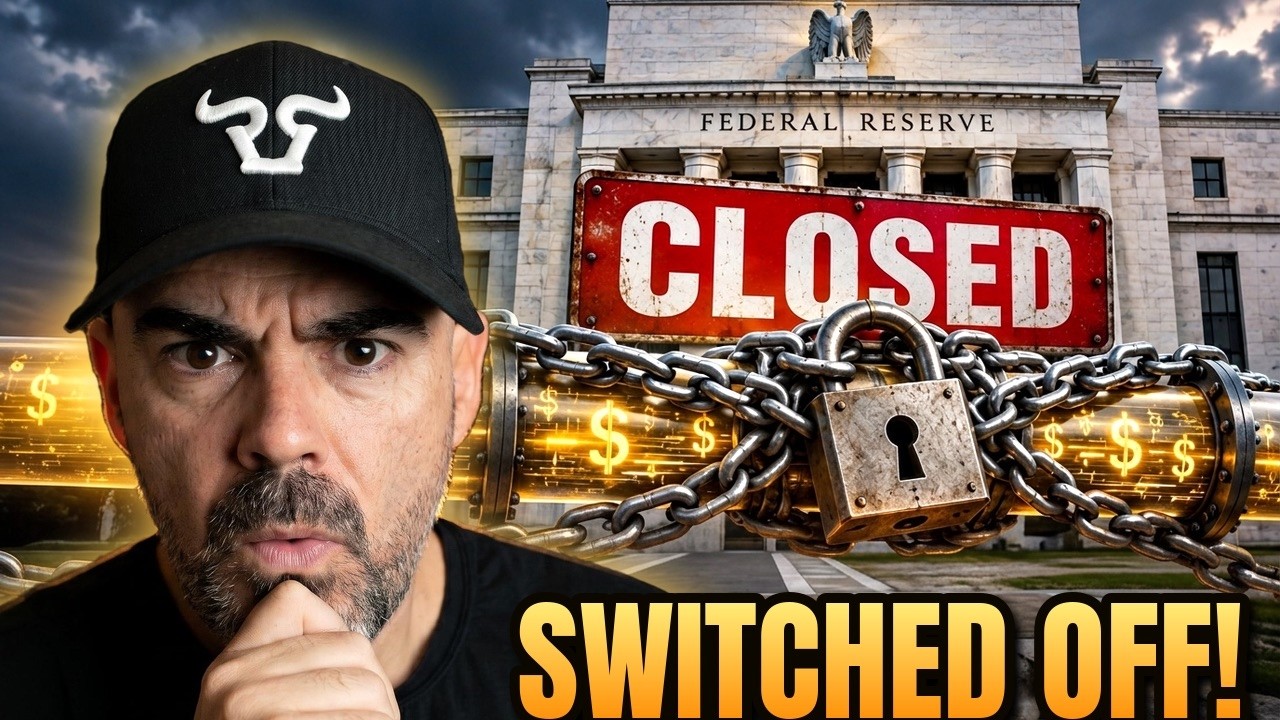
Fedwire moves $4.59 trillion a day but closes on weekends. The Fed's OP-1870 plan adds Sunday in 2028 or 2029 as an interim step toward possible seven-day hours.
Key takeaways
- Fedwire, one of the main US systems for settling large payments in central bank money, runs Monday to Friday and is closed on weekends and Reserve Bank holidays.
- Under Docket OP-1870, the Fedwire Funds Service is expected to move to 22 hours a day, Sunday through Friday, including weekday holidays, in 2028 or 2029. The National Settlement Service goes to 21.5 hours a day.
- The six-day schedule keeps 26 hours of weekend downtime, from Friday 7 p.m. ET to Saturday 9 p.m. ET. The Fed calls it an interim step and says it will stand ready to offer seven-day operation no sooner than two years after it starts.
- Commenters raised weekend bank runs and weekend bank resolution. The video says the Fed never answered that question, though the filing says the Fed is exploring more discount window days alongside the expansion.
- According to the video, your bank's wire cutoff is usually 2 to 5 hours earlier than the Fed's 7 p.m. ET close, so look it up before you need it.
Fedwire, the Federal Reserve’s large-value payment system, settled an average of about $4.59 trillion across roughly 869,000 transfers per business day in 2025, and it is closed on weekends and holidays. Under Docket No. OP-1870, Fedwire is expected to run 22 hours a day, Sunday through Friday, starting in 2028 or 2029, leaving most of Saturday closed.
Fedwire is one of the main places where large US payments settle in central bank money. Its hours decide when a big transfer is actually final and how long a weekend wire sits idle. The video argues they also shape how regulators handle a failing bank. It reads the Fed’s filing and focuses on a weekend bank-run question raised by commenters, which the video says the Fed never answered. The Fed itself describes the six-day schedule as an interim step toward possible seven-day operation.
What is Fedwire and why does it matter?
Fedwire is the Federal Reserve’s system for settling large payments between banks. When you send money to someone at another bank, your bank doesn’t move cash. It sends a message, and the two banks settle up at the Fed. A Fed explainer clip in the video describes the Reserve Banks as acting as “a bank for banks.”
Fedwire’s annual statistics show the system handled about $4.59 trillion on an average business day in 2025, spread across 869,187 transfers. Those payments cover house purchases, payrolls, bond trades and banks paying each other.
On Saturdays, the video points out, that number is zero. The system isn’t running slowly. It is switched off.
What are Fedwire’s current operating hours?
Fedwire currently runs from 9 p.m. Eastern Time the previous calendar day to 7 p.m. Eastern Time, Monday through Friday, excluding holidays observed by the Reserve Banks. The Fed’s filing spells this out.
That leaves the system dark for about 50 hours every weekend, from Friday 7 p.m. ET to Sunday 9 p.m. ET, plus every holiday. The video makes a practical point about what that means:
- A wire marked “pending” on a Saturday isn’t being processed. The instruction sits in a file waiting for the system to reopen.
- If your bank shows the money as already gone from your side and already arrived on the other side, your bank has fronted it. It advanced its own cash on the expectation that settlement will happen when Fedwire opens.
Banks do this every weekend, and it normally works without anyone noticing. The video’s point is that it works right up until the bank on the other end isn’t there on Monday.
What did the Fed decide in Docket OP-1870?
In October 2025, the Federal Reserve Board decided to expand the Fedwire Funds Service to 22 hours a day, six days a week, Sunday through Friday, including weekday holidays. The National Settlement Service gets the same days but 21.5 hours a day, closing 30 minutes earlier. The Board expects the Reserve Banks to implement the change in 2028 or 2029 “to ensure technological, operational, and industry readiness.”
The decision was published in the Federal Register on November 17, 2025. Here is how the Fedwire Funds Service schedule changes:
| Today | After OP-1870 (2028 or 2029) | |
|---|---|---|
| Days open | Monday to Friday | Sunday to Friday |
| Hours per operating day | 22 (9 p.m. ET prior day to 7 p.m. ET) | 22 |
| Weekday holidays | Closed | Open |
| Saturday | Closed | Closed until 9 p.m. ET |
| Weekend downtime | About 50 hours | 26 hours, Friday 7 p.m. ET to Saturday 9 p.m. ET |
The system adds one operating day a week. The video connects the push for longer hours to crypto markets, which never close.
Why is Saturday still closed?
Saturday stays mostly closed because the Fed chose a six-day schedule as an interim step, not a final one. The filing says the six-day plan is meant to help participants adapt and to test demand, and commenters also said a step-by-step approach would help them adjust. The Board’s original 2024 proposal was for 22 hours a day, every day of the year (22x7x365). The final decision says the Board will stand ready to offer that schedule no sooner than two years after the six-day schedule begins.
Under the six-day plan, the filing keeps 26 hours of weekend downtime, from Fedwire’s 7 p.m. ET close on Friday to 9 p.m. ET on Saturday, when Sunday’s operating day opens.
The filing also records concerns from commenters. A number of them asked the Board to address the possibility that a seven-day system “could enable large deposit outflows during weekends and holidays in a bank run scenario.” A few commenters raised questions about the proposal’s effect on “weekend bank resolution.”
According to the video, the phrase “weekend bank resolution” appears exactly once in the Fed’s 45-page document, and the Board summarizes the question without returning to it. The filing does say the Fed is exploring whether to expand the days its discount window is open alongside the Fedwire expansion. The discount window is the Fed’s emergency lending to banks. The same commenters who asked about weekend resolution supported that idea.
The video also says the filing describes private sources of overnight funding (loans that run until the next morning) as likely to be “scarce or completely unavailable on weekends or holidays.” It is not clear from the video whether that line reflects the Fed’s own view or a commenter’s point. The host reads it as meaning a bank short of cash on a Saturday has nowhere to go, though that reading leaves out the Fed’s discount-window work. For background on how banks borrow from the Fed when private funding is tight, see Bullrunners’ article on the repo market record and the Fed’s standing repo facility.
How does weekend bank resolution work?
Weekend bank resolution is how regulators close a failing bank without a disorderly collapse during business hours. As the video describes it, regulators shut the bank on a Friday night, spend Saturday and Sunday going through the books and looking for a buyer, and reopen the doors on Monday under a new owner. In the video’s words, the weekend isn’t incidental to that process. The weekend is the tool.
The March 2023 failures show how this plays out:
- Silicon Valley Bank: $42 billion left the bank in 24 hours, which the video says was about a quarter of its deposits. Another $100 billion was lined up to leave the next day.
- Signature Bank: $18.6 billion left in a matter of hours, about a fifth of its deposits. New York’s top banking regulator testified that her office took possession of Signature on the evening of Sunday, March 12, and appointed the FDIC as receiver, to avoid “a disorderly midday Monday shutdown and further contagion across the banking system.”
- The regulators’ view: the video says regulators had time over the weekend to assess whether a bank could safely open on Monday. The then-head of the FDIC described the weekend of the two failures as a tough judgment for the agencies.
The video argues that the queued $100 billion didn’t disappear. It sat waiting for Monday, and the only thing between those instructions and the money was the clock. The video also says a senator on the Banking Committee stated there would be no stock-market-style brakes on bank withdrawals. In the host’s view, if no speed limit on withdrawals is coming, the closed weekend does some of that job. That is the video’s interpretation, not something the Fed states. For an older example of what happens to depositors when a bank runs into trouble, see Bullrunners’ piece on the 2013 Cyprus bail-in.
How does FedNow compare with Fedwire?
FedNow is the Fed’s instant payment system, and it already runs every hour of every day. The video describes it as built for smaller payments like rent, refunds or paying a plumber. Fedwire handles the large flows: company payrolls, bond trades and one bank owing another billions of dollars. The video’s point is that the system that closes on weekends is the one carrying the largest payments. Bullrunners also covered FedNow in a weekly roundup on FedNow and cross-border payments.
The video also plays a clip of a Federal Reserve governor describing a cultural shift in how traditional finance and the crypto industry treat each other, moving from rivalry to asking how they can work together. The video description links to Governor Waller’s October 21, 2025 closing remarks at the Payments Innovation Conference. The host reads the clip as a sign that the two systems are starting to merge. That is commentary, not Fed policy. The host’s broader point is that the Fed is taking until 2028 or 2029 to add one day a week, while blockchain networks run continuously. The Fed has left the door open to seven-day operation after that.
How to check your bank’s wire cutoff time
The video ends with a two-minute task any reader can do:
- Look up your own bank’s wire cutoff time. You want your bank’s time, not the Fed’s 7 p.m. ET close.
- Expect it to be earlier. According to the video, it is usually 2 to 5 hours earlier, because your bank needs time to get the instruction into Fedwire before it shuts.
- Treat that time as the real end of your money’s day. After it, the video says, any money in transit is a promise until the next business morning.
- Plan Friday wires around it. The host shares a personal example from real estate: in his experience, escrow companies ask for wires before 2 p.m. Pacific on Friday so funds can be processed before the weekend.
This matters most when you move large sums, such as a home purchase, or when you shift cash between a bank and a crypto exchange near a weekend.
What to watch next
The first date to track is the 2028 or 2029 rollout of Sunday-to-Friday Fedwire hours, and whether the Reserve Banks set a firmer timeline. After that, watch whether the Board moves to a seven-day, every-day-of-the-year schedule, which it says it could offer no sooner than two years after the six-day schedule starts. Also watch the Fed’s review of whether to open the discount window on more days, and whether it says more about the weekend bank-resolution questions commenters raised. Until then, most of Saturday remains a time when Fedwire is closed, so know your own bank’s cutoff before you need to move money.
Sources
- Federal Reserve: Action to Expand Fedwire Funds Service and National Settlement Service Operating Hours, Docket No. OP-1870 (Oct 9, 2025)
- Federal Register entry (Nov 17, 2025)
- Fedwire Funds Service annual statistics
- U.S. Senate Banking Committee: Oversight of Financial Regulators in the Wake of Recent Bank Failures
- Governor Waller, closing remarks at the Payments Innovation Conference (Oct 21, 2025)
Frequently asked questions
Is Fedwire open on weekends?
No. Fedwire currently runs from 9 p.m. ET the previous day to 7 p.m. ET, Monday through Friday, and closes on holidays observed by the Reserve Banks. A wire sent on Saturday waits until the system reopens Sunday night.
When will Fedwire add Sunday?
The Federal Reserve's Docket OP-1870, announced in October 2025, says the Reserve Banks are expected to implement the expansion in 2028 or 2029. The Fedwire Funds Service will then run 22 hours a day, Sunday through Friday, including weekday holidays.
Why does Fedwire stay closed on Saturday?
The Fed describes the six-day schedule as an interim step to help participants adapt and to test demand. The Board says it will stand ready to offer a seven-day, every-day-of-the-year schedule no sooner than two years after the six-day schedule begins.
Did the Fed answer the weekend bank run concern?
According to the video, the Fed summarized commenters' questions about weekend bank runs and weekend bank resolution without answering them. The filing does say the Fed is exploring whether to expand the days its discount window, its emergency lending to banks, is available.
What is the difference between Fedwire and FedNow?
According to the video, FedNow runs every hour of every day and is built for smaller payments like rent or refunds. Fedwire handles large-value transfers such as payroll, bond trades and bank-to-bank obligations, and it is the system that closes on weekends.
Full video transcript
From the video's captions, lightly formatted. Captions can mishear names and numbers, so check figures against the article above.
On an average business day, 4.59 trillion dollars moves through one system in this country. 869,187 transfers. Money for houses, payrolls, bonds, bank-to-bank-to-bank. And on Saturdays, that number is zero. Not slow, not delayed, zero.
The system is switched off. It is called Fedwire. It is run by the Federal Reserve, and it is the only place in America where a large payment becomes final. Now, the Federal Reserve has decided to change that, and it has put a year on it in a document that anybody can download. But, that is not the part that got my attention.
Buried in the same filing is a question the banking industry asked the Fed in writing. A question about what happens on a weekend. The Fed printed the question, and then across 45 pages, never answered it. By the end of this video, you are going to know what that question was, and why the answer is the real reason that your money sits still for 2 days every week. Your bank has a bank.
When you move money to somebody at a different bank, your bank does not drive cash around town. It sends a message, and the two banks settle up at the Federal Reserve.
The Reserve Banks also distribute coins, [music] and act as a bank for banks.
That is the Fed's own phrase, a bank for banks. And here is the part that surprises people. A bank for banks keeps opening hours the same way the branch on the corner does. The Fed writes them out in its own filing, and I'm reading this off the page. Fedwire is currently open from 9:00 p.m.
Eastern Time of the preceding calendar day to 7:00 p.m. Eastern Time, 5 days per week, Monday through Friday, excluding holidays observed by the Reserve Banks. So, the machine that makes big money final in America is shut for roughly 26 hours every weekend plus every holiday on the calendar. This is where it stops being trivia. When your wire says pending on a Saturday, nothing is processing.
There is no queue being worked through the back office somewhere. The pipe is literally closed and your instruction is sitting in a file waiting for Sunday night. If your bank shows the money as gone from your side and arrived on the other side before then, your bank fronted it. It advanced its own cash against a promise because it is confident the real money will arrive when the Fed opens. That is a normal boring thing banks do every single weekend, every weekend of the year.
It works right up until the day the bank on the other end is not there on Monday. So, as we all know, they are literally open 5 days a week as you see right here. The Federal Funds Service is currently open from 9:00 p.m. Eastern Time of the preceding calendar day to 7:00 p.m. Eastern Time.
5 days a week. And if you're like me, you've gone through this process before. When you send something on a Friday, you have to just plan it in your schedule that it won't go through until technically, usually Tuesday, if you know what I'm saying. Because banks are closed on weekends and holidays. Now, there is a proposal, as we talked about a few minutes ago, docket number OP-1870, Federal Reserve action to expand Fedwire funds service and National Settlement Service operating hours.
And in reality, they're going to have to adapt that because crypto is open 24/7. And in fact, I just recently got a message from Robinhood stating that they are adapting to this and they're starting to do early hours trading and post hours trading. Now, they're not trading on the weekends, but you can get into your options early morning before the markets open. And I know what you're thinking because I get this comment on every video like this. You've been hearing that the money system is broken for 15 years.
Your wire still clears. Nobody has come for your account. The sky has not fallen. And that is fair and it's definitely true. Your wire does clear on a Tuesday.
So, the question this video is about is not whether the system works on a Tuesday. It is what the system is built to do on the two days a week it's dark. The Federal Reserve published in October 2025 that docket we just mentioned OP-1870. The decision, in the board's words, Fedwire goes to 22 hours per day, six days per week, operating Sunday through Friday, including weekday hours and holidays. And the date on that?
Not a maybe, not a hope. The board expects the Reserve Banks to implement this expansion in 2028 or 2029. So, in 2028 or 2029, Federal Reserve System Docket Number OP- 1870, page one. The board expects the Reserve Banks to implement this expansion in 2028 or 2029 to ensure technological, operational, and industry readiness. So, the plan is coming.
So, America's most important money pipe adds one day a week, and it does it roughly 3 years from now. That is the headline, but read the two pages further, and then the picture changes. And before we get into that part, everything that we just went over came out of a PDF on the Fed's own website that anybody can download for free, and reading the boring parts is the actual job. And that is what we do inside of SGS System at Altcoin Pro. Most people who get this far into the video close out the tab.
They go on to do nothing with it. If you're the one who won't do that, the first link in the description, book a call with my team while it's still fresh in your head. If you want that one-on-one personal attention for the next 5 months working with one of my team members every 7 to 10 days on a live Zoom call, go ahead and check out that opportunity. So, 6 days, not 7. Sunday gets added, Saturday does not.
The Fed spells out exactly what survives. Fedwire will retain 26 hours of weekend downtime from its 7:00 p.m. Eastern close on Friday to 9:00 p.m. Eastern on Saturday. 26 hours every week forever as far as this document is concerned.
The Fed writes that a number of commenters asked the board to address the possibility that a 7-day system could enable large deposit outflows during weekends and holidays in a bank run scenario. So, let's read that in ordinary English. The banks told the Federal Reserve, "If you open this thing all the way on the weekend, people will be able to take their money out on the weekend." And then the very next sentence regarding the weekend bank resolution, "A few commenters raised questions about the effect on the proposal on weekend bank resolution." Weekend bank resolution. That is the technical term, and here is what it means with the suit taken off. And by the way, this phrase appears exactly one time in all 45 pages.
The board summarizes the question and never returns to it. So, when a bank is going under, going insolvent, going bankrupt, the government closes it on a Friday night, spends all day Saturday and Sunday going through the books and finding a buyer, and then opens the doors on Monday morning under somebody else's sign. And then the customers walk in, and the name over the door has changed. The weekend is not incidental to that. The weekend is the tool.
In order to avoid a disorderly midday Monday shutdown and further contagion across the banking system, on the evening of Sunday, March 12th, DFS took possession of Signature and appointed the FDIC as receiver.
That is New York's top banking regulator under oath describing Signature Bank. Her office took the bank on a Sunday evening, and the reason she gives is to avoid its collapsing in the middle of the day on a Monday. $18.6 billion out of Signature Bank in a matter of hours. 1/5 of the whole bank gone between breakfast and dinner. And across the country the same week, $42 billion out of Silicon Valley Bank in 24 hours. A quarter of everything in it.
Not a line on the sidewalk. An app open on a few hundred phones in one afternoon. Another 100 billion was lined up for the next day. Lined up, queued, waiting for the system to open. But the queue is the part to hold on to.
That second 100 billion dollars did not vanish. It sat there, formed up, waiting for Monday morning. The only thing between those instructions and the money was a clock. After avoiding a default on Friday, regulators had time over the weekend to assess the bank's condition and come to a consideration view as to whether it could open safely on a Monday. Time over the weekend.
The weekend of the failures of Silicon Valley Bank and uh Signature Bank um really posed, I think, a a tough judgment for the agencies to make.
Even the man who ran the FDIC calls it a weekend. Not a Friday, not a Monday, a weekend. The obvious answer is to slow the customer down, put a speed limit on withdrawals. A senator on the banking committee says it out loud that nobody is going to put the kind of brakes on taking your money out that the stock market has. So, the brake is not coming from that direction, which leaves the clock.
And there's one more line in the Fed's filing that tells you the Fed knows it. On the question of where a bank in trouble would borrow cash on a Saturday, the Fed writes that private sources of overnight funding, that is borrowing until the next morning, were likely to be scarce or completely unavailable on weekends or holidays. In plain words, on a Saturday, a bank that runs out of cash has nowhere to go. And when all of this was going on back in 2008 and 2009 during the financial crash, that's where we got the term too big to fail because there were some banks that they didn't save, but there were a lot of huge banks that they did rescue. So, put this whole thing together.
The Fed already built a system that runs every hour of every day, and it's called FedNow, and it is for small payments. Your rent, a refund, the plumber. The part that is closed on Saturday is the part where the big money is. Payroll for a company, a bond trade, one bank owing another bank $9 billion.
Instead of, "Dude, we're going to take your job and drive you out of business." which was kind of the crypto world about 6, 7, 8 years ago. It's all like, "How do we work together?" I mean, this is a profound cultural change in the way people think about these things.
That is a governor of the Federal Reserve on a Federal Reserve stage saying the fight with the crypto side is over and the merge has started. He is not asking whether the plumbing gets replaced, he is asking which one wins. So, read the 2028 date again. That is not the Federal Reserve announcing an upgrade. That is the Federal Reserve announcing how long it intends to take, one extra day a week, while the thing it is being measured against has never closed for a minute since the day it was switched on. for you to go and check, and it takes 2 minutes.
Look up your own bank's wire cutoff time, not the Fed's 7:00 p.m., your bank specific, and it will be earlier, usually by 2 to 5 hours because your bank needs room to get the instruction into the Fed before the Fed shut down. That time is the real edge of your money's day. After it, whatever you're holding is a promise until the next business morning. And as you guys know, well, a lot of you guys have been watching for a long time, we do real estate investing as well, and you have to wire money into escrow. And the one thing that escrow always really tries to get you to do is to make sure you wire your money in Friday before 2:00 p.m.
Pacific time, since I'm in Pacific time zone, because that way it can process all the money's before the weekend hits. So, now that you've done that quick research, put your bank and the cutoff time in the comments. I want to see the spread, because I think most people are going to find out theirs is earlier than they assumed. Reading the paperwork that decides what your money is allowed to do and when, that is the actual job. And that is what the SGS system inside of Altcoin Pro does with our clients.
For 5 months, we work with you side by side. So, if you're holding $50,000 or more, and nobody has ever sat down with you and mapped out where it actually lives, what closes on it and when, that is the conversation that you need to be having. So, book that call. The link is down in the description below. Bring a pen and paper to that call, because my team is going to give you a ton of information.
And if you're not there at the $50,000 or more market, that's totally fine. Keep watching these videos. They're free. We're not going to stop making them for you. And if you are thinking that you do not have time to read Federal Reserve filings, right.
That is the point. Neither does anybody else, which is why the interesting parts sit in them for years and go undiscovered. So, if this is the money that you're investing in crypto, that you do with your spouse as well, bring them onto the call, because they'll be blown away also. So, the first link in the description gets you started. Book a call right away, those spots do fill up fast.
We're also on our way to 400,000 subscribers. We're at 396,000 right now. Smash that subscribe button. Hit the thumbs up if you're getting value from these videos, leave me a comment down below as well. And crypto does carry risk, and past performance doesn't guarantee future results.
This video is for educational purposes, so I hope you're learning cuz I know you're a genius. And it's not financial advice either. And you know what to do. Stay bullish. I'll see you at the top.
Education and commentary only, not financial advice. Crypto is volatile and you can lose money. Do your own research and speak to a qualified advisor before making investment decisions. Figures and quotes are as reported in the video on October 27, 2026 and may have changed since.


