HBAR's 30% Pump: Is Hedera the Next Quant?
Why HBAR jumped 30% on September 28, 2026, what IBM and NVIDIA actually announced, how it compares to Quant's bank deal, and the leverage and fee data.
Key takeaways
- NVIDIA's Open Agent Safety Platform never mentions Hedera; four of its 100+ partners simply also sit on the Hedera Council.
- IBM listing IDTrust, an AI agent identity product built on Hedera, is the more direct news, but IBM does not need to buy HBAR for it to work.
- Quant's rally followed a bank-owned network committing to run money on its technology, which HBAR has not yet matched.
- On the pump day, open interest jumped 74% and RSI ran past 70, and HBAR gave back most of the gain within a day.
- Hedera earned about $2,000 in network fees on the pump day, so HBAR's price rests mostly on demand to hold it.
HBAR, the coin of the Hedera network, rose 30% in a single day on September 28, 2026, after IBM listed an AI agent identity product built on Hedera and NVIDIA launched an AI safety platform with four Hedera Council members as partners. Within 24 hours, HBAR gave back most of the gain, leaving buyers at the top down more than 20%.
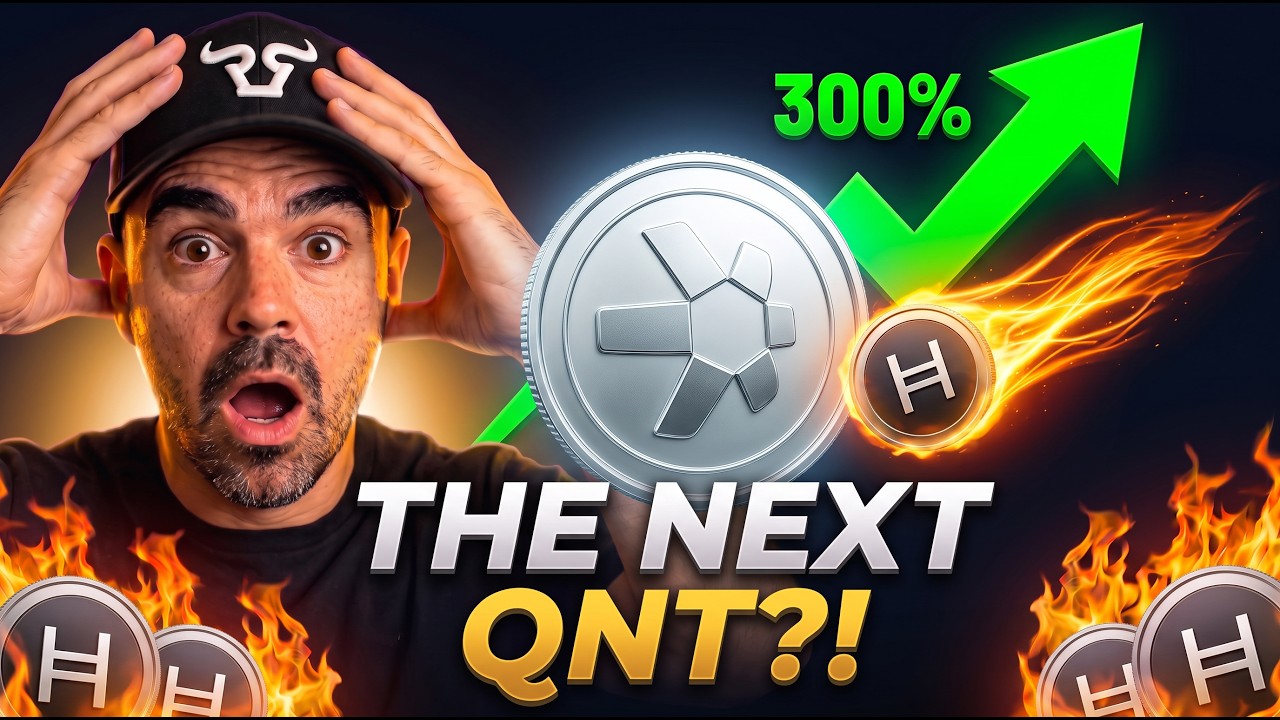
The pump arrived days after Quant (QNT) more than quadrupled on a major bank deal, so many holders started asking whether Hedera is next. A Bullrunners video hosted by Ryan Huggins breaks down what the news actually said, why Quant’s situation was different, and what the chart and fee data showed on the day.
Did NVIDIA pick Hedera?
NVIDIA did not pick Hedera, according to the video, because the word Hedera does not appear anywhere in NVIDIA’s announcement. What NVIDIA launched on September 28 was its Open Agent Safety Platform, a system that watches AI agents and stops them from doing things they are not allowed to do.
The platform came with more than 100 partners. Four of them, Accenture, Dell, IBM and ServiceNow, also sit on the council that governs Hedera. Hedera pointed out that overlap itself the same morning, and many headlines turned it into “NVIDIA picked Hedera.” That is a stretch of what the announcement contains.
What is IDTrust and why does IBM matter?
IDTrust is an AI agent identity product from The Hashgraph Group, a Swiss company, and IBM listed it in its cloud catalog five days before the pump. The video describes IDTrust as an employee ID badge for an AI agent: it shows who the agent works for and what it is allowed to do, and each badge is recorded on Hedera so nobody can quietly change it later.
IBM tested the product and listed it, so IBM’s business customers can switch it on. According to the announcement, IDTrust is the first business app built on Hedera that companies can buy directly from a major cloud marketplace.
The video explains the problem this targets. AI agents are starting to book, buy and pay for things on their own. When an agent spends a company’s money, someone has to prove afterwards what it did and who authorized it, and a bank statement cannot show what a piece of software was permitted to do. Hedera’s pitch is a public record that no one, including the company that owns the agent, can go back and edit. Bullrunners covered an earlier version of this story in what Hedera’s IBM deal really meant for HBAR.
Who uses Hedera today?
Hedera is governed by a council of almost 30 organizations, including Google, IBM, Deutsche Telekom and Standard Bank, and those members run the computers that keep the network alive. FedEx joined in February 2026, and Accenture joined in April 2026 to build trust tools for AI. For background on this structure, see who runs Hedera and how HBAR works.
The video lists two non-AI uses:
- Wyoming’s FRNT stablecoin. In March 2026, the state of Wyoming put its own stablecoin, FRNT, live on Hedera. The video describes it as the first fully dollar-backed stablecoin issued by a public body in the United States.
- Lloyds Bank and Aberdeen. In July 2025, the two firms used a tokenized money market fund and a tokenized UK government bond on Hedera as collateral for a currency trade, moving tokens instead of cash.
The video’s point is that on Hedera, large institutions are already involved rather than “coming soon.”
What did Quant get that HBAR doesn’t have?
Quant got a bank-owned network committing to run real money through its technology, which is more than a partnership headline. According to the video, QNT went from around $64 to a high of $373 in about a week.
The move started on September 24, when The Clearing House, a network owned by America’s biggest banks that moves more than $2 trillion a day, picked Quant to run its new system for moving bank deposits on a blockchain, with launch planned for the first half of 2027. The same week, seven UK banks, including Barclays, HSBC and Lloyds, pushed their first live customer payments through a platform Quant built. Bullrunners looked at that deal in what The Clearing House partnership means for the QNT token.
| Quant (QNT) | Hedera (HBAR) | |
|---|---|---|
| Key news | The Clearing House picked Quant for on-chain bank deposits | IBM listed IDTrust; NVIDIA partners include Hedera Council members |
| Live money | Seven UK banks sent live customer payments | Not shown in this news |
| Requires the token? | Not stated in the video | Neither IBM nor NVIDIA has to buy HBAR |
| Price move cited | About $64 to $373 | About 30% in one day, peak near 13 cents |
Are institution partnerships real?
The video plays both sides of an argument from VirtualBacon, a crypto YouTuber. On his September 28 show, he described how bank-linked coins tend to move as a group: usually XRP breaks out first and the rest follow; in the last cycle HBAR jumped first; this time, he said, it looked like Quant.
On the same show he also argued that institutional investing is “not a thing,” and that any major layer-1 blockchain with a marketing budget can pay institutions to put out marketing releases. The host says VirtualBacon is right about most partnership headlines, including a large part of HBAR’s news: IBM listed another company’s product, NVIDIA named 100 partners, and neither has to hold HBAR for the deals to work. This is the same question Bullrunners explored in whether bank money ever reaches the token.
The video’s view is that HBAR has not had its “Clearing House moment.” That would mean a council member switching on a large live system that actually needs HBAR to run.
What the chart and fees showed on pump day
The trading data on September 28 pointed to a leveraged, stretched move, according to the video:
- Volume: about $1.5 billion traded in a day, close to a third of the coin’s total value.
- Open interest: the amount traders had bet with borrowed money rose 74% to around $284 million.
- RSI: the daily relative strength index, which measures how stretched a move is, went above 70, the level that usually signals a coin is running out of buyers. The video puts it around 80.
When many traders buy with leverage at once, a small dip can force them to sell together. HBAR topped around 13 cents and was back near 10 cents within a day.
The video also notes that the pump did not change what the network earns. On the day itself, Hedera took in around $2,000 in fees on a coin worth about $4.6 billion. Those fees are not burned; they go to network operators and stakers. The host’s conclusion is that HBAR’s price rests almost entirely on people wanting to hold it, since the network uses up very little of it.
Timing mattered too. The first leg higher came around 4 a.m. New York time, and HBAR was already up more than 20% by the time Hedera posted about NVIDIA. On the video’s figures, HBAR had bounced about 79% from a 12-month low near 6.4 cents in August, yet still sat about 81% below its all-time high of 57 cents from September 2021.
The video’s approach to not chasing the candle
The host lays out a framework for handling sharp moves, pointing to Quant, which fell almost by half the day after hitting $373 on September 27. As of October 1, HBAR was around 10.4 cents, more than 20% below its high. The approach described:
- Decide how much of a coin you want while the market is quiet.
- Build the position in pieces on red days rather than all at once.
- Never buy into a 30% green candle.
- Size the position so you can live with a pullback.
- When it spikes, take your starting money back out.
This is the video’s general method, not a recommendation on HBAR.
What to watch next for HBAR
Based on the video, the signal that matters is whether a Hedera Council member launches a large live system that actually requires HBAR, rather than another listing or partner mention. Beyond that, watch open interest and RSI after any headline-driven jump, and check whether Hedera’s network fee revenue starts to move along with the price. Quant’s planned Clearing House launch in the first half of 2027 is also a useful benchmark for what a real bank deployment looks like.
Sources
- NVIDIA Open Agent Safety Platform
- THG and IBM IDTrust partnership (PR Newswire, Sept 23, 2026)
- Hedera Council members
- FedEx joins the Hedera Council
- Accenture joins the Hedera Council
- Wyoming FRNT live on Hedera
- Lloyds Bank and Aberdeen tokenized collateral on Hedera (Ledger Insights)
- The Clearing House partners with Quant
Frequently asked questions
Why did HBAR go up 30% on September 28, 2026?
According to the video, the jump followed IBM listing The Hashgraph Group's IDTrust, an AI agent identity product built on Hedera, in its cloud catalog, and NVIDIA launching an AI agent safety platform whose partner list included four Hedera Council members.
Did NVIDIA partner with Hedera?
No. The video points out that the word Hedera does not appear in NVIDIA's announcement. Accenture, Dell, IBM and ServiceNow are among more than 100 partners and also sit on the Hedera Council, which Hedera itself highlighted.
Is HBAR the next Quant?
The video argues not yet. Quant's move followed The Clearing House choosing its technology and seven UK banks sending live customer payments on a Quant platform, while HBAR's news so far does not require anyone to use HBAR.
How much does the Hedera network earn in fees?
The video says the whole Hedera network took in around $2,000 in fees on the pump day, on a coin valued at about $4.6 billion. Those fees are not burned; they go to the network operators and stakers.
Who runs the Hedera network?
Hedera is governed by a council of almost 30 organizations, including Google, IBM, Deutsche Telekom and Standard Bank, which run the computers that keep the network going. FedEx joined in February 2026 and Accenture in April 2026.
Education and commentary only, not financial advice. Crypto is volatile and you can lose money. Do your own research and speak to a qualified advisor before making investment decisions. Figures and quotes are as reported in the video on October 16, 2026 and may have changed since.