Kaspa Explained: What It Is, How It Works, and What Is Different
Kaspa is a proof-of-work coin built on a blockDAG instead of a single chain. How GHOSTDAG works, the 10 blocks per second upgrade, supply, mining and the risks.
Video coming soon.
Key takeaways
- Kaspa is a proof-of-work cryptocurrency, like Bitcoin, but it keeps blocks mined at the same time instead of throwing them away. That structure is called a blockDAG.
- GHOSTDAG is the rule that puts those parallel blocks into one agreed order, which is what lets Kaspa run at 10 blocks per second since the Crescendo upgrade on May 5, 2025.
- Kaspa launched on November 7, 2021 with no premine, no presale and no allocation to founders. Every KAS has been mined.
- The supply is about 28.7 billion KAS. Rewards shrink a little every month and halve about once a year, and the Kaspa wiki's schedule put about 95% of all KAS as mined by July 10, 2026.
- Mining today is done with specialized ASIC machines, and smart contract features are still limited. Both matter when you weigh the risks.
Kaspa is an open-source proof-of-work cryptocurrency, like Bitcoin, but it uses a blockDAG instead of a single chain, so blocks mined at the same time are kept rather than thrown away. Since its May 2025 Crescendo upgrade, it produces 10 blocks per second. It launched in November 2021 with no premine.
That design is why people describe Kaspa as fast proof of work. This article explains what Kaspa is, how its blockDAG and GHOSTDAG rule work, what changed with the 2025 Crescendo upgrade, how the coin supply is set, who runs the project, and the risks worth knowing before you form a view.
What is Kaspa?
Kaspa is an open-source cryptocurrency secured by proof of work, the same basic method Bitcoin uses. Miners spend computing power to find valid blocks, and the network accepts the work as proof that a block is legitimate. Its coin is KAS.
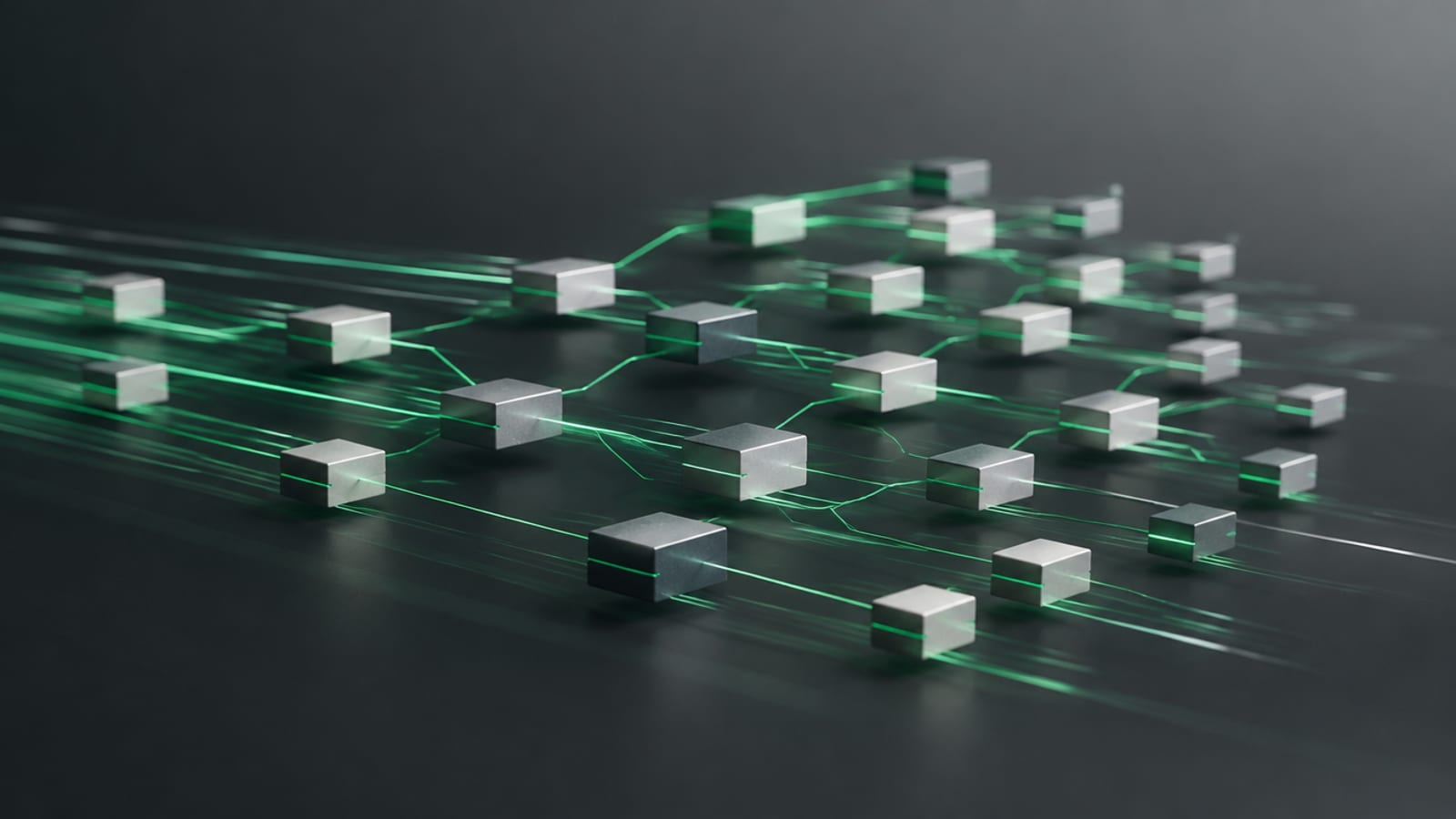
The difference is the shape of the ledger. Bitcoin is a blockchain: a single line of blocks. Kaspa is a blockDAG. DAG stands for directed acyclic graph, which in plain terms means each new block can point back to several earlier blocks instead of just one. Picture a braid instead of a single thread.
Kaspa’s mainnet started on November 7, 2021. The Kaspa wiki describes it as a community project, with all related activity carried out on a voluntary basis.
How does GHOSTDAG work?
GHOSTDAG is the rule that takes blocks created at the same time and puts them into one order that every honest node eventually agrees on. It comes from a research paper first posted in 2018 and now titled “PHANTOM and GHOSTDAG: A Scalable Generalization of Nakamoto Consensus,” by Yonatan Sompolinsky, Shai Wyborski and Aviv Zohar. Nakamoto consensus is the name for Bitcoin’s original method.
Here is the problem it solves. On Bitcoin, if two miners find a block at almost the same moment, only one survives. The other becomes an “orphan” and its work is wasted. To keep that from happening often, Bitcoin deliberately targets about one block every 10 minutes, so each block can spread across the world before the next one appears.
GHOSTDAG does not orphan parallel blocks. It lets them coexist, then ranks them so the network still agrees on which transaction came first. According to the paper, that removes the trade-off where a faster block rate means weaker security. The Kaspa wiki describes it as a gentle generalization of Bitcoin’s design rather than a new type of consensus.
| Bitcoin | Kaspa | |
|---|---|---|
| Security model | Proof of work | Proof of work |
| Ledger shape | Single chain | BlockDAG |
| Blocks found at the same time | One wins, the other is orphaned | Both are kept and ordered by GHOSTDAG |
| Target block rate | About 1 every 10 minutes | 10 per second since May 2025 |
| Launch | 2009 | November 7, 2021 |
What did the Crescendo upgrade change?
Crescendo raised Kaspa’s block rate from 1 block per second to 10. It was a hard fork, meaning every node had to upgrade, and it activated on May 5, 2025 at about 15:00 UTC, according to the official Rust node repository.
Two details matter for holders:
- The emission rate did not change. Kaspa’s monetary policy is set per second, not per block. With ten times as many blocks, the reward per block was cut by ten times, so the number of new KAS created each second stayed the same.
- The node software changed. The upgrade shipped with Rusty Kaspa, a rewrite of the node in the Rust programming language, which the project’s repository calls the recommended node software, replacing the older Go node.
How is Kaspa mined?
Kaspa uses its own proof-of-work hashing algorithm, called kHeavyHash, which adds a matrix multiplication step to a standard hash. Miners compete to find a result below a target, the same principle Bitcoin uses with a different calculation.
In the early days, KAS could be mined on ordinary computers and graphics cards. According to the Kaspa wiki, that era ended around mid-2023, when ASICs, machines built to do only this one calculation, took over most of the network’s mining power. You can still point a home computer at it, but the wiki is blunt: you would spend more on electricity than you would earn.
Was Kaspa a fair launch, and what is the supply?
Yes. Kaspa launched with no premine, no ICO, no vesting schedule and no allocation to the team. Every KAS was mined from the first block onward. The original developer, a company called DAGlabs, transferred the project to the public domain about six months before mainnet.
The supply rules, from the Kaspa wiki:
- Total supply: about 28.7 billion KAS. The hard cap in the code is 29 billion. The final number is an estimate, partly because rewards in the first two weeks were random and averaged higher than planned.
- The “chromatic phase”: since May 2022, the block reward shrinks by a small fixed factor every month. The effect is a smooth halving about once a year, instead of Bitcoin’s sudden halving every four years.
- Most is already mined: the wiki’s emission schedule put about 95% of all KAS as mined by July 10, 2026, so as of October 2026 only a small share is left to be mined.
For comparison with Bitcoin’s fixed cap, see how Bitcoin’s 21 million limit works.
Who runs Kaspa?
No company or foundation controls it. Core code is written by dozens of contributors around the world. According to the Kaspa wiki, there are no paid positions; work is voluntary and, if paid at all, is paid through donations. The wiki says funds were raised this way for the Rust rewrite and for work on a protocol called DAGKnight.
Yonatan Sompolinsky, a co-author of the GHOSTDAG paper, is the best-known figure. The wiki says smart contract work is being led by groups outside the core team with his oversight.
What are the risks?
Kaspa’s design is unusual, and that cuts both ways. The main risks to understand:
- Mining concentration. ASIC mining means a small number of hardware makers and large mining operations matter a lot. That is also true of Bitcoin, but it is worth knowing.
- Limited smart contracts. The wiki lists only a limited set of features today, a KRC-20 token standard and a separate EVM-compatible layer 2 from the Kasplex team. Broader smart contract support is still in development, and plans can change or slip.
- Volunteer development. No foundation with a budget stands behind the code. That supports decentralization but means funding and roadmaps depend on donations and goodwill.
- Newer, less tested design. Bitcoin’s single chain has run since 2009. Kaspa’s blockDAG has run since 2021 and moved to 10 blocks per second in 2025.
- Price volatility. Like other crypto assets, KAS can move sharply in either direction. Nothing in this article is a forecast.
A checklist before you dig deeper
- Use official sources. Check claims against the Kaspa wiki and the kaspanet GitHub, not social media posts.
- Know what “fast” means. Kaspa’s speed comes from block rate and confirmation time. Ask what a specific claim measures.
- Check where you would hold it. Confirm a wallet or exchange supports native KAS, not a token on another chain with a similar name.
- Protect your keys. If you self-custody, write your recovery phrase on paper and never type it into a website. Our guide to seed phrases explains why.
- Send a small test first. Before moving a meaningful amount, send a small transaction and confirm it arrives.
What to watch next
Three things will show how Kaspa’s design holds up: whether smart contract features move from plans to live use, how mining power is spread across pools, and how the network behaves under heavy load at 10 blocks per second. For a broader look at storing coins like KAS safely, see cold wallets vs hot wallets.
Sources
Frequently asked questions
What is Kaspa?
Kaspa is an open-source proof-of-work cryptocurrency. Instead of a single chain of blocks, it uses a blockDAG, which lets many blocks be created at the same time and still be put in one agreed order.
How many blocks per second does Kaspa produce?
10. The Crescendo hard fork on May 5, 2025 raised the block rate from 1 block per second to 10. The reward per block was cut by the same factor, so the number of new KAS created per second did not change.
Did Kaspa have a premine?
No. According to the Kaspa project, the mainnet launched on November 7, 2021 with no premine, no ICO and no preallocation, so every KAS in existence was mined.
What is the maximum supply of Kaspa?
About 28.7 billion KAS, according to the Kaspa wiki. The hard cap in the code is 29 billion, and the exact final number is an estimate because of how the reward schedule works.
Can you mine Kaspa with a home computer?
Technically yes, but not profitably. The Kaspa wiki says ASICs, specialized mining machines, took over most of the network's mining power around mid-2023.
Education and commentary only, not financial advice. Crypto is volatile and you can lose money. Do your own research and speak to a qualified advisor before making investment decisions. Figures are as of November 5, 2026 and may have changed since.