Kraken Saldo Bank Deal: Bank Deposits vs Crypto Custody Explained
Kraken's parent Payward agreed to buy Lithuania's Saldo Bank on 14 October 2026. What the deal covers, what a deposit guarantee covers, and what it leaves out.
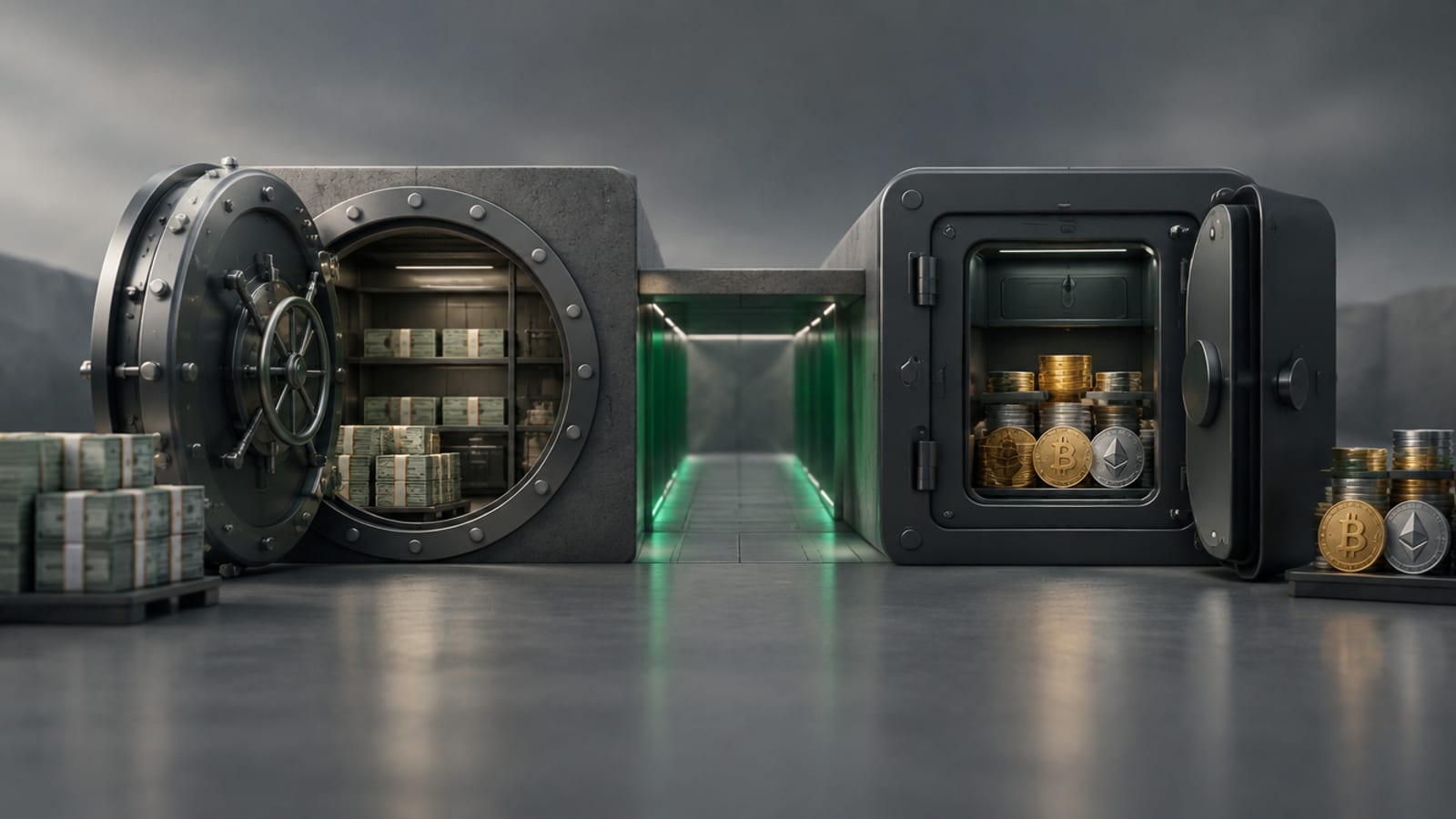
Key takeaways
- On 14 October 2026, Payward, the parent of Kraken, signed an agreement to buy Saldo Bank in Lithuania; the deal needs regulatory approval and is expected to close in 2027.
- Payward says it plans to offer European clients interest on deposits and lending, subject to approvals; the release does not mention US customers.
- Lithuania's deposit guarantee covers eligible bank deposits up to EUR 100,000 per depositor per bank, and its official page does not mention crypto.
- Neither the release nor CoinDesk says whether any crypto would be held at the bank, or mentions deposit insurance.
- A company owning a bank does not make every balance in its app a bank deposit; ask which entity holds each part of your money.
On 14 October 2026, Payward, the company behind the Kraken exchange, announced it had agreed to buy Saldo Bank, a bank in Lithuania. CoinDesk reported the same day that the deal would give Payward a banking license in the European Union.
The headline sounds simple: a crypto company is getting a bank. The question it raises is less simple. If cash and crypto sit in the same app, are they held the same way, and under the same protections? This story is a useful way to learn how to check.
What did Payward announce?
Payward’s release on Business Wire says it signed a definitive agreement to acquire Saldo Finance, a Finnish holding company that owns Saldo Bank. The release says Saldo Bank is licensed by the European Central Bank and regulated by the Bank of Lithuania. The price was not disclosed. Both the release and CoinDesk say the deal needs regulatory approval and is expected to close in 2027.
Arjun Sethi, Payward’s co-CEO, said in the release that a regulated EU bank is the piece that lets the company serve European clients “the way a primary financial institution should,” with “one place to hold assets, move them freely, and put them to work.”
CoinDesk reports that the Financial Times described this as the first crypto firm to buy a bank in Europe. That is the FT’s description as reported by CoinDesk, and we have not checked it ourselves.
The deal was not a surprise. In July, Bloomberg reported, citing unnamed sources, that Payward was planning to buy a Lithuanian bank, with no certainty a deal would be reached.
What does Saldo Bank do?
According to the release, Saldo Bank offers term deposits, consumer loans, loans to small businesses, a credit card in Finland and full access to SEPA, Europe’s euro payment network. It says the bank has more than 90 staff and can operate in five European markets.
The release says the deal is expected to let Payward offer European clients interest on deposits and lending products, subject to regulatory approvals. That is a plan that depends on approvals not yet given. The release talks about European clients and does not mention customers in the United States.
What does a bank deposit guarantee cover?
It covers money in bank accounts, up to a limit. In Lithuania, deposit insurance is run by a public institution, Deposit and Investment Insurance. Its page, checked on 14 October 2026, says:
- the most repayable to one depositor under the deposit guarantee scheme is EUR 100,000;
- all of a person’s eligible deposits at the same bank are counted together;
- covered deposits are balances held with a bank under a deposit or account agreement;
- some things are not covered, including electronic money.
The page does not mention crypto at all.
What does the announcement leave out?
The release does not mention deposit insurance. It does not say whether any crypto would be held at the bank. It does not give a price. CoinDesk’s story does not address deposit insurance or crypto at the bank either.
When a release is silent on something, that is not a yes or a no. It means the answer has to come from somewhere else, in writing.
What does a crypto company buying a bank mean for your money?
Three things, none of them about price.
- Owning a bank doesn’t make every balance a bank deposit. The bank is one legal entity and the exchange is another. The question is which one holds which part of your money.
- Protection claims need a source. The only deposit guarantee figure in this story comes from Lithuania’s official scheme, and it covers bank deposits.
- Cash and crypto in one app can sit under different rules. Ask about each one separately.
We looked at the same question from the exchange side in what Coinbase’s terms say about account freezes.
What is happening on the US side?
CoinDesk reports Payward has applied for a US national trust bank charter, and that its banking arm has a limited-purpose master account at the Federal Reserve, giving it limited access to the Fed’s payment system. An application is not an approval, and CoinDesk does not report a decision. We explained the master account in our piece on Kraken’s Fed master account tiers.
CoinDesk also reports Payward says its banking business has made more than $2 billion in loans and holds an electronic money license in Ireland. Bloomberg reported in July that Kraken already holds a license under MiCA, the EU’s crypto rules. These are licenses for different jobs. None of them, on its own, tells you what covers a given balance. For another recent Payward move, see Hyperliquid in the US: what Payward announced.
A made-up example: two holders, one platform
Holder A and Holder B each keep cash and crypto on the same platform. This is a made-up example, not any real person.
| Holder A | Holder B | |
|---|---|---|
| What they know | Sees one total, assumes it’s all protected the same way | Has looked up which company holds the cash and which holds the crypto, and saved the terms for each |
| Platform announces a banking feature | Has to work out from scratch whether it changes anything | Checks the two lines in the terms that matter |
Neither has done anything wrong with their money. The difference is how quickly each can tell what the news means for them.
What are the limits of what we know?
- The deal isn’t done and needs regulatory approval.
- The bank’s services and Payward’s plans come from Payward’s own release.
- The FT description, the charter application and the Fed account are reported by CoinDesk; we have not seen the underlying documents.
- CoinDesk gives two different figures for the bank’s size, so we left the number out.
- The deposit guarantee page covers Lithuania only. Other countries have their own schemes.
- We have not seen Kraken’s or Payward’s terms for any new product.
One note on sources: CoinDesk discloses that it is owned by Bullish and that its reporters may receive Bullish stock as part of their pay.
What would change this view?
If Payward publishes terms that say which balances sit at the bank and what covers them, the open questions here get answers. If regulators reject the deal or set conditions, the plans could change. If the deal closes and European products move to the bank, the custody picture for those clients would need a fresh look. In fairness to Payward, buying a regulated bank means taking on a regulator’s rules. Saldo Bank’s president, Jarkko Mäensivu, said in the release that “a banking license is only as valuable as what you build on top of it.”
Three custody questions for any platform
- Which company holds each part of your money? The name on the app and the legal name in the terms can differ. If the terms name more than one company, note which is listed next to cash and which next to crypto.
- What protection applies, and who says so? Look for exact words in the platform’s terms or an official scheme’s own page. If you can’t find it in writing, treat it as unknown.
- Is this balance cash or crypto? Ask the first two questions separately for each.
What to watch next
Watch whether regulators approve the deal and on what conditions, the terms of any deposit or lending product and what they say about protection, whether the US trust charter application gets a decision, and whether the deal price is ever disclosed. Most of all, check what your own platform’s terms say about where your cash and crypto sit.
Frequently asked questions
Is Kraken buying a bank?
Kraken's parent company, Payward, signed a definitive agreement on 14 October 2026 to acquire Saldo Finance, the holding company for Saldo Bank in Lithuania. The deal needs regulatory approval and is expected to close in 2027. The price was not disclosed.
What is Saldo Bank?
According to Payward's release, Saldo Bank is licensed by the European Central Bank, regulated by the Bank of Lithuania, has more than 90 staff and can operate in five European markets. It offers term deposits, consumer and small business loans, a credit card in Finland and SEPA payment access.
Will crypto on Kraken be covered by deposit insurance?
Nothing in the release or CoinDesk's report says so. Lithuania's deposit insurance body says its guarantee covers eligible bank deposits up to EUR 100,000 per depositor per bank, and its page does not mention crypto.
Does the Kraken Saldo Bank deal affect US customers?
The release talks about European clients and does not mention US customers. Separately, CoinDesk reports Payward has applied for a US national trust bank charter, and an application is not an approval.
Education and commentary only, not financial advice. Crypto is volatile and you can lose money. Do your own research and speak to a qualified advisor before making investment decisions. Figures are as of October 19, 2026 and may have changed since.