Ondo BlackRock Portfolios: Who Designs, Who Issues, Who Can Hold
Ondo launched Intelligent Portfolios with strategies BlackRock developed for it. Who issues the tokens, what holders get, the fees, and who is eligible.
Key takeaways
- On 24 September 2026, Ondo launched Intelligent Portfolios: three single-token portfolios using strategies Ondo says BlackRock developed for it.
- Ondo's docs say the model provider does not issue, sponsor, manage or administer the tokens and has no duties to token holders.
- A portfolio token gives economic exposure to a basket of Ondo's tokenized stocks and ETFs, which is not the same as owning the shares.
- Ondo's pages say U.S. persons are not eligible, and the annual fee rate and custodian names are not printed in the public docs.
- For any big-name token product, name the designer, the issuer, what you hold, the fee and whether you are eligible.
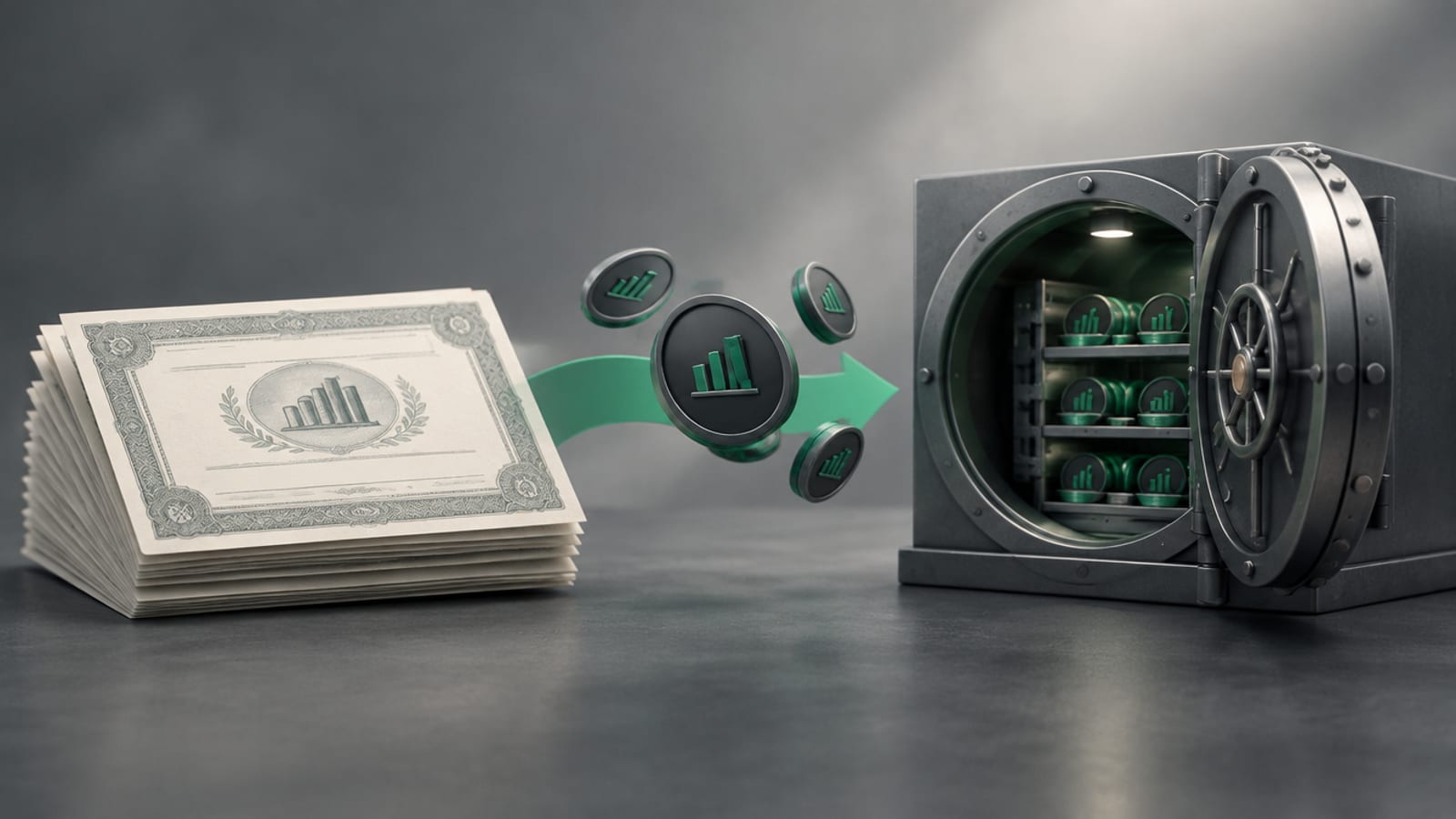
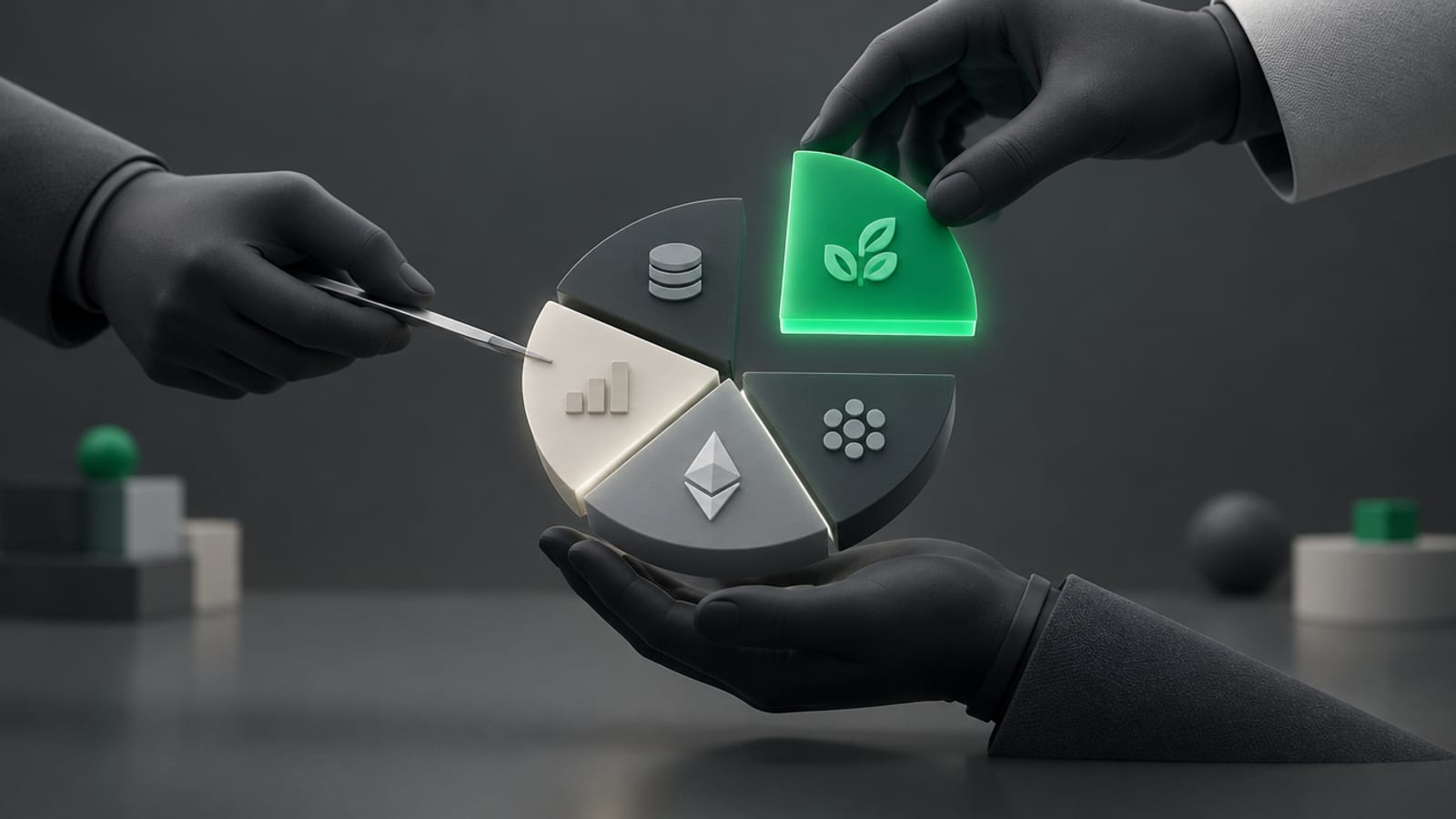
On 24 September 2026, Ondo Finance launched what it calls Intelligent Portfolios: whole investment portfolios, each packed into a single token. Ondo’s blog says the first three use “portfolio strategies developed by BlackRock for Ondo,” and CoinDesk described BlackRock’s role the same way on 3 October.
A famous name on a label is a reason to read closely. On its own, it says nothing about how a product will do or who stands behind the token. This post separates three things the headlines blur together: who designed the strategy, who issues the token, and what a holder actually gets. It is about the portfolio tokens, not the ONDO token, and says nothing about any token’s price. For how ONDO itself relates to bank news, see our bank-linked altcoins test.
What did Ondo launch?
Ondo launched three portfolios, each built into one token on a blockchain. They are named Ondo High Income, Ondo Diversified Growth and Ondo High Growth, each ending in “Powered by BlackRock.” Those are product names; “High Income” is a label, not a result. Ondo’s press release says the portfolios are delivered as single tokens “for eligible investors outside the United States.”
As Ondo and CoinDesk describe it, BlackRock designed the strategies and Ondo builds and runs the tokens. We looked for a BlackRock press release or filing and did not find one, so BlackRock’s role here is as Ondo states it and CoinDesk reports it.
Lisa O’Connor, who leads model portfolio solutions at BlackRock, said in the release and to CoinDesk: “Tokenization creates new ways for portfolio strategies to be delivered through digital infrastructure.” Note that it is about delivery and says nothing about returns.
What is a model portfolio?
CoinDesk describes model portfolios as pre-built combinations of funds and other investments used by wealth managers. Think of a recipe: someone picks the ingredients and the amounts, and the recipe is used in client accounts. CoinDesk, citing the data firm Broadridge, put the money tracking model portfolios at about $9.8 trillion in June. The recipe idea is not new. What Ondo says is new is the wrapper: one token instead of a brokerage account.
How does Ondo say the token works?
Per Ondo, the holdings inside are its own tokenized stocks and ETFs, which it says are backed by real securities. The press release says a portfolio token gives “economic exposure” to the basket. That means the token’s value is meant to track the basket. It is not the same as owning those shares.
- Rebalancing: Ondo’s help pages say portfolios generally rebalance once a quarter back to their starting weights, carried out by Ondo, and that a rebalance changes amounts, not which assets are held. The release says this runs automatically in the token’s smart contract. Automatic does not mean the basket cannot fall in value.
- Chains: Ondo’s technical page says the tokens are on Ethereum and BNB Chain.
- Transfers: the release says the tokens can move between wallets, exchanges and crypto apps.
Who issues the token, and who stands behind it?
This is the core of the story. Ondo’s model providers page says the model provider, which for the first three is BlackRock, does not issue, sponsor, manage or administer the portfolio tokens. It says the model provider does not hold the assets behind them and has no relationship with, or obligations to, token holders.
Ondo’s docs name the issuer of its tokenized stocks as Ondo Global Markets (BVI) Limited, a company in the British Virgin Islands, and say the portfolio tokens share that framework. The stocks are held with one or more U.S.-registered broker-dealers acting as custodians, which the docs do not name. Ondo’s notes say its tokenized stocks are not themselves stocks or ETFs and that a holder may lose money, up to the total amount paid.
| Role | Who, per Ondo’s docs |
|---|---|
| Designed the strategy (first three) | BlackRock, as model provider |
| Issues the token | Ondo Global Markets (BVI) Limited framework |
| Holds the underlying stocks | Unnamed U.S. broker-dealer custodians |
| What a holder gets | Economic exposure, not the shares |
| Duties to token holders from the designer | None, per the model providers page |
The same split appears in other stock tokens. Our Robinhood Chain explainer covers why a stock token is not the same as owning a share.
Who can hold these tokens?
Ondo’s release says eligible investors outside the United States. Its eligibility page says the portfolio tokens follow the same rules as its tokenized stocks, and that list names the United States as prohibited. If you live in the U.S., Ondo’s own pages say you are not eligible. Some places, such as the U.K. and the European Economic Area, carry extra tests; for individuals there, one test is a portfolio of €500,000.
Creating or redeeming tokens directly with Ondo, called minting and redeeming, happens during U.S. market hours on trading days and needs identity checks. Holding a token bought from someone else does not, by itself, allow minting or redeeming. Outside market hours, Ondo’s market hours page warns that spreads may widen and token prices may drift further from the basket’s value. The token moves around the clock; the stocks behind it trade on Wall Street’s clock.
What are the fees?
Ondo’s fees page says each portfolio charges an annual service fee, taken through the token’s price, plus a fee on each holding in the basket when minting or redeeming. The public docs do not print the annual rate; they point to each product page.
What has changed since launch?
Ondo’s 1 October release (in Portuguese; our translation) says the range grew from three portfolios to seven. Ondo’s docs say the four new ones were designed by Ondo itself, so only the first three carry BlackRock’s strategies. If you see all seven described as BlackRock portfolios, Ondo’s own pages say otherwise.
CoinDesk also notes that Bitwise launched Automated Token Portfolios in August with Coinbase and Glider, also for eligible investors outside the U.S. John Hoffman, Ondo’s head of portfolio products, told CoinDesk the end goal is portfolios that are “professionally managed, real-time.” That is a stated aim, not something that exists today.
Five checks for any big-name token product
- Who designed the strategy? For the first three portfolios, Ondo says BlackRock.
- Who issues the token, and does the designer owe you anything? Here, a different company issues it, and the designer has no duties to holders.
- What do you actually hold? The asset itself, or exposure to it.
- What is the fee? Note when the rate is not printed where you can see it.
- Are you eligible where you live? For U.S. persons, Ondo’s pages say no.
What would change this view?
Our read is that the designer and the issuer are separate companies and key details sit in the help pages, not the headline. That would change with a statement or filing from BlackRock itself, or if Ondo published fee rates and custodian names on its public pages.
What to watch next
- Whether BlackRock publishes anything of its own about the product.
- Whether Ondo adds fee rates and custodian names to its public docs.
- Whether Ondo adds more networks or model providers, which its docs say it intends to do.
Ondo’s pages were checked on 14 October 2026 and may have changed since.
Frequently asked questions
What are Ondo Intelligent Portfolios?
They are investment portfolios packaged into single tokens, launched by Ondo Finance on 24 September 2026. The first three use portfolio strategies Ondo says were developed by BlackRock for Ondo.
Does BlackRock issue the Ondo portfolio tokens?
No, according to Ondo's docs. They say the model provider does not issue, sponsor, manage or administer the tokens, holds no assets behind them, and has no obligations to token holders. We found no BlackRock press release or filing about the launch.
Can U.S. investors buy Ondo Intelligent Portfolios?
Ondo's press release says the tokens are for eligible investors outside the United States, and its eligibility pages list U.S. persons as prohibited.
What fees do Ondo Intelligent Portfolios charge?
Ondo's docs say each portfolio charges an annual service fee taken through the token's price, plus mint and redeem fees on each holding in the basket. The public docs do not print the annual rate; they point to each product page.
How often do the portfolios rebalance?
Ondo's help pages say the portfolios generally rebalance once a quarter back to their starting weights, and that a rebalance changes how much of each asset is held, not which assets are in it.
Education and commentary only, not financial advice. Crypto is volatile and you can lose money. Do your own research and speak to a qualified advisor before making investment decisions. Figures are as of October 17, 2026 and may have changed since.