Who Is Satoshi? Bitcoin's Unmoved Coins and Why XRP Is Different
Two 2026 investigations named different people as Satoshi. What the evidence shows, why his unmoved Bitcoin matters for quantum risk, and how XRP differs.
Key takeaways
- Satoshi is believed to control around 1.1 million Bitcoin, roughly 5% of all Bitcoin that will ever exist, and as far as anyone can tell those coins have never moved.
- Every serious Satoshi theory so far, including the 2026 cases for Adam Back and for Hal Finney and Len Sassaman, rests on circumstantial evidence, not proof.
- If quantum computers ever break Bitcoin's current cryptography, coins that nobody can move to new quantum-safe addresses could become targets, and Bitcoin developers are debating what to do about them.
- XRP has known founders and a known company, and most of Ripple's reserve sits in escrow that anyone can see on the ledger.
- Bitcoin and XRP carry different kinds of risk. Holders should know which kind they own.
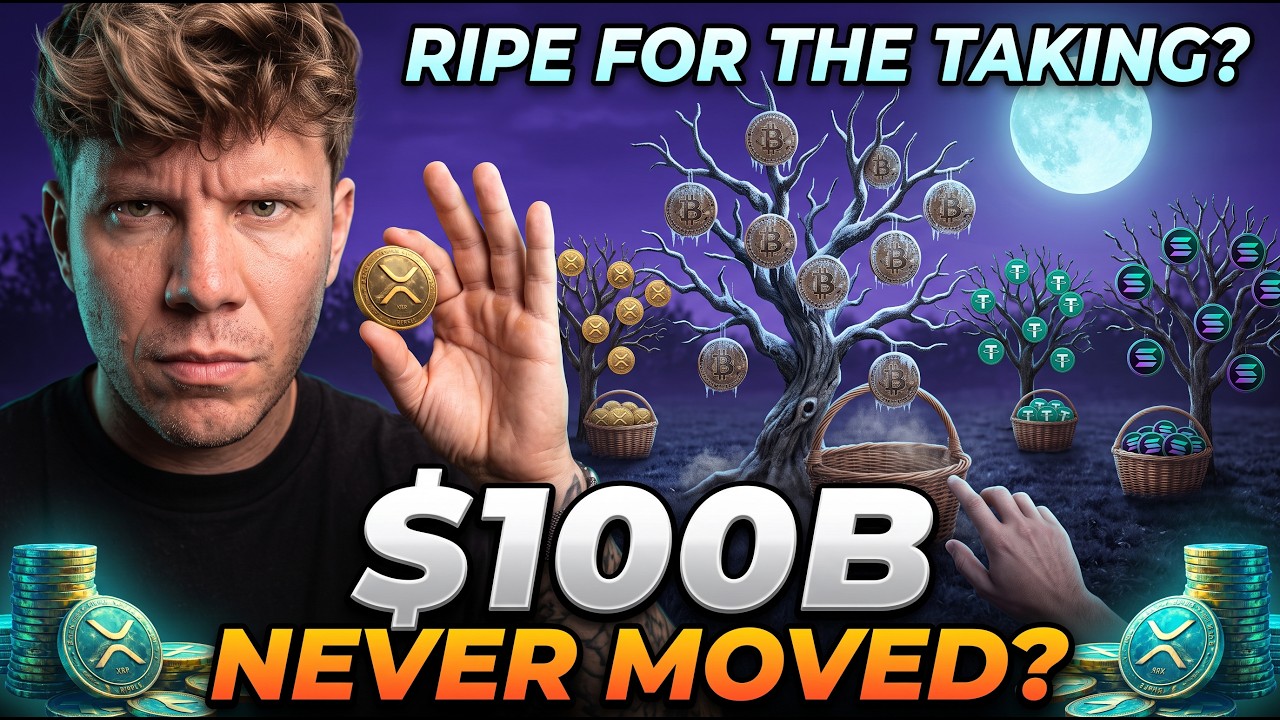
The person who invented Bitcoin is believed to control around 1.1 million coins. That is roughly 5% of all the Bitcoin that will ever exist, worth something like $100 billion depending on the price. As far as anyone can tell, none of it has ever moved.
In 2026, two major attempts to unmask Satoshi Nakamoto landed within two weeks of each other, and they named different people. In this Bullrunners deep dive, host George Lee walks through both cases, the people wrongly named before them, and two reasons the mystery matters to anyone holding crypto: the quantum computing risk hanging over those unmoved coins, and why XRP’s story is the opposite of Bitcoin’s.
What is actually known about Satoshi Nakamoto?
Very little is on the record. According to the video, the timeline is short:
- October 31, 2008: someone calling themselves Satoshi Nakamoto publishes the Bitcoin white paper.
- January 2009: the network goes live. Within days, programmer Hal Finney posts two now-famous words: “Running Bitcoin.”
- January 12, 2009: Satoshi sends Finney the first Bitcoin transaction from one person to another.
- About two years of public work on the project follow.
- December 2010: Satoshi’s last forum post.
- 2011: in an email to another developer, Satoshi writes that they have moved on to other things. Then nothing.
An HBO documentary on the mystery framed the stakes simply: the inventor of Bitcoin could be one of the richest people on Earth, and as Bitcoin becomes part of the financial system, the question of who that is has only grown more pressing.
Who has been wrongly named as Satoshi before?
The hunt has a poor track record. The video lists three earlier cases that fell apart or were firmly denied.
| Year | Person | Who named them | What happened |
|---|---|---|---|
| March 2014 | Dorian Nakamoto | Newsweek cover story | He denied any involvement and said he had only recently heard of Bitcoin |
| Years of claims, ruled on March 14, 2024 | Craig Wright | Himself | A judge in the High Court in London ruled he was not Satoshi and did not write the white paper, and later said he lied to the court extensively and repeatedly |
| October 2024 | Peter Todd | HBO documentary | He denied it |
Dorian Nakamoto’s case shows the human cost. He was swarmed by reporters within hours of the Newsweek story and spent the following days trying to clear his name, saying he was “just an engineer doing something else.”
Is Adam Back Satoshi? The New York Times case
The New York Times says yes. Adam Back says no, and there is no proof either way.
On April 8, 2026, the paper published a more-than-year-long investigation by John Carreyrou, the reporter who exposed the blood-testing company Theranos. His answer was Adam Back, a British cryptographer. The case rests on:
- Hashcash. In 1997 Back invented Hashcash, a system where a computer has to do a small amount of work to prove it isn’t a spammer. It is one of the building blocks of Bitcoin mining, and the white paper cites it.
- Early contact. Back was one of the first people Satoshi emailed, in August 2008, before the white paper came out.
- Writing style. Carreyrou pointed to similarities in how the two wrote.
The most pointed part of the case concerns the 2008 emails Back made public. According to the video, the Times asked Back for the technical data behind them, and Carreyrou suggested as a theory that Back might have written both sides himself. Back did not hand the data over. He explained that he held off sharing the emails for years because sharing private correspondence without permission is considered impolite, and he could not ask someone who no longer answered.
Back denied the claim the same day. Two days later on CNBC, he argued there is selection bias in the hunt: people with the right background keep getting named. He compared it to a Monty Python sketch in which a man’s denial that he is the Messiah is taken as proof he is. He also pointed to 2013 chat logs that he says show him still learning how Bitcoin worked. Skeptics counter that a careful Satoshi could have done exactly that.
The video’s summary: a real cypherpunk (a privacy and cryptography activist) with the right skills and history, a respected reporter, a flat denial, and suggestive evidence. But not proof.
Were Hal Finney and Len Sassaman Satoshi?
A second 2026 investigation says Satoshi was two people, both now dead. On April 22, 2026, the film Finding Satoshi came out, built on an investigation by business writer William Cohan and private investigator Tyler Maroney.
Their theory is that Hal Finney wrote the code and Len Sassaman, a privacy programmer, did much of the writing, including the white paper. Both worked on encryption. Sassaman died in July 2011, only months after Satoshi went quiet, which is a big reason his name keeps coming up. Finney died of ALS in 2014.
Key points from the video:
- Finney denied being Satoshi while he was alive.
- According to Decrypt’s report on the film, his widow Fran conceded her husband probably played a role in Bitcoin’s creation. As the video notes, “probably played a role” is a long way from being Satoshi.
- Bitcoin investor Nick Carter said on Bloomberg that many people he knows suspect Sassaman, but added: “There’s no direct evidence of this. It’s all circumstantial.”
The film’s strongest argument is about the coins. One investigator put it this way: if you had a $100 billion fortune, you would not live a life of frugality. In other words, the coins haven’t moved because nobody alive can move them. The video points out that this still isn’t proof. Someone could simply be disciplined, or could have lost the keys. And naming people who have died carries a cost, because their families can become targets.
Why do Satoshi’s unmoved coins matter for quantum risk?
They could become the first target if quantum computers ever break Bitcoin’s cryptography. Nick Carter laid out the concern on Bloomberg: in the coming years, a quantum computer might be able to break the cryptographic assumptions underpinning Bitcoin. Active holders could in theory move their coins to new, quantum-safe addresses. But if Satoshi is gone, those coins would sit idle and, in Carter’s words, be “ripe for the taking.”
That leaves Bitcoin developers with a hard choice, according to the video:
- Leave the coins alone and risk a sudden flood onto the market if someone cracks them.
- Change the rules so old coins that haven’t moved get frozen, which means touching the one fortune the community has always left alone.
Either option breaks something people care about. On timing, Carter said Google and Cloudflare are bringing their deadline forward to 2029 for a full transition, and the US government wants to transition between 2030 and 2035. The video stresses these are Carter’s summary, and nobody knows exactly when, or if, such a computer will arrive.
The point is that the risk isn’t only in the math. It is that the largest single Bitcoin holder, as far as anyone can tell, is unknown, silent and can’t be asked.
Why is XRP’s story the opposite of Bitcoin’s?
XRP has known founders and a known company, Ripple, while Bitcoin has no known founder. For years that looked like Bitcoin’s advantage.
On June 14, 2018, William Hinman, a senior official at the SEC, gave a speech on why some coins might be securities. He said that when he looked at Bitcoin, he did not see a central third party whose efforts were a key determining factor. Many people read that as Satoshi’s disappearance helping Bitcoin: with no founder in charge, there was nobody to hold responsible.
XRP had Ripple. According to the video:
- End of 2020: the SEC sued Ripple, arguing its XRP sales were securities offerings.
- About two and a half years later: a judge ruled that XRP Ripple sold automatically through exchanges did not count as investment contracts, though its sales to large institutional investors did.
- August 2025: the case finally ended, with Ripple paying a $125 million penalty.
Having a name and a face made XRP a target. But the video argues it also changes what holders can see:
| Bitcoin | XRP | |
|---|---|---|
| Founder | Unknown | Known founders and company (Ripple) |
| Largest holder | Believed to be Satoshi, unconfirmed | Ripple, known |
| Visibility of that holding | Idle coins, owner can’t be asked | Most of Ripple’s reserve in escrow, visible on the ledger |
| Main risk highlighted | Silent holder, quantum exposure | Regulatory attention on a known company |
Neither is risk-free. They carry different kinds of risk, and with XRP the risks are public, even the uncomfortable ones.
What to watch next
The identity question may never be settled. Back himself said he doesn’t expect anything conclusive after 15 years of analysis. For holders, the more useful things to follow are:
- Any movement of early Satoshi-era coins. None has been seen so far, as far as anyone can tell.
- Bitcoin developer proposals on quantum safety, especially whether old, unmoved coins would be left alone or frozen.
- Quantum transition timelines from large tech firms and governments, keeping in mind that no one knows when a capable machine will exist.
- Ripple’s escrow, which anyone can check directly on the XRP Ledger.
Most of all, know which kind of risk sits in your own portfolio: an unknown holder you can’t question, or a known one whose holdings you can see.
Frequently asked questions
Who did the New York Times say is Satoshi Nakamoto?
On April 8, 2026, the New York Times published an investigation by John Carreyrou naming cryptographer Adam Back, the inventor of Hashcash. Back denied it the same day, and the video notes there is no proof either way.
What does the documentary Finding Satoshi claim?
The film, released April 22, 2026, argues Satoshi was two people: Hal Finney, who wrote the code, and Len Sassaman, who did much of the writing. Both men have died, and Finney denied being Satoshi while he was alive.
How much Bitcoin does Satoshi own?
According to the video, Satoshi is believed to control around 1.1 million Bitcoin, roughly 5% of the total supply and worth about $100 billion depending on the price. As far as anyone can tell, those coins have never moved.
Why does quantum computing matter for Satoshi's coins?
Investor Nick Carter argued that if a quantum computer breaks Bitcoin's cryptography, holders could move coins to new quantum-safe addresses, but Satoshi's idle coins could not be moved and would be exposed. Developers are debating whether to leave those coins alone or freeze them.
How is XRP different from Bitcoin on this issue?
XRP has known founders and a known company, Ripple, and most of Ripple's reserve sits in escrow visible on the ledger. The video argues that this made XRP a regulatory target but also means its risks are public.
Education and commentary only, not financial advice. Crypto is volatile and you can lose money. Do your own research and speak to a qualified advisor before making investment decisions. Figures and quotes are as reported in the video on October 11, 2026 and may have changed since.