Zcash Trusted Setup: How Snowden Held a Piece of the Launch Key
The story of Zcash's 2016 key ceremony, Edward Snowden's secret role, two counterfeiting flaws, and what it teaches about the trust behind any coin.
Key takeaways
- Bitcoin is not anonymous: every transaction sits on a public ledger, and once an address is linked to you, your history can be followed.
- Zcash's original trusted setup split a key that could print counterfeit coins between six people, and only one of them needed to destroy their piece for the system to be safe.
- Edward Snowden was one of the six key holders under the pseudonym John Dobbertin, which the public did not learn until April 2022.
- Zcash has fixed two known counterfeiting flaws, one disclosed 11 months after discovery (2018) and one patched within days (2026).
- For any coin you hold, ask what would have to go wrong for it to fail, and who could stop it, change it or print more of it.
In 2016, a key that could have printed unlimited Zcash was split between six people in six locations. One of them used a fake name, and for more than five years nobody outside the project knew who it was. In April 2022 the answer came out: it was Edward Snowden, the former NSA contractor.
A new Bullrunners video tells the full story, from a problem Satoshi Nakamoto could not solve, to a ceremony involving blowtorches and tin foil, to two counterfeiting flaws found years later. The point is not just Zcash. Every coin rests on some kind of trust, and the video argues that many holders never ask what theirs is.
Why isn’t Bitcoin private?
Bitcoin is not anonymous because every transaction sits on a public ledger that anyone can read. Your name is not on it, but once an address is linked to you, your history can be followed.
The public ledger is a feature. It is how everyone can check that nobody is cheating. The video calls it a glass wall around your money.
Satoshi knew this. In August 2010, someone on the Bitcoin forum raised the idea of hiding transaction details. Satoshi replied that it was a very interesting topic, and that if a solution were found, a better and more convenient version of Bitcoin would be possible. The catch, Satoshi wrote, was that it was hard to see how to apply zero-knowledge proofs, because the network has to prove a coin has not already been spent, and that seems to require seeing everything.
A zero-knowledge proof lets you prove something is true without revealing the thing itself. The video’s example: proving you are over 18 without showing your date of birth.
How did Zcash start?
Zcash grew out of academic research that took up Satoshi’s challenge. According to the video:
- 2013: Cryptographers at Johns Hopkins, including Professor Matthew Green, designed a privacy add-on for Bitcoin called Zerocoin.
- 2014: A larger team from Johns Hopkins, MIT, the Technion and Tel Aviv University published Zerocash, a full design for private payments using a type of zero-knowledge proof.
- 2016: That design became Zcash, built on Bitcoin’s code with the same 21 million coin cap.
The key difference from Bitcoin is the shielded pool: an option to send money where the sender, receiver and amount are all encrypted.
What is the trusted setup problem?
To launch Zcash, someone had to generate a cryptographic structure using a secret key, and anyone who kept that key could counterfeit money. Users would have to trust that whoever created it destroyed every copy.
This became known as the trusted setup problem. It was especially dangerous because shielded coins are encrypted. If someone had printed Zcash inside a shielded pool at launch, it could have gone unnoticed. The Zcash team’s own name for the leftover secret was “toxic waste.”
What happened at the 2016 Zcash ceremony?
The team’s answer was a two-day event in October 2016, just before Zcash went live on October 28, which they called the ceremony. Instead of one person making the key, six participants in separate locations each made one piece. As long as any one of the six destroyed their piece, nobody could rebuild the whole key. This technique is called multi-party computation.
The precautions, as described in the video:
- Each computer was bought new from a random store and kept air-gapped, meaning never connected to any network.
- Participants physically removed the Wi-Fi and Bluetooth radios before powering the machines on.
- Every message between machines was burned onto discs that cannot be rewritten, leaving a permanent evidence trail.
- A fingerprint of the whole process was recorded in the Bitcoin blockchain.
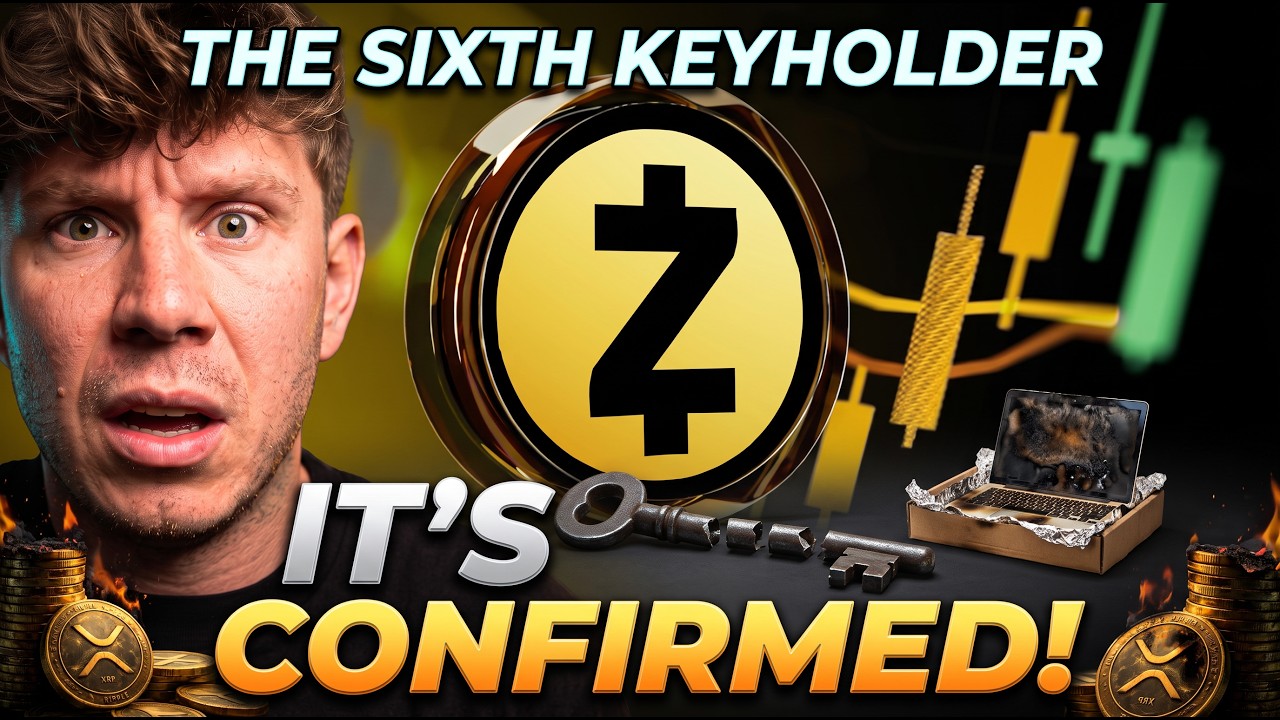
Then came the destruction. A journalist from IEEE Spectrum who witnessed one station reported that memory chips holding key fragments were smashed and burned in a fire pit. Bitcoin developer Peter Todd ran the mobile station on a laptop inside a cardboard box lined with tin foil while driving across British Columbia, then burned the machine with a propane torch.
Within days, five participants were named: Andrew Miller, a University of Illinois professor; Peter Van Valkenburgh of the policy group Coin Center; Peter Todd; the security firm NCC Group, which was hired both to run a station and to try to hack the ceremony; and founder Zooko Wilcox. The sixth went by the pseudonym John Dobbertin.
Who was John Dobbertin?
John Dobbertin was Edward Snowden. In April 2022, Zooko said he had messaged the participant asking to end the secrecy. The reply, as Zooko read it, was that it could be shared “as long as it’s clear that I was never paid and had no stake, it was just a public interest thing.”
Snowden then confirmed it on camera. He said he joined because trusted academic cryptographers were working on it, and because most cryptocurrencies use cryptography to make a fair ledger but not a private one. In his words, “you can’t have truly free trade unless you have private trade.”
According to the video, Snowden had praised the technology publicly before the reveal. In December 2017 he called it a moonshot, risky but transformative if it succeeded, while saying plainly he was not telling anyone to buy it.
What counterfeiting flaws has Zcash fixed?
Zcash has fixed two known counterfeiting flaws, and the way each was handled was very different.
| 2018 flaw | 2026 flaw | |
|---|---|---|
| Found by | Ariel Gabizon, cryptographer at the Zcash company | Taylor Hornby, researcher at Shielded Labs |
| Found on | March 1, 2018 | May 29, 2026 |
| Where | Proof system Zcash launched with | Orchard pool circuit, present since 2022 |
| Fix | Upgrade in October 2018 | Emergency upgrades within days; new Ironwood pool on July 28, 2026 |
| Disclosure | February 2019, about 11 months after discovery | Patched publicly within days |
| Evidence of use | Team said none found | Analysis found none, but cannot prove certainty |
The 2018 story explains a mystery. In September 2018, Peter Todd publicly criticized the ceremony and complained that files needed to fully check it were unavailable. According to the video, the team had quietly removed those files with a cover story that they were lost, because anyone holding them could have exploited the flaw.
In 2019, Zcash added a rule nicknamed the turnstile, which stops more coins leaving a shielded pool than went in. That protects total supply, but it cannot stop fake coins being created inside a pool.
For the 2026 flaw, the old Orchard pool was closed to new deposits so coins could only leave it, under a stricter check. The video notes that the Orchard balance grew steadily over four years, which suggests nobody was quietly draining it.
How did Zcash remove the trusted setup?
A 2019 breakthrough called Halo made it possible to build these proofs without a trusted setup. The lead researcher, Sean Bowe, described stumbling on the technique and, over about 24 hours, realizing it removed the need for a ceremony. He is a high school dropout, a detail the video highlights.
On September 10, 2019, Zooko announced the team was exploring Halo. On May 31, 2022, the NU5 upgrade went live with the Orchard pool, which needed no trusted setup. A second ceremony had been run in 2018 with far more participants, but as one speaker put it, people may not trust a setup “even if there’s a million people.” Still, as the 2026 flaw showed, setup-free math can have bugs too.
How does Zcash privacy compare with Bitcoin and Monero?
The main difference is whether privacy is off, always on, or optional.
| Coin | Privacy model | Video’s analogy |
|---|---|---|
| Bitcoin | Public by default | Glass walls |
| Monero | Always private | Blackout blinds |
| Zcash | Optional: transparent or shielded addresses | Curtains you can open or close |
Supporters say optional privacy gives users a choice. Critics say it means fewer people use the private side.
Privacy coins also make regulators nervous. In 2018, under pressure from Japan’s financial regulator, the exchange Coincheck delisted Zcash and other privacy coins. On the other side, a 2020 RAND study commissioned by the company behind Zcash found only about 1% of dark web listings that took crypto accepted Zcash, far behind Bitcoin and Monero.
Three lessons for any coin you hold
The video closes with a framework that applies well beyond Zcash.
- Every coin rests on some kind of trust. With Bitcoin, you trust that no single group controls most of the mining. With many newer coins, you trust a company, a foundation or a handful of validators. Ethereum ran its own setup ceremony in 2023 with more than 141,000 contributors, relying on the same one-honest-participant idea.
- Public by default is a design choice. Know which model your coin uses and what it means for how exchanges and regulators treat it.
- Watch how a project handles its weak points. Zcash kept one flaw quiet for 11 months and patched another within days. You can read that as a warning sign or as a team that finds and fixes its own bugs.
The exercise: pick one coin and ask what would have to go wrong for it to fail, and who could stop it, change it or print more of it. If you cannot answer, that is your homework.
What to watch next
For Zcash holders, the practical points to follow are how the Ironwood pool performs, whether any further review of the old Orchard pool emerges, and how exchanges and regulators continue to treat privacy coins. For every other holding, the question from this story still applies: know what your coin’s security depends on, and check how its team has handled problems in the past.
Frequently asked questions
What is the Zcash trusted setup problem?
To launch Zcash, developers had to generate cryptographic parameters using a secret key. Anyone who kept a copy of that key, which the Zcash team called toxic waste, could have counterfeited coins inside the encrypted shielded pool without being noticed.
Was Edward Snowden involved in Zcash?
Yes, according to the video. Snowden took part in the original 2016 ceremony under the pseudonym John Dobbertin, and Zcash founder Zooko Wilcox revealed it with his permission in April 2022. Snowden said he was never paid and had no stake.
Does Zcash still need a trusted setup?
No. The NU5 upgrade on May 31, 2022 added the Orchard shielded pool, which used the Halo proof system and needed no trusted setup. After a flaw was found in Orchard in 2026, a new pool called Ironwood went live on July 28, 2026.
Were the Zcash counterfeiting bugs ever exploited?
According to the video, the Zcash team said it found no evidence the 2018 flaw was discovered or used by anyone else. For the 2026 Orchard flaw, analysis found no evidence of exploitation, but the video notes this cannot be proven with absolute certainty.
How is Zcash different from Monero?
On Monero, privacy is always on. On Zcash it is optional: you can use a transparent address similar to Bitcoin or a shielded address where the sender, receiver and amount are encrypted.
Education and commentary only, not financial advice. Crypto is volatile and you can lose money. Do your own research and speak to a qualified advisor before making investment decisions. Figures and quotes are as reported in the video on October 12, 2026 and may have changed since.