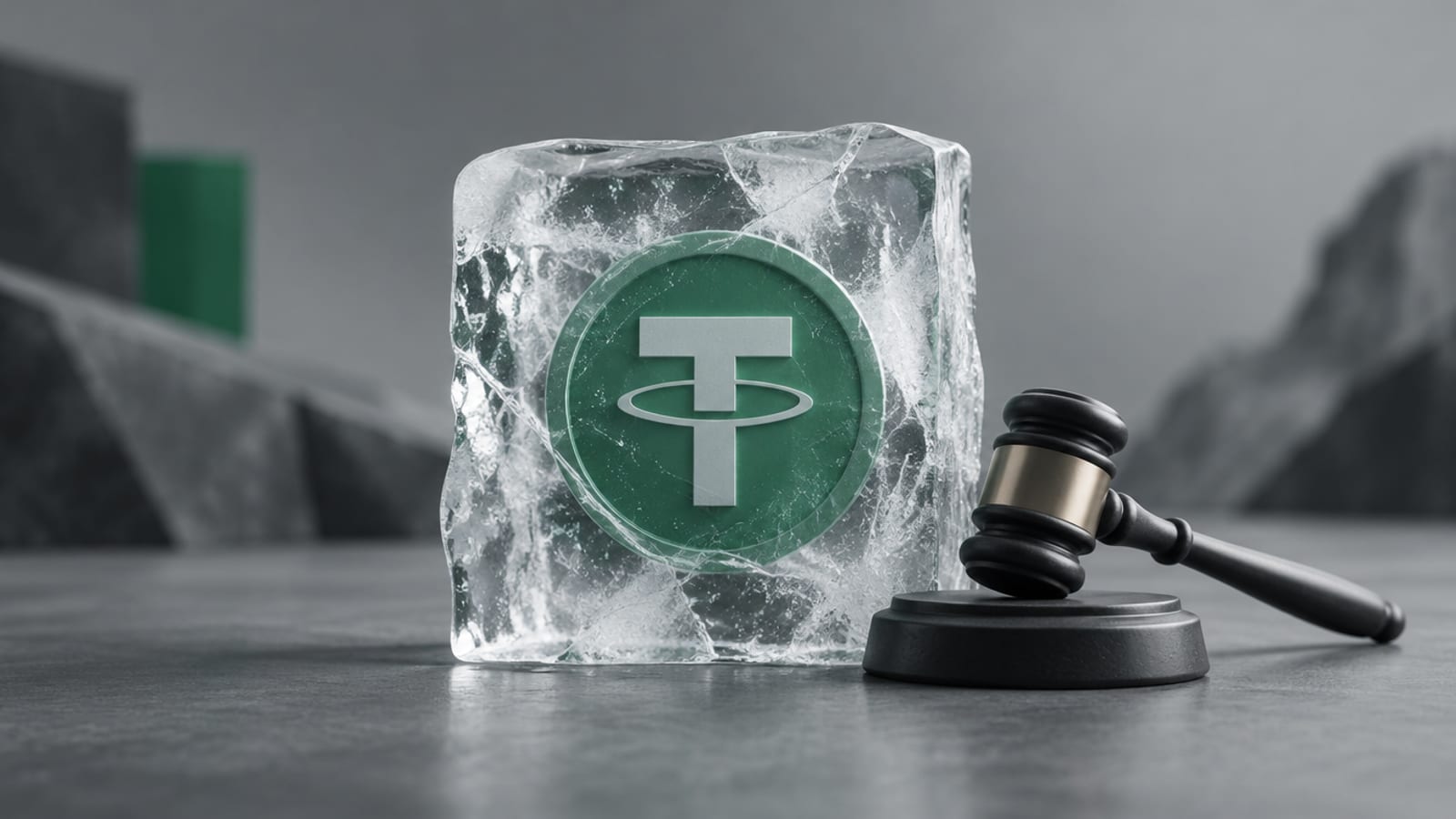
BitMEX Shutdown: The Pardons, the $100M Fine and Exchange Risk
BitMEX closed after 11 years, 18 months after its founders and parent company were pardoned and a $100M fine was wiped out. What happened and what it means.

Key takeaways
- BitMEX, once the largest crypto derivatives exchange, shut down on September 23, 2026, after announcing the closure in July 2026, according to the video.
- The March 2025 pardons covered the three founders and the parent company, HDR Global Trading, erasing a $100 million fine that the video says was headed for the federal Crime Victims Fund.
- According to the video, BitMEX was never hacked in 11 years; the risk for users came from the people who controlled the exchange and its decision to close.
- Users of a centralized exchange depend on that company's decisions, terms and survival, which is the core of the 'not your keys, not your crypto' lesson.
- Keep a current list of every exchange you use and know how quickly you could move your coins to a wallet you control if an exchange announced a closure.
BitMEX, the crypto derivatives exchange founded in 2014, shut down for good on September 23, 2026. According to the video, the closure came 18 months after President Trump pardoned its three founders and its parent company, HDR Global Trading, wiping out a $100 million fine that was due to go to the federal Crime Victims Fund.
For everyday holders, the story matters less for the politics and more for what it shows about centralized exchanges. BitMEX was never hacked, according to the video. Its users still ended up depending entirely on decisions made by a small group of people who controlled the platform, right down to the day it closed.
What was BitMEX?
BitMEX was a crypto derivatives exchange launched in 2014 by Arthur Hayes, Ben Delo and Sam Reed. A derivative is a contract whose value tracks an asset such as Bitcoin, so traders can bet on its price without holding it.
In 2016, BitMEX introduced the perpetual swap. The video describes it as a contract that let traders bet on Bitcoin with up to 100 times leverage, with no expiry date, trading 24 hours a day. Leverage means borrowing to make a bigger bet than your own money would allow, which magnifies both gains and losses.
The video gives these figures for BitMEX’s peak:
- Over $1 trillion in yearly trading volume by 2019.
- About 57% of the entire crypto derivatives market, which the video says is more than any single exchange has held before or since.
- $8 billion traded in one 24-hour window in July 2018.
- Around $2 trillion in lifetime volume on a single contract.
Why did the Justice Department charge BitMEX?
The US Department of Justice charged BitMEX in October 2020, alleging the founders effectively ran it as a money laundering platform. Prosecutors also said the exchange’s claimed withdrawal from the US market was a sham, and the video adds that an email address was often the only identification needed to open an account.
In 2022, all three founders pleaded guilty. According to the video, the sentences were:
| Founder | Sentence | Forfeiture |
|---|---|---|
| Arthur Hayes | Six months of home confinement plus two years of probation | $10 million |
| Benjamin Delo | 30 months of probation | $10 million |
| Samuel Reed | 18 months of probation | $10 million |
Then in January 2025, a federal judge in Brooklyn ordered the parent company, HDR Global Trading, to pay $100 million for willfully violating the Bank Secrecy Act, the US law that requires financial firms to run anti-money-laundering checks.
What happened to the $100 million fine?
The $100 million fine was erased by a pardon signed hours before the payment was due, according to the video. The fine was due 60 days after the judgment. On March 27, 2025, President Trump pardoned Hayes, Delo and Reed, and also HDR Global Trading itself.
The video says that, by federal law, the money was supposed to go into the Crime Victims Fund, which pays out to victims of violent crime and their families. It cites a review by The Trace of the second-term pardons and commutations, which found at least $113 million in fines meant for the fund were erased, most of it from the BitMEX case.
The video also cites former US Pardon Attorney Margaret Love, who led that office from 1990 to 1997, as saying no American president had pardoned a corporation before.
The video places the BitMEX pardon alongside others in the same period, including Silk Road founder Ross Ulbricht and Nikola founder Trevor Milton, who had been convicted of securities fraud. A CNBC clip in the video reports that Milton and his wife donated more than $1.8 million to a Trump re-election campaign fund before the November election. The host argues these pardons set a precedent for white-collar cases. That is the video’s opinion, not an established finding.
How did BitMEX end?
HDR Global Trading announced in July 2026 that BitMEX would close, and the exchange went dark on September 23, 2026 at 4:00 UTC, according to the video. By its final weeks, the video says, BitMEX was handling around $400,000 a day, down from $8 billion on its best day, and its market share had fallen to under one hundredth of one percent.
The host argues that ordinary users learned about the closure from an online post, while the people running the exchange saw it coming. The video does not lay out evidence for exactly when insiders acted, so readers should treat that part as the host’s interpretation.
If you want to understand what typically happens to customer funds when a platform closes, Bullrunners has a guide on how to protect coins before an exchange shuts down.
Where is the crypto derivatives market moving?
The video frames BitMEX’s death as part of a broader shift away from the old centralized exchange model. It points to several developments:
- JPMorgan, Citi, Bank of America, Wells Fargo and more than a dozen peers announced work on their own on-chain settlement network to move money around the clock on a blockchain.
- Hyperliquid, a decentralized exchange, recorded $161 million in revenue in one quarter, which the video calls the highest quarterly revenue any DeFi protocol had recorded. Bullrunners has covered how Hyperliquid grew without outside investors.
- Coinbase cut around 14% of its workforce in 2026.
- Centralized perpetual futures volume kept falling through the year while the on-chain share of the same market tripled, according to the video.
These are the video’s figures. They describe a trend in where trading happens, not a guarantee about any one platform or coin.
Why BitMEX is a lesson about custody
The main lesson the video draws is that centralized exchanges can never be fully safe, because whoever controls the keys controls the coins. BitMEX ran for 11 years without a hack, yet users still had no say in the company’s legal troubles, its pardons or its decision to close.
When you keep crypto on an exchange, you usually hold a claim on that company rather than coins in an address you control. Bullrunners explains the difference in who actually owns your XRP on an exchange, in an ETF or in your own wallet. Moving to self-custody removes that company risk but hands you full responsibility for your keys and backups. If you are weighing that move, start with the difference between hot and cold wallets.
A simple exchange risk check
The BitMEX story suggests a few questions worth answering for every platform you use:
- List every exchange or app where you hold crypto.
- For each, note whether you hold coins in a wallet you control or a balance on the company’s books.
- Check where the company is registered and which regulator, if any, oversees it. BitMEX was registered in the Seychelles, according to the video.
- Know your withdrawal steps and limits in advance, so you could move funds quickly if a closure were announced.
- Decide deliberately how much, if anything, you are comfortable leaving on each platform.
What to watch next
The immediate questions are practical ones. Former BitMEX users should check any communications from HDR Global Trading about remaining balances. More broadly, watch whether more centralized derivatives venues shrink or close, how the banks’ on-chain settlement network develops, and whether the shift of trading volume toward decentralized exchanges continues. And whatever exchange you use, keep an eye on its announcements and terms, since BitMEX users found out about the end from a post.
Frequently asked questions
Why did BitMEX shut down?
According to the video, HDR Global Trading announced in July 2026 that BitMEX would close for good and the exchange went dark on September 23, 2026 at 4:00 UTC. The video points to its collapse in activity, from $8 billion in a single day at its 2018 peak to around $400,000 a day in its final weeks.
Who pardoned the BitMEX founders?
President Trump pardoned co-founders Arthur Hayes, Benjamin Delo and Samuel Reed, along with the parent company HDR Global Trading, on March 27, 2025, according to the video. All three founders had pleaded guilty in 2022.
What happened to BitMEX's $100 million fine?
In January 2025 a federal judge in Brooklyn ordered HDR Global Trading to pay $100 million for willfully violating the Bank Secrecy Act. The video says the money was due to go to the federal Crime Victims Fund, and the pardon was signed hours before the payment deadline, erasing the fine.
Was BitMEX ever hacked?
The video says BitMEX operated for 11 years without being hacked. Its argument is that the risk to users came from the small group of people who controlled the exchange, not from outside attackers.
Has a US president pardoned a company before?
According to former US Pardon Attorney Margaret Love, cited in the video, no American president had pardoned a corporation before the HDR Global Trading pardon.
Education and commentary only, not financial advice. Crypto is volatile and you can lose money. Do your own research and speak to a qualified advisor before making investment decisions. Figures and quotes are as reported in the video on October 16, 2026 and may have changed since.