
Crypto Tier List 2026: 25 Coins Ranked by What Still Buys Them
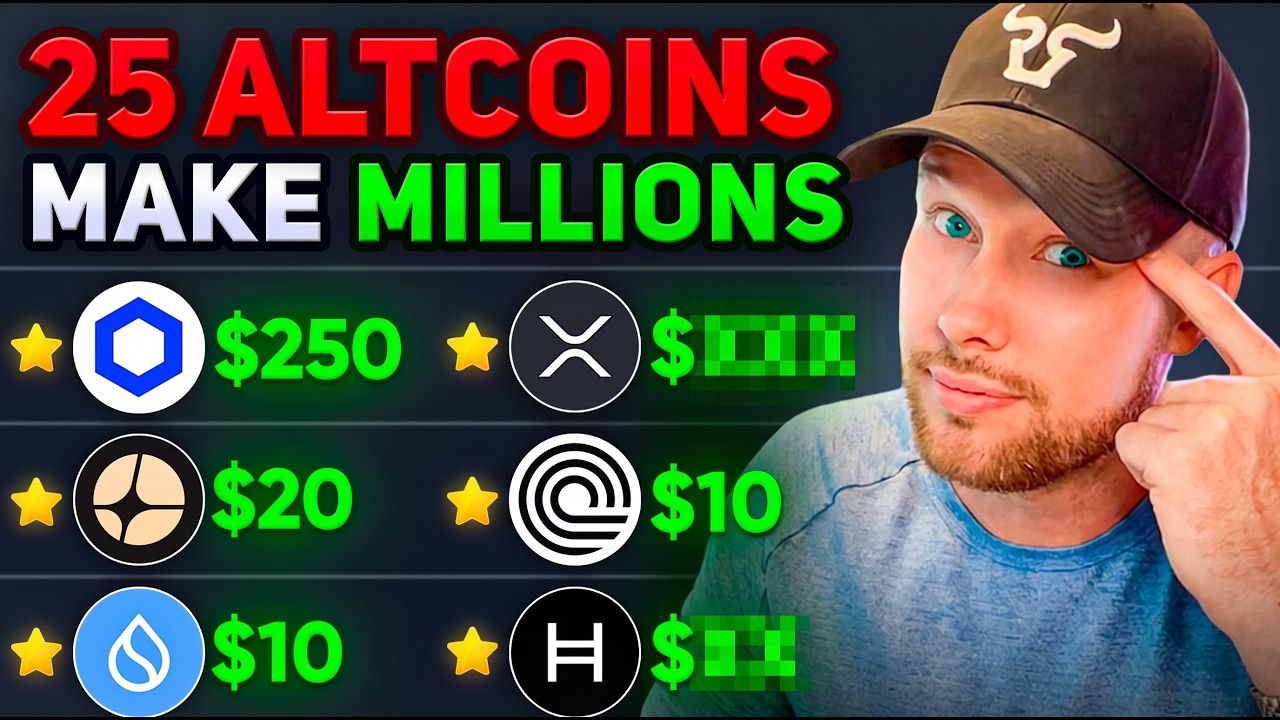
A Bullrunners video ranks 25 coins, including XRP, Bitcoin, Solana and Zcash, by one test in this dip: what still buys the coin when nobody is excited?
Key takeaways
- The video ranks 25 coins by one question: what keeps buying the coin when nobody is excited, such as ETFs, buybacks, burns or real network use.
- Only Bitcoin, Hyperliquid and Zcash made the video's S tier. Good headlines alone did not lift Sui, Quant or Avalanche to the top.
- The video treats large future supply as a weight on a coin. It says about 59% of SUI is still to come and that more than 1.7 billion ONDO unlock on January 18.
- XRP landed in A tier because ETF and treasury-company buying is real, but the video says that buying is not yet clearly outpacing the 200 to 300 million XRP leaving escrow each month.
- The video says its rankings can change within weeks. Its listed triggers include Aave buybacks restarting, USDe reaching $7.5 billion and flows into or out of the Zcash ETF.
A Bullrunners video ranks 25 large cryptocurrencies from S tier down to D tier during the late-2026 dip. It uses one test: what is still buying the coin when nobody is excited? In the video’s ranking, Bitcoin, Hyperliquid and Zcash made S tier. XRP, Solana and Ethereum landed in A tier, while Dogecoin, Sui and Polkadot sat at the bottom.
The video was recorded with XRP close to $1, Solana under $90 and Bitcoin having dropped to around $73,000. In that kind of market, every coin you already hold can look cheap. The video argues that a falling coin is only a bargain if real buying still sits behind it, such as ETFs, buybacks, burns or people who need the coin to use the network. The host stresses that this is his team’s own take, that none of it is a price target, and that any of these coins can fall further.
How does the tier list work?
The video scores each coin on its sources of steady demand against the new supply still coming to market. Demand can come from four places:
- a project buying back its own coin
- coins being burned (destroyed for good)
- ETFs buying the underlying asset
- users needing the coin to pay network fees
On the other side, the host describes every newly released coin as “one more coin someone can sell to you.”
The video’s tiers mean:
- S: where the host has the most confidence
- A: the host really likes it
- B: could do well, but more of a gamble
- C: a weak case
- D: the host would stay away from it
The video’s final ranking:
| Tier | Coins |
|---|---|
| S | Bitcoin (BTC), Hyperliquid (HYPE), Zcash (ZEC) |
| A | Solana (SOL), Ethereum (ETH), BNB, Tron (TRX), Monero (XMR), Uniswap (UNI), XRP |
| B | Aave (AAVE), NEAR, Ethena (ENA), Chainlink (LINK), Quant (QNT), Ondo (ONDO), Aerodrome (AERO) |
| C | Stellar (XLM), Bittensor (TAO), Cardano (ADA), Hedera (HBAR), Avalanche (AVAX) |
| D | Dogecoin (DOGE), Sui (SUI), Polkadot (DOT) |
Bullrunners has also published an earlier altcoin tier list ranked by token demand for readers who want to compare.
Why did Bitcoin, Hyperliquid and Zcash make S tier?
The video puts Bitcoin, Hyperliquid and Zcash in S tier because each has a buyer that keeps showing up even on quiet days.
Bitcoin. The video says Bitcoin makes up about 60% of the crypto market and that Bitcoin ETFs hold about $99 billion of it. Only 21 million BTC will ever exist. The video says about 96% are already out, so there is little new supply to sell. When crypto gets scared, the host says, money runs to Bitcoin and stablecoins first.
Hyperliquid. Hyperliquid is an exchange where traders bet on crypto price moves. The video says it made about $81 million in fees over one month this fall. About $64 million of that, almost 80%, went to a fund that buys HYPE straight off the market. The host’s concern is valuation. He says that even at about 25% below its all-time high, the full HYPE supply is worth about $70 billion, and that rival exchanges Aster and Lighter are chasing the same traders. Bullrunners has covered the HYPE buyback versus unlock race in more depth.
Zcash. The host said Zcash was the coin he didn’t expect to rank this high. According to the video, Bitcoin fell about 8% in the three weeks before recording, while Zcash rose about 8%. The video says a US Zcash ETF held nearly 600,000 ZEC at last count. It also says almost 5 million ZEC, nearly 30% of supply, sits in private (shielded) addresses. Zcash supply is capped at 21 million, and the video says its NU7 upgrade has gone live. The video names two risks: the fund shrank about 12% in October as money left, and governments could target privacy coins with new rules.
Where did XRP rank?
XRP landed in the video’s A tier. The host says it has more real buying behind it than most coins on the board. US spot XRP ETFs hold more than a billion XRP, and the video notes that companies now exist just to hold XRP.
The obstacle, in the video’s view, is supply. Each month 1 billion XRP unlocks from Ripple’s escrow, a locked account holding Ripple’s XRP. Most of it goes back in, but the video says about 200 to 300 million XRP a month still comes out. The video also says Ripple has stopped publishing its sales reports, so outsiders cannot easily see how much is sold. For background, see how Ripple’s monthly escrow release works.
The host’s test for XRP is whether ETFs, companies and holders are buying more than Ripple lets out each month. With XRP down about 15% in three weeks, his answer was “not yet.” He says that is what kept it out of S tier.
Why are Solana, Ethereum, BNB, Tron, Monero and Uniswap in A tier?
The video credits each of these A-tier coins with real demand, but says each has a weakness that kept it below S tier.
- Solana: People use the network and Solana ETFs hold real SOL, but the video says SOL was still down about 16% over three weeks.
- Ethereum: It is the biggest home for stablecoins. The video says its spot ETFs hold nearly $15 billion, yet ETH fell about 12% in three weeks.
- BNB: Binance burned more than 1.6 million BNB in October, worth about $1.2 billion. The video says BNB fell about 17% in this drop, compared with 28% for Ethereum and 34% for Solana. It does not say what period those drops cover, and they differ from the three-week figures above. The host sees dependence on Binance as the main risk. He notes Binance was recently hacked and says BNB sold off less than he expected.
- Tron: The video says more than $90 billion of USDT sits on Tron, and each transfer needs TRX for fees. The host sees the risk as how much rests on founder Justin Sun and on USDT staying on Tron.
- Monero: The video says privacy demand does not depend on price and that XMR trades well above its 200-day average. The host’s concern is exchanges delisting it.
- Uniswap: The video says holders voted to send part of the fees toward burning UNI, and that 100 million UNI were burned. But of roughly $90 million in fees over one month, it says only about 8% went toward UNI.
Why did big news not lift Sui, Quant and Avalanche?
The video’s central lesson is that good news only helps a coin if it brings someone to buy the coin.
- Sui (D): Samsung has announced it is bringing USDC on Sui to Samsung Wallet for up to 82 million US Galaxy devices. But the video says only about 41% of all SUI is out, with the other 59% still to come.
- Quant (B): The Clearing House, a payments operator owned by the biggest US banks, chose Quant for a payment network planned for 2027. Almost all QNT is already issued. The host says banks using Quant software does not force anyone to buy QNT. The video says QNT was trading at about twice its 200-day average, and the host said the price had run ahead of the buyers. He added that QNT would likely have ranked in A tier if it had been trading lower when the video was made.
- Avalanche (C): According to the video, BlackRock’s tokenized government bond fund runs on Avalanche and the coin has two spot ETFs. The New York Stock Exchange has selected Avalanche for clearing and settlement on its planned 24/7 tokenized-securities platform, which is pending regulatory approval. The video says that platform will run on a separate network built with Avalanche technology, which may use only about $1,200 of AVAX a month. It says Avalanche’s main network makes around $19,000 a day in fees.
What held back the B, C and D tier coins?
The video says most lower-ranked coins either pass little business value to the token or face heavy new supply.
| Coin | Tier | Main issue cited in the video |
|---|---|---|
| Aave | B | One tracker has recorded no buybacks since April; the founder says an automatic system is coming |
| NEAR | B | NEAR Intents handled about $4B in swaps in 30 days but kept about $6M in fees |
| Ethena | B | ENA buybacks start only when USDe reaches $7.5B; it is just under $5B |
| Chainlink | B | Its reserve buys about $4M of LINK a month against about $8B of LINK outstanding |
| Ondo | B | More than 1.7 billion ONDO unlock on January 18, at least 35% more than is out |
| Aerodrome | B | About $170M valued, but more than $1.1B counting locked AERO; fees do reach lockers |
| Stellar | C | Around 30% of XLM still to come; down about 17% since mid-October |
| Bittensor | C | New TAO worth about $280M a year vs. an estimated $3M to $15M in revenue |
| Cardano | C | Down about 46% this year; ETF pulled in August; waiting on the Leios upgrade |
| Hedera | C | Network fees of only around $500 a day |
| Dogecoin | D | About 5 billion new DOGE a year, no cap, ETF inflows of about $12M by June |
| Polkadot | D | Lower issuance and a cap, but the JAM upgrade has no launch date |
For a short set of similar checks, see the Bullrunners guide on how to spot a bad altcoin.
A “what’s still buying it” check based on the video
This list is Bullrunners’ summary of the approach the video uses. It is a way to analyse a coin, not a rule for when to buy or sell.
- Is there a steady buyer? Look for ETFs holding the real coin, buybacks funded by fees, burns, or users who must pay fees in the coin.
- How big is that buyer next to the coin’s value? In the video’s Chainlink example, a buyer of about $4 million a month for a coin worth about $8 billion is real but small.
- How much of the business reaches the token? Compare fees earned with the share that goes to holders, as the video does with Uniswap’s 8% and Hyperliquid’s almost 80%.
- How much new supply is still coming? Check the share of total supply not yet released and any large unlock dates.
- Has the price already run ahead of the buyers? The video points to the 200-day average for Quant, Monero and Zcash as one sign of how far a price has moved.
- What has to change before anyone buys it? This is the question the host poses for coins in his C and D tiers. Writing the answer down makes it easier to check later.
On timing, the host says he is not calling a bottom without confirmation. He describes his team keeping some stablecoins on the side and buying a little at a time (dollar cost averaging) rather than putting everything in at once. That is the host’s account of his own approach, not a recommendation.
What to watch next
The video stresses that its rankings can shift within weeks, and it names specific triggers to watch:
- whether Aave’s promised automatic buybacks start
- whether USDe reaches $7.5 billion, which would switch on Ethena’s ENA buybacks
- the January 18 ONDO unlock
- flows into and out of the Zcash ETF
- the launch of Cardano’s Leios upgrade
- whether ETF and company buying of XRP outpaces the XRP leaving Ripple’s escrow each month
The host says an updated ranking will follow as conditions change.
Frequently asked questions
Which coins made S tier in the Bullrunners 2026 tier list?
Bitcoin, Hyperliquid and Zcash. The video says each one has a buyer that keeps showing up in a dip: ETFs for Bitcoin and Zcash, and a fee-funded buyback for Hyperliquid.
Where did XRP rank and why?
XRP landed in A tier. The video says US spot XRP ETFs hold more than a billion XRP. It also says about 200 to 300 million XRP a month still comes out of Ripple's escrow, and it is not clear buyers are absorbing more than that.
Why is Sui in D tier despite the Samsung Wallet news?
According to the video, only about 41% of all SUI that will ever exist is in circulation, so 59% is still to come. The host does not think the Samsung Wallet news brings enough buyers for all of it.
What happens with Ondo on January 18?
The video says more than 1.7 billion ONDO unlock at once that day. It says that is at least 35% more than is in circulation today.
Why is Ethereum only in A tier?
The video says Ethereum's spot ETFs hold nearly $15 billion of ETH, but ETH still fell about 12% in three weeks. In the host's view, that big buyer has not been strong enough to hold the price up.
Full video transcript
From the video's captions, lightly formatted. Captions can mishear names and numbers, so check figures against the article above.
XRP's close to $1 again and Solana is under $90. And every time crypto drops like this, people start asking the same thing. What should I buy while it's down? And I get it because when the price falls this far, it feels like the sale that you've been waiting years for and nobody wants to miss the bottom. But a coin that fell is only a bargain if there's still real buying behind it.
So my team ranked 25 of the biggest coins in crypto from S tier down to D by asking one question about each of them. Who's still buying it when nobody's excited? And some of the coins with the biggest headlines this year landed a lot lower than you think. So if you're holding XRP, I know a lot of you are, you want to know one thing. Is this the dip to add more or is something still standing in the way and will XRP go lower?
And if you're holding altcoins like Solana, Dogecoin, Sui, or any of the other big names, you're probably wondering about your coins too. Are they really cheap right now or could they keep falling lower? And if you add to the wrong coin, you could be waiting years just to get back to break even. So with the market this low, which coins would I actually buy right now and which ones would I stay away from? Well, we ranked all 25 and a few of them are going to surprise you.
So let's run it. All right, bull runners, welcome back to the channel. Now here's why asking what and who is still buying a coin matters so much right now because when everybody's excited, almost every coin goes up. But once the excitement's gone, the coins that hold up are the ones people still have a reason to buy. And that buying can come from a project buying back its own coin or from coins getting burned for good.
It can also come from ETFs or from people who need the coin to use the network. And every new coin that gets released is one more coin someone can sell to you. So here's how the board works. S is where we have the most confidence. A we really like.
B could do well, but it has some room for improvement. C has a weak case and D I'd stay away from. And this is just our own take. None of it is a price target, all right? Any of these coins could definitely fall further from here.
So let's get started with the two coins that everybody knows because they sit at opposite ends of this board. Dogecoin is the meme coin everyone's heard of and when you ask what's still buying it, well, it's the clearest fail on the whole board. Nothing buys Doge back. Nothing burns it. And about 5 billion new Doge gets created every year with no limit to the supply.
Now, it does have its own ETFs, but by June, all the money that had gone into them added up to about $12 million. For a coin this big with this big of a market cap, that's extremely tiny. So what's really buying Doge is excitement, and there isn't much of that around right now. So at this stage in the market cycle, Doge goes into D tier. And until we see demand start to pick up again for meme coins, it's going to stay there for a bit.
Now, Bitcoin is the opposite. When crypto gets scared, money runs to Bitcoin and stable coins before anything else. Bitcoin is about 60% of the whole crypto market. It also has the biggest buyers in crypto with Bitcoin ETFs holding about $99 billion of it. And only 21 million Bitcoin will ever exist.
About 96% of them are already out. So there's almost no new supply for anyone to sell to you. And look, it could definitely still fall further from here, but if you could only own one coin during a dip, this is the one with the biggest buyers behind it. So during a pullback like this, Bitcoin goes in the S tier. Now, if big buyers put Bitcoin at the top, you think big news would do the same for the other coins.
But some of the coins that worry me the most in this dip have great news behind them, but the problem is how many new coins they still have coming. Sui is one of the biggest examples. And I know this one's going to hurt some of you. Samsung Wallet added the USDC digital dollar on Sui for up to 82 million Galaxy phones in America. So that's definitely a big deal, but only about 41% of all the Sui that will ever exist is out so far.
The other 59% is still coming. So that's more new Sui on the way than there is out today. And somebody has to buy it. And even with news as good as Samsung, I don't think the buyers are there for all of it. So Sui currently lands in the D tier.
Now, Stellar has a smaller version of the same problem right now. It keeps winning real deals with big companies, and I like that, but around 30% of all XLM that will ever be still hasn't come out. So every new deal has to bring in enough buyers for all that new XLM too. And so far, those deals haven't done much for the price, which is down about 17% since mid-October. So, right now, we're putting Stellar in the C tier.
Now, Polkadot did the opposite and now creates fewer new dot than it used to, and its supply has a cap. So, there's a limit on how many new dot can ever exist. So, that's exactly what you want to see. But fewer new coins only helps if people want to buy the ones already out there. And Polkadot's big upgrade called JAM still doesn't have a launch date.
So, what's the new reason to buy dot? Well, there really isn't one right now. Polkadot goes in the D tier. Now, by the way, I'm not doing deep dives into any specific coin today, or this video would be 4 5 hours long. So, if you want a full video on Polkadot or any coin on this board, let me know in the comments below.
Whichever coin gets the most likes, I'll make a full video on it next. Now, let's talk about BitTensor because Tao has a supply problem like Sui's, but it comes from how it pays people. It rewards people for building AI models on its network. And if AI comes back as the big story in crypto, I can see a lot of money heading here first. But to pay those builders, it creates new Tao every day.
And as I'm recording this, that's worth around $280 million a year. What it earns from real customers on one estimate is somewhere between $3 million and $15 million a year. So, it hands out far more in new Tao than it brings in. And somebody has to buy all of it. So, currently, BitTensor goes in the C tier.
Now, Cardano is in a similar spot to Polkadot. It's waiting on its next big upgrade. And to be fair, it never really stopped building. Its holders even voted to spend money from Cardano's own treasury on its apps. And I just recently finished a deep dive video on Cardano that you can watch on this channel when you subscribe.
But ADA is still down about 46% this year. And the ADA ETF that holders were waiting on got pulled back in August. And for most people, what gets them buying ADA again is the next upgrade. It's called Leos, and it's expected before the end of this year. So, until it actually shows up, I just don't see who's buying Cardano while the market is selling off right now.
So, Cardano currently goes in the C tier. Now, if you hold ADA, you definitely want to check out the complete video I made on Cardano for the reason why. If you want the whole story, I'll put the link in the description below. Now, ETFs are the buyer everyone talks about, and they matter. But an ETF on its own doesn't save a coin, and Hedera shows you why.
It has a spot ETF, and some huge company names sit on the council that help run it, but the network itself makes very little in fees, only around $500 a day. And a big company helping run Hedera doesn't have to buy any HBAR, so the buyers just aren't there right now. So currently Hedera goes in the C tier. Now Avalanche has even bigger names behind it, and it just got the biggest one yet. BlackRock's tokenized funds run on it.
That's a fund that puts US government bonds on the blockchain, and Avalanche has two spot ETFs of its own. Then just this week, the New York Stock Exchange picked Avalanche to settle the stocks on its new market, the one that never closes. So that's a huge win for Avalanche, but the New York Stock Exchange will run on a separate network of its own built with Avalanche's technology. Running that might only take about $1,200 worth of AVAX a month, and Avalanche's main network where AVAX really gets used only makes around $19,000 a day in fees. So for all those big names, very few people are paying to use AVAX yet.
That's why even with the New York Stock Exchange, Avalanche stays in the C tier for now. Now Solana has what Avalanche is missing. People really use it, and the Solana ETFs hold real SOL. So the buyers are real. They just haven't been strong enough to hold the price up currently.
SOL is still sitting about 16% down in the last 3 weeks, and that what keeps it out of the S tier right now, but Solana goes in the A tier. Now Ethereum is the same story on a bigger scale. It's the biggest home for stable coins in crypto. Its spot ETFs hold nearly $15 billion of it, but even with a buyer that big, Ethereum has dropped about 12% in the last 3 weeks. Now I like Ethereum, but it hasn't earned S tier yet.
So Ethereum will go with Solana in the A tier. So what does it take to get into the S tier right next to Bitcoin? Well, we'll get into that in a bit, but first, if one of your coins just landed in C or D, I get it, especially for projects that we talk positively about on the channel like HBAR or even XLM. That's hard to hear when it's your money and you've held it for years. You remember what you paid.
Every bounce feels like the start of a comeback. And the longer you hold on and hope, the longer that money sits there doing nothing for you. And just because a project might be in the C or D tier right now, doesn't mean it'll stay there in the next week or two, or even the next three months. These will likely change and we'll make an update video because you have to be flexible with the market. If you're too rigid and you're not able to rebalance your portfolio based on what's happening, then that's what causes you to hold a project for years hoping that you get back to a break even.
Now, that doesn't mean you have to dump anything tomorrow, but you should know why you're still holding what you hold and what has to happen for the projects you're holding to come back. And that's hard to clearly see on your own. So, if you want a second opinion on those coins with an expert that's been in the industry for the past 10 years, then book a call with an expert on my team. They'll go through what you hold and help you work out what's worth keeping and what you're only holding on because you want to get back to a break even. So, it's the first link in the description below.
Definitely check that out. Now, if you're holding XRP, you've probably noticed it hasn't come up yet. Don't worry, I haven't forgot about it. XRP has its own spot on this board and we're getting there in a little bit. But next up are the coins backed by real businesses that make real money.
The question with these is how much of that money actually makes it to the coin that you're holding. Ave is the biggest place to borrow and lend in crypto. It makes real money from all that borrowing and it used to spend some of that money buying back its own coin. But one tracker that follows those buybacks hasn't recorded a single one since April. Ave's founder has said a new system is coming where they run automatically.
The day those buybacks come in, I'd move Ave up on the board. But for now, Ave goes in the B tier. Now, Near Protocol has a great business too. In fact, I think it's one of the best products on this board. It's called Near Intense and it lets you swap coins between different networks in one step.
And in the last 30 days, it handled close to $4 billion of swaps. But it kept only about $6 million of that in fees. So, the product works. It's just that very little that money makes it to Near. So, right now Near goes in the B tier.
Now, Athena's coin, ENA, has a buyback that hasn't started yet. Athena runs USDE, which is a digital dollar that pays its holders a return. So, ENA is really a bet on more people holding USDE and its holders did vote for ENA buybacks, but they only switch on once USDE hits $7.5 billion and USDE is just under $5 billion right now, so it still needs another $2.5 billion before those buybacks start. And in the meantime, ENA fell about 30% in the last month. So if you hold ENA, that $7.5 billion is the number that I'd watch.
So Athena goes in the B tier. Now Chainlink buyer is already running. Part of what Chainlink earns goes into a reserve that buys Link and I like that, but it only adds about $4 million of Link a month and all the Link out there is worth about $8 billion. So it's real buyers, it's just a small one for the size of the coin. So right now Chainlink goes in the B tier.
Now Quant has news most coins would love to have. The Clearing House, which is a company owned by the biggest banks in America, chose Quant for a payment network the banks plan to launch in 2027 and almost every QNT that will ever exist is already out. So there's very little new supply hitting the market. On paper, that makes Quant look better than virtually every single coin on this board. But banks using Quant software doesn't mean anyone has to buy QNT.
It's the same problem as a lot of other coins on the board and QNT already trades at about twice its average price over the last 200 days. So that's a big run for a coin nobody has to buy. So I think the price has run ahead of the buyers currently. It's a little overbought, so we're going to put Quant in the B tier. Now if Quant at the time of making this video was at a better entry point, it would likely go in the A tier, but for now we keep it in B.
Now Ando is the leader in putting real world things like government bonds and stocks on the blockchain. So that's a real business and that's what keeps Ando out of the bottom of this board, but for Ando holders, January 18th matters more than any headline. That's when more than $1.7 billion Ando will unlock all at once. That's at least 35% more Ando than is out right now. So I'd want to see who's going to buy all that before the date comes.
And until that date comes, for now we're putting Ando in the B tier. So if you hold Ando or you've been thinking about buying it, the time to decide what you'll do is before that date. Now, my team can help you work that out on a call. So book one before January 18th is the first link in the description below. Now, the smallest coin on this board is Aerodrome Finance and it's the main exchange on the Base network, which is the network built by Coinbase.
So it's going after the same traders as Uniswap and it's worth only about $170 million right now. It's down about 33% in this dip, one of the hardest hits on the board, but that $170 million leaves out most of the arrow out there because holders have it locked up. And if you count all of it, it's worth more than 1.1 billion. So when those locks end, that arrow can be sold and new Aerodrome keeps coming out of the top. So that's a lot of supply hanging over the price.
So we're going to put it in the B tier. What keeps it in the B tier is that the trading fees go to the people who lock up their arrow. So the business really does reach the coin. And look, you don't have to agree with us on every single coin here. This is just how we look at them currently.
We don't buy or hold a coin or hope on a price target here. We hold it based on what's really behind it, regardless of the conspiracy theories or whatever on social media is hyping up out there. And that's personally how I've made millions in this market. Now, is there any coin with a buyer that keeps showing up even in a dip like this? Well, these next three have one and they're holding up better than most.
For example, BNB has something built right into that. It's called the burn. In October, Binance burned more than 1.6 million BNB and those coins are gone forever. That's about $1.2 billion worth in one go. And BNB is only down 17% compared to Ethereum at 28 or Solana at 34%.
BNB is actually held up pretty well in this drop, which is better than most of the big coins. Now, all of this leans on Binance and if something goes wrong there, BNB takes the hit. And Binance recently got hacked and BNB surprisingly didn't sell off as much as I thought it would. So we're putting BNB in the A tier. Now, if we look at Tron, it gets its buyers from somewhere else, from people moving money every single day.
More than $90 billion of USDT, the biggest digital dollar sits on Tron. People use it to move dollars around the world, and every time they send it, the network needs TRX to pay the fee. And they send it whether price is up, whether it's down, or going sideways. The risk is how much of Tron depends on one man, and that's its founder, Justin Sun. So if you hold TRX, you're really betting on that USDT staying on Tron.
So whether you like Tron's business model or not, Tron actually holds up very well during market dips. So we're putting Tron in the A tier currently. Now Monero's buyers don't care where the market goes. It's money that's private by design, and people who want privacy want it no matter what the price is doing. And it shows.
Now Monero is trading well above its average over the last 200 days. What worries me is exchanges dropping it. So if you hold XMR, I keep an eye on which exchanges still list it. But for now, we're putting Monero in the A tier. And before we keep going, there's one thing I want to say about timing.
Knowing which coins to buy is only half of it. The other half is when to buy them, because you could be watching this video the moment that it comes out. You could be watching this video 3 months or 6 months from when it's published. For example, Bitcoin dropped to around $73,000 and bounced. And I'm not calling that the bottom yet.
I'd want a clear reason and confirmation first. So until I see that confirmation, I definitely keep some stable coins on the sideline. And that's what my research team does, too. We buy a little at a time. We dollar cost average instead of putting everything in at once during a dip like this, because that's how you prevent yourself from buying the dip that keeps on dipping.
Now remember that question from earlier. What does it take to get into the S tier next to Bitcoin? Well, the two coins I most wanted to put side by side answer it better than anything, Uniswap and Hyperliquid. Uniswap is the biggest decentralized exchange in crypto, the kind with no company in the middle. And for most of its life, holding Uni didn't get you any of its fees.
Then holders voted to send part of the fees towards burning Uniswap. And Uniswap burned 100 million Uni at the same time. So now there's buyers. But over 1 month this fall, Uniswap made around $90 million in fees. And only about 8% of that went towards Uni.
Hyperliquid is an exchange where people bet on where crypto prices are heading. And over the same month, it made about $81 million in fees. A bit less than Uniswap, but about $64 million of that, almost 80% went to a fund that buys hype straight off the market. So, that's a business buying its own coin with most of what it earns. And that buyer keeps showing up even on the quiet days.
The catch with Hyperliquid is the price you'd be paying. Even about 25% below its all-time high, every hype that will ever exist adds up to about $70 billion. So, that's a big price and it only holds up if Hyperliquid keeps growing and two newer exchanges, for example, Aster and Lyder, are both chasing the same traders. So, if you buy Uniswap, you need Uniswap to start sending a lot more of its fees to the coin. If you buy Hyperliquid, well, the buyers are already there and what you need is for Hyperliquid to keep its traders.
So, right now we're putting Hyperliquid in the S tier. Uniswap goes in the A tier. The next coin is the one I didn't expect to rank this high and it's actually Zcash. In the last 3 weeks, at the time I'm recording this video, Bitcoin fell about 8% and Zcash went up about 8%. And when you look at what's buying it, you can see why.
Zcash has its own ETF in America right now and at last count, that fund held nearly 600,000 Zcash. Every dollar that goes into it buys real Zcash and like Bitcoin, only 21 million Zcash will ever exist. Then there's the privacy side and that's what Zcash is built for. Almost 5 million Zcash, nearly 30% of everything that's out sits in private addresses. So, a lot of people hold it for privacy, the same way they hold Monero.
And its big upgrade, N U 7, has now gone live too. And in a market where 70% of the altcoins on Binance trade below their average price over the last 200 days, Zcash is way above its own. Now, it isn't risk-free though. In October, people pulled money out of that fund and it shrank by about 12% and governments could always come after privacy coins with new rules, especially with the Democrats taking over. But Zcash has an ETF that holds real Zcash, a hard limit of 21 million and people holding it to keep their money private all at the same time.
So, right now Zcash goes in the S tier and that leaves one coin, the one most of you have been waiting for, and that's XRP. Now, XRP has more real buying behind it than most coins on this board. The US spot XRP ETFs hold more than a billion real XRP, and they've taken in about 1.8 billion since they launched. Every new dollar that goes into those funds buys real XRP, and there are companies now built just to hold XRP. So the buying is real.
So the real question is, what's standing in its way? Well, one of the big answers is its supply. Every month, 1 billion XRP unlocks from Ripple's escrow, which is a locked account Ripple holds its XRP in. Most of that goes straight back in, but about 200 to 300 million a month still comes out. And Ripple stopped publishing its sales reports anymore, so nobody outside the company knows how much of that gets sold unless you do some digging, which we did in a previous video.
But the real question people want to know is, is this dip a time to add more XRP or other altcoins on this board? Well, it comes down to one thing. Are the ETFs, the companies, and the holders like you buying more XRP than Ripple lets out each month? With XRP down about 15% in the last 3 weeks, probably likely lower by the time you watch this video, I'd say not yet. That's the one thing standing between XRP and the S tier.
So it's not the S the XRP army wanted, and it's nowhere near the D that the haters want it. So right now, XRP goes in the A tier. And if you want to see how Ripple is really handling its XRP and whether it's dumping on holders, watch my video titled Ripple is replacing XRP with RLUSD. I went deep on it there. A lot of people freaked out.
They didn't even see the question mark at the end of the video, but when you watch it, you'll fully understand. I'll put the link in the description. Make sure to check it out. But all in all, that's 25 altcoins. Only three made the S tier currently.
And if you look at how much good news is sitting in the middle of the board and even in the bottom of the board, Samsung, for example, brought Sui into its wallet. The big US banks chose Quant for their payment network, and the New York Stock Exchange just picked Avalanche. Not one of those coins reached the S tier because, important lesson here, good news only helps a coin if it gets somebody buying the coin. And the coins that held up the best in this dip all have a buyer that doesn't need anyone to be excited about a headline. So, if you're holding a coin from the top of this board, I think the dip can be a chance to add more and start dollar cost averaging a little piece at the time rather than going all in.
And if you're holding something from the C tier or the D tier, then ask yourself, what has to change before anyone buys it? And if you don't know the answer to that, then book a strategy call with an expert on my team and they'll help you identify it. Because anything on this board could change extremely fast. For example, Ave's buyback stopped, money left the Zcash fund, and Ando's big unlock is coming. So, a coin that looks good today can actually drop a tier within weeks.
And in a dip like this, everything you already hold looks cheap. So, adding feels more like the smart move. But if you add to the wrong coin at the wrong time, the money can be stuck for years waiting to come back to a break even while the coins with real buyers come back without you. And if you don't know what to look for, you can miss the boat. And it's really hard to judge each one of these coins fairly because you want every one of them to come out looking good.
You bought each one for a reason, so you'll find a reason to keep holding them all. That 's why it helps to run your coins past my research team because we're not going to sugar coat it. We're going to tell you the truth, even if it's something you don't like to hear, because a shot of the truth is always better than a tall glass of comforting lies. So, on the call, they'll take each coin you hold and ask it the same question they ask today. What's still buying it?
It's the same check they run on every coin that they pick for our members. It's the same check they run on every single coin that they have in their own portfolios. So, you know which ones still have a buyer behind them before you put another dollar into this dip. So, as always, it's the first link in the description below. It says get our top altcoin picks early.
If you're on mobile, all you have to do is tap the button that says more. The first link at the top. There's a short video. It explains our top seven picks, then a quick form. Takes less than a minute.
Then you simply schedule a call on the calendar that works best for you. Now, this won't be the last dip and every coin you hold will look cheap again when the next one comes. So, when it does, ask what's buying before you buy more of it. So, as always, I'll see you on the next video. I'll see you at the top.
You know what to do. Stay bullish.
Yeah.
[music]
Education and commentary only, not financial advice. Crypto is volatile and you can lose money. Do your own research and speak to a qualified advisor before making investment decisions. Figures and quotes are as reported in the video on November 15, 2026 and may have changed since.


