DTCC Tokenization Service: Which Chains Made It and Where XRP Stands
The DTCC launched tokenization on October 28 with about 20 firms. Solana, Stellar and Circle's Arc are planned for 2027. What it covers and why XRP isn't named.
Key takeaways
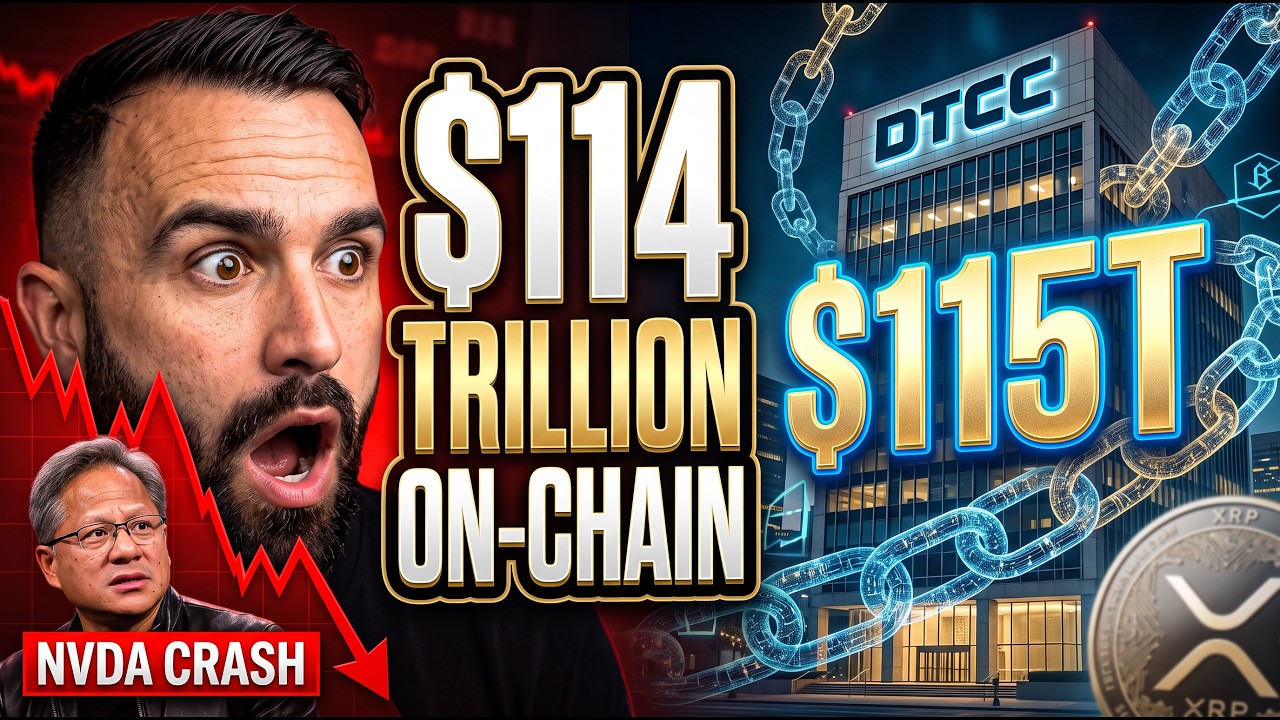
- The DTCC, through its subsidiary DTC, holds about $115 trillion of securities, but its new tokenization service started with only 34 eligible securities.
- Only Canton and a private Besu network were live at the October 28 launch. Stellar, Solana and Circle's Arc are planned connections targeted for 2027.
- Under an SEC staff no-action letter for a three-year pilot, tokens are entitlements backed one-for-one by securities held at DTC, and official ownership records stay on DTC's books.
- The XRP Ledger is not among the five networks named so far, and a DTCC executive said future choices depend on client demand and technical fit.
- When a headline says Wall Street picked a blockchain, check whether the connection is live or planned, and whether the coin itself is needed.
The DTCC, whose subsidiary the Depository Trust Company holds most US securities for the financial industry, launched a tokenization service on October 28 with about 20 firms and 34 eligible securities. Only Canton and a private Besu network were live at launch. Solana, Stellar and Circle’s Arc are planned for 2027. The XRP Ledger has not been named.
This matters to XRP holders because XRP has long been pitched as a bridge between banks and blockchain. When the main piece of US market plumbing picks its networks, it is reasonable to ask why XRP wasn’t chosen and whether that changes anything. It also helps to separate what the DTCC has actually done from the bigger claims the video builds on top of it.
What is the DTCC and how much does it hold?
The DTCC (Depository Trust & Clearing Corporation) clears and settles most US securities trades, and its subsidiary, the Depository Trust Company (DTC), holds the securities for brokers and banks. If you own a share of Apple or units of an ETF, the record of that holding generally sits at DTC, not with your broker.
DTCC CEO Frank La Salla gave these figures on stage at a Chainlink event in New York, in a clip shown in the video:
- About $115 trillion of securities held for the industry.
- About $20 trillion a day settled and cleared.
- “Two-thirds of the US GDP” passing through the DTCC for settlement, in his words. That line compares a daily figure with an annual one.
La Salla also said the US Treasury market sits at Bank of New York and the Federal Reserve, not at the DTCC. The new tokenization service does cover some Treasuries held at DTC.
The video opens by saying one company is “moving $115 trillion” onto a blockchain. The quotes it plays don’t say that. They describe how much the DTCC holds today and a new service that started with 34 securities. A service going live is not the same as every security being converted.
What did the DTCC launch, and who signed up?
The DTCC launched its tokenization service on October 28 with about 20 financial firms. They include JPMorgan, State Street, Bank of America, Fidelity, Citadel Securities, Citi, Morgan Stanley, Barclays and UBS. At launch, 34 securities were eligible, running on Canton and a private Besu network.
The key dates:
- December 2025: the DTCC and Digital Asset announce a partnership to tokenize US Treasuries on the Canton Network.
- December 11, 2025: SEC staff issue a no-action letter covering a three-year DTC tokenization pilot.
- May 27, 2026: the DTCC announces a planned connection to Stellar, targeted for the first half of 2027.
- October 28, 2026: the tokenization service launches with about 20 firms and 34 securities.
- November 12, 2026: the DTCC announces a planned Solana connection, targeted for the second half of 2027.
Circle’s Arc blockchain has also been named as a planned network for the second half of 2027.
At a Solana event shown in the video, Nadine Chakar, then head of digital assets at the DTCC, said the firm built “a quasi version” of itself in digital form in 50 weeks, work she said took 50 years the first time. Chakar has since reportedly told the DTCC she plans to leave.
We covered the earlier Canton stage in why the XRP Ledger wasn’t on the DTCC’s Canton list.
Is a tokenized share the same as a real share?
A tokenized share on the DTCC service is closely tied to the real share but is not a replacement for it. The tokens are entitlements backed one-for-one by securities held at DTC. Registered ownership does not change, and the official records stay on DTC’s normal books.
In a CNBC clip in the video, the report says that under the SEC letter, tokenized real-world assets would have the same entitlements, protections and ownership rights as the asset in its traditional form. The letter was a staff no-action letter, meaning SEC staff said they would not recommend enforcement action over a three-year pilot. Coverage lists Russell 1000 stocks, ETFs tracking major indices, and Treasury bills, notes and bonds.
That still differs from many retail tokenized stock products, which are wrappers or price-tracking tokens with weaker links to the underlying share. For the basics, see our beginner’s guide to real-world asset tokenization.
The video goes further, saying a brokerage account “is about to work like a crypto wallet inside two years.” That is the video’s forecast, not something the DTCC said.
Why do banks want tokenization?
In the video, the DTCC’s main stated reason is collateral. Banks keep large pools of assets set aside to cover trades that might fail, and that money sits idle.
La Salla said that if collateral can move on blockchain rails, banks could save 20 to 30% of capacity on their balance sheets. He said that would free “billions and billions of dollars of trapped liquidity” across repo, common stock and corporate bonds.
The video plays other executives’ comments too:
- Larry Fink of BlackRock said on CNBC that “we’re just at the beginning of the tokenization of all assets,” from real estate to equities and bonds. At Davos, he said Brazil and India lead in digitizing their currencies and argued the US should move quickly, citing lower fees.
- Jamie Dimon of JPMorgan warned on a Bloomberg podcast that governments “can’t borrow endlessly and spend endlessly.” He noted US debt has gone from about 50% of GDP to 100%.
- On real estate, a speaker the video identifies as Chakar was asked whether it will eventually go on chain and replied: “Blockchain is ripe for that.”
The video links Dimon’s debt warning to the DTCC’s timing, arguing banks will need blockchain liquidity when something breaks. Dimon didn’t mention tokenization in the clip shown, so that link is the video’s interpretation.
Which blockchains did the DTCC pick, and why isn’t XRP on the list?
The DTCC has named five networks, and the XRP Ledger is not one of them. The video lists four and does not mention Circle’s Arc.
| Network | Status |
|---|---|
| Canton Network | First network picked; live at launch |
| Besu (private) | A private network the DTCC runs on Besu software; live at launch |
| Stellar | Announced May 27, 2026; targeted for the first half of 2027 |
| Solana | Announced November 12, 2026; targeted for the second half of 2027 |
| Circle’s Arc | Planned; targeted for the second half of 2027 |
On the Solana stage, Chakar said: “Well, I’m here. So that should say it all. But we are examining Solana.” She added that the decision “will be driven by client demand” and that the DTCC needs “to understand its fit with our technology.” The video doesn’t say when she spoke. If it was before November 12, “examining” has been overtaken by the planned connection.
The factors she named were client demand and technical fit. The video reads this as banks asking for Solana and not for XRP. That is its inference, not something Chakar said.
On Stellar, Denelle Dixon, CEO of the Stellar Development Foundation, said on camera that Stellar passed $5 billion in real-world assets while she was at the event. For more on the two networks, see what Stellar’s DTCC deal means for XRP and XLM.
What the video gets right, and what it stretches
The core facts hold up. The DTCC launched a tokenization service, large firms joined, SEC staff cleared a pilot, and Solana and Stellar were named while XRP was not.
Several claims go beyond the evidence:
- “$115 trillion moved onto blockchain.” The $115 trillion is what DTC holds. The service started with 34 securities.
- Solana “on launch day.” Solana was announced two weeks after launch, and its connection isn’t due until the second half of 2027.
- Four chains. The DTCC has named five, including Circle’s Arc.
- Timing with Nvidia. The video says the DTCC news was buried under coverage of what it describes as a $671 billion Nvidia sell-off. That is commentary, not evidence of anything planned.
- The Goldman Sachs clip. David Solomon’s quoted line is about infrastructure that “delivers compute to US businesses.” The video says he meant blockchain rails, but the quote doesn’t say so.
- Amazon in 1999. That comparison is speculation about future returns, and Bullrunners does not treat it as a forecast.
A quick check for any “Wall Street picked a blockchain” headline
Ask these questions the next time a headline says banks chose a network:
- Is the network named in an official statement? Look for the institution’s own words, not a commentator’s summary.
- Is it live, planned or being examined? A connection targeted for 2027 is not the same as one running today.
- Does the institution need the coin, or only the network? Tokenized stocks can settle on a chain without banks holding much of its token.
- Who decides what comes next? Here, the DTCC pointed to client demand and technical fit.
- Is the dollar figure what moved, or what the company holds? Big totals often describe the whole business, not the new product.
Our explainer on why a Ripple win isn’t automatically an XRP win applies the same logic to Ripple’s own deals.
What to watch next
Watch whether the Stellar connection arrives in the first half of 2027 and whether Solana and Circle’s Arc follow in the second half. Look for the list of eligible securities to grow beyond the first 34, and for any sign that real estate moves past comments into a pilot. Note who leads the DTCC’s digital assets work after Chakar’s reported departure. For XRP holders, the useful question is whether any DTCC statement or filing ever lists the XRP Ledger as a supported network.
Frequently asked questions
What did the DTCC launch on October 28?
The DTCC launched its tokenization service on October 28 with about 20 financial firms, including JPMorgan, State Street, Bank of America, Fidelity, Citadel Securities, Citi and Morgan Stanley. Thirty-four securities were eligible at launch, on Canton and a private Besu network.
Is Solana live on the DTCC tokenization service?
No. The DTCC announced a planned Solana connection on November 12, and it is targeted for the second half of 2027. Stellar is targeted for the first half of 2027 and Circle's Arc for the second half of 2027.
Is XRP part of the DTCC tokenization service?
No. The networks named so far are Canton, a private Besu network, Stellar, Solana and Circle's Arc, and the XRP Ledger is not among them. The video lists four of these and notes XRP's absence.
Is a tokenized stock on the DTCC service the same as a real share?
Not exactly. CNBC reported that, under an SEC letter, the tokenized assets carry the same entitlements, protections and ownership rights as the traditional versions. The tokens are entitlements backed one-for-one by securities held at DTC, and the official ownership records stay on DTC's books.
Why does the DTCC want to use blockchain?
In the video, DTCC CEO Frank La Salla says faster collateral movement could save banks 20 to 30% of balance sheet capacity. He says it could free billions of dollars of trapped liquidity in areas like repo, common stock and corporate bonds.
Full video transcript
From the video's captions, lightly formatted. Captions can mishear names and numbers, so check figures against the article above.
Right now, while you are watching this video, one single company is moving $115 trillion of American money onto a blockchain. And they did it with one press release that almost nobody on cable news even bothered to cover. I want you to sit with me for the next 15 minutes because what I'm about to walk you through is going to change how you think about your money, your retirement account, and the window you have left to get in front of this before everyone else does. Now, this is not a prediction. This is not a theory.
This already happened, and the receipts are sitting on video from Bloomberg, CNBC, and the chief executives of the biggest banks on the planet. To start, watch what Bloomberg aired while nobody was watching.
Since the revelations emerged and up until the close of post-market trading overnight, Nvidia has lost a staggering $671 billion in market cap.
$671 billion wiped off Nvidia in two days flat, and the whole country was glued to that one stock ticker like it was the Super Bowl. A Chinese spy accusation, a chief executive on the ropes, a national security hearing lined up in Washington, and every single news camera in New York pointed at Jensen Huang. Honestly, that was the point because while you were doom scrolling in the video story, a company called the DTCC flipped the biggest financial switch of our lifetimes. And I mean literally, this is the moment textbooks are going to write about in 20 years when they explain how Wall Street moved onto blockchain. And here is the thing that should have you leaning forward in your chair right now.
The people who figured this out in the next 30 days are going to be positioned before the wave hits. And the people who figure it out in the next 30 months are going to be reading about it in the news and wondering why they missed it. So I built this video so you do not end up in that second group. But if you're feeling bullish, like this video, and if you're going to become the first millionaire in your family tree, confirm it right now by subscribing to the channel and commenting 777 down below. But jump straight into it. [music] All right, Bull Runners, welcome back to the channel.
Now, before I get into what the DTCC actually did, let me explain what the DTC even is, because most people have never heard the name, and if you own one share of Apple, a Treasury bill, or a dollar inside an ETF, the paper that proves you own it does not sit at your broker. It sits at a company called the DTCC. They hold $115 trillion of American securities, and they move $20 trillion of trades every single day, which is two-thirds of the American economy running through one company almost nobody talks about. And here is Frank La Salla, the chief executive of the DTCC, saying those exact numbers out loud on stage last month.
We have about $115 trillion of securities that we hold for the industry. That's all securities except for the US Treasury market which which sits at Bank of New York and and the Federal Reserve. Um we settle and clear $20 trillion a day, every day at DTCC. That's two-thirds of the US GDP comes through DTCC for settlement.
Now, I want to make sure you caught those numbers because $115 trillion is sitting inside one single company, and that company just moved the whole thing onto a blockchain, and your bank did not send an email about it. Now, stay with me here because the next part is 20 of the biggest banks on the planet all signing up on the same day. So, on October 28th, the DTCC launched their tokenization service, and 20 of the biggest financial firms on the planet signed up on day one. So, we are talking JP Morgan, State Street, Bank of America, Fidelity, Citadel, you name it. Every one of them lined up on launch day like they were buying iPhones.
Then on November 12th, they added Solana to the plan, but they did not add XRP. Now, I know a lot of you watching this just felt that in your stomach because XRP has been in the room for a decade promising to be the bridge between banks and blockchain. And on launch day, the DTCC picks Solana instead. Now before you tell me a tokenized Apple share is not really the same as a real Apple share, listen to what Frank La Cella told CNBC about the letter the SEC just sent them.
And the tokenized real world assets would have the same entitlements, protections, and ownership rights as the asset would in its traditional form. Now it adds that this includes the Russell 1000 ETFs tracking major indices [music] and T bills.
So the chief executive of the DTCC just said the tokenized version has the same entitlements, the same protections, and the same ownership rights as the normal share, which means the Apple share on the blockchain is the actual Apple share, not a copy, just a real thing living on a chain that never sleeps. Now here is the part the Wall Street really does not want you thinking about. And I want you to pay close attention to this one. Every bank on earth has a huge problem called collateral where they keep a massive pile of assets locked up just in case a trade goes sideways. And that money sits there earning nothing, just dead weight on the balance sheet.
Now Frank La Cella said that if they fixed this with blockchain, the biggest banks on the planet could free up 20 to 30% of their balance sheet, which is billions and billions of dollars suddenly released. And here he is explaining how that it works.
If we can introduce that and operationalize it, they can save 20 to 30% capacity in their balance sheet. That is enormous. So we are we are going down a path where just with with collateral movement, repo, even even common stock, corporate bonds, we are going to free up billions and billions of dollars of trapped liquidity that in the current structure is stuck.
Billion dollars of trapped money suddenly set free and the DCC just built a machine that frees it. Nadine Chakar, who runs digital assets at the DTCC, said it even simpler at the Solana event this month. Just watch.
We've actually done 50 years of work in 50 weeks. It's taken us 50 years to build DTCC, and we build a quasi version of it in digital format in 50 weeks. So that's what the power of this technology allows us to do today.
50 years of work built in 50 weeks, and the banks that own Wall Street signed off on it with one press release and no interview tour. So let me pause here and ask you something because why would Larry Fink, who used to call Bitcoin a money laundering tool, and Jamie Dimon, who called Bitcoin a fraud for years, both suddenly flip the entire financial system onto a blockchain and sign up on day one? And the answer is sitting inside a $38 trillion problem that nobody in Washington wants to touch. First, here is Larry Fink from BlackRock, who runs $12 trillion for a living, saying on CNBC exactly where this is all headed.
You know, I do believe we're just at the beginning of the tokenization of all assets, from real estate to equities, to bonds, across the board.
He just said we are at the beginning of the tokenization of all assets, meaning real estate, stocks, bonds, every asset you can think of. Then at the Davos meeting earlier this year, Larry Fink went even further, sitting in front of Christine Lagarde and Ken Griffin, and said the United States is actually losing the race to Brazil and India, which are already tokenizing their entire money systems right now. So listen to him lay it out himself.
I think the movement towards tokenization, decimalization is is necessary. It's ironic that we see two emerging countries leading the world in decimal in in in in the tokenization and digitization of their currency. That's Brazil and India. I think we need to move very rapidly to doing that. We would be reducing fees.
We would do more democratization by reducing more fees if we had all investments on a tokenized platform that you can move from a tokenized money market fund to equities and bonds and back and forth.
He basically wants every asset you own living on blockchain. So your money market funds, your stocks, your bonds, and even your retirement account are all moving back and forth on the same rails with no middleman standing between you and your money. Now just stop for one second and think about what that means for your Schwab account on or your Robin Hood account because right now your broker takes a whole day to settle one trade. And the whole system was built in the 1970s and still moves like it was built in the 1970s. And in the world the DTCC just built your Apple share can move in seconds.
It can sit as collateral for a loan at 2:00 in the morning on a Sunday and it can earn you yield while you are sleeping. Your Schwab account is about to work like a crypto wallet. And that is not a guess. That is what the chief executive of JP Morgan just personally signed up to help build, which brings me back to that $38 trillion question I promised. Jamie Dimon, the exact same man who called Bitcoin a fraud for years, just went on Bloomberg podcast and warned about something scarier than any crypto crash.
And here's the $38 trillion of American government debt sitting on the books right now. And here he is spelling it out for the whole country.
You know, look, maybe a little bit. I'm not going to talk about France in particular. It's a warning to governments, okay? We can't borrow endlessly and spend endlessly and it's been going on for a long time. If you look at if you look at the buildup of debt around the world, actually Europe's been less.
I mean, you kind of tapped out at one point, but America's gone from you know, 50% of GDP to 100%. You know, countries around the world are borrowing money. And I think we can't be complacent. And the lesson is there will be a point where the market will ask for more and more and more.
$38 trillion of government debt, interest rates climbing, and Jamie Dimon warning that one day the market will ask for more and more until something finally breaks. When something breaks, the banks are going to need every ounce of liquidity blockchain can hand them. And that is exactly the reason the DTCC flipped this switch right now instead of waiting another five years. Even David Solomon over at Goldman Sachs is saying the same thing in his own quiet way on CNBC this month. Just watch.
This infrastructure really is what delivers compute to US businesses. It's going to be important as the economy moves forward.
So Goldman Sachs is not talking about Nvidia chips there. Goldman is talking about the rails themselves and the DTCC just laid those rails for them. Now here is the part nobody in XRP community wants to hear. So let me be straight with you. The DTCC picked Canton Network first.
Then they built their own private chain called Besu. Then they added Stellar. And now they just added Solana, which is four separate chains on the list already and zero mention of XRP anywhere. XRP has been in the room for a decade promising to be the bridge between banks and blockchain. And on launch day the DTCC handed the microphone to Solana instead.
But listen to the head of digital assets at the DTCC say it on the Solana stage.
Well, I'm here. So that that that that should say it all. But we are we are examining Solana and working with the leadership in in others. Again, it will be driven by by client demand. We're also on we need to understand its fit with our technology.
Now pay very close attention to the words she used there because she said it will be driven by client demand. And the clients she's talking about are JP Morgan, Citi, Bank of America, Fidelity, and Citadel. And those clients asked for Solana and they did not ask for XRP. Now let me show you how Stellar earned their seat at the table before XRP ever got a call because the chief executive of Stellar just hit $5 billion of real-world assets on their chain this month. So listen to Darnell Dixon say the number.
Yeah, so it's so funny. I mean just I think while we were here, we hit over 5 billion in uh RWA on Stellar.
It happened?
5 billion dollars of real assets already live on Stellar and zero on XRP. And here is the one that should really stop you in your tracks because Nadine Chakar from the DTCC said this move does not stop with stocks and bonds. Real estate is next on the list and the biggest asset class in the whole world is about to come on chain. And here she is saying it herself.
Do you believe that the world's largest asset class real estate will also go on chain eventually?
Blockchain is ripe for that.
So your house, your rental building, pieces of an apartment in Dubai that you can buy on a Sunday from your couch, every piece of it about to run on the same rails, they just lit up for stocks. So let me just pull this whole thing together for you one more time because the stakes are personal here. 115 trillion dollars of American assets just moved onto blockchain rails. Solana got the newest slot on the chain list. Stellar is already holding 5 billion dollars of real world assets and Canton and Beso are running the show today.
XRP, the asset that spent a decade promising to be the bridge, is sitting on the sidelines on launch day. So your Schwab account is about to work like a crypto wallet inside two years and most people still think crypto is a casino. But the people who understand this plumbing today are going to look back in five years the way people who bought Amazon in 1999 look back today. Now a lot of you are watching this video are feeling that pit in your stomach, the one that shows up when you watch a wave form on the horizon and you have no idea where to stand when it hits the shore. But let me just be real with you for a second because I get it.
Back in 2017 I sat on my hands watching the people around me do the real numbers. And all I was waiting for was a guide that never showed up to walk me through how any of this stuff actually worked. But that is the exact reason we built the Altcoin Pro Accelerator. And if you have 50,000 dollars or more in crypto and you are tired of guessing which chain the banks are going to pick next. We have a team that studied this stuff for a living.
We will walk you through exactly which tokens sit in the path of this tokenization wave, which DeFi protocols the big money is lining up to flow into, and how to position yourself before the headlines land. But let me just show you what that actually looks like when somebody stops watching from the sideline and walks through the door. One of our members, Gary Franklin, wrote this to the group last month in his own words. Gary said he is really enjoying the low stress of DeFi, and his most successful altcoin pick has been XRP with an average entry of 72 cents, and he's currently up 218% on that position. He also said the knowledge he picked up inside the room has opened real doors for him and his family.
Now results aren't typical, so don't be typical, but that is what the accelerator does. We hand you the playbook that took us 10 years to figure out ourselves with no guessing and no gurus and no fluff. But here is what I need you to do in the next 60 seconds. Before you click off this video and the real world pulls you back in, click the first link in the description of this video right now and book a 20-minute call with the team. Now I must be honest, our calendar fills up fast because we are a small team and we only take on people who are actually serious about positioning.
So the earlier you book, the better your spot in the queue. On the call, we will look at your portfolio with you and tell you straight up what it would take to position before this tokenization wave finally hits retail. Now crypto carries risk and past performance doesn't guarantee future results, so this is education, not financial advice. Now the switch has been flipped, the pipes are laid. The only question left is one you answer with your own calendar today before the crowd shows up or after they already did.
I will see you in the next video. As always, you know what to do. Stay bullish.
[music] [music] [music]
Education and commentary only, not financial advice. Crypto is volatile and you can lose money. Do your own research and speak to a qualified advisor before making investment decisions. Figures and quotes are as reported in the video on November 25, 2026 and may have changed since.