Herstatt Risk: The 1974 Bank Failure Still Exposing FX Markets
How Bankhaus Herstatt's 1974 collapse created settlement risk, what CLS fixed, why $1.4 trillion a day stays exposed, and where atomic settlement fits.
Key takeaways
- Herstatt risk is the danger that you pay your side of a currency trade and never receive the other side, often because of time zone gaps.
- CLS, launched in 2002, removes this risk for trades it settles by paying both legs at the same time, but it covers only 18 currencies.
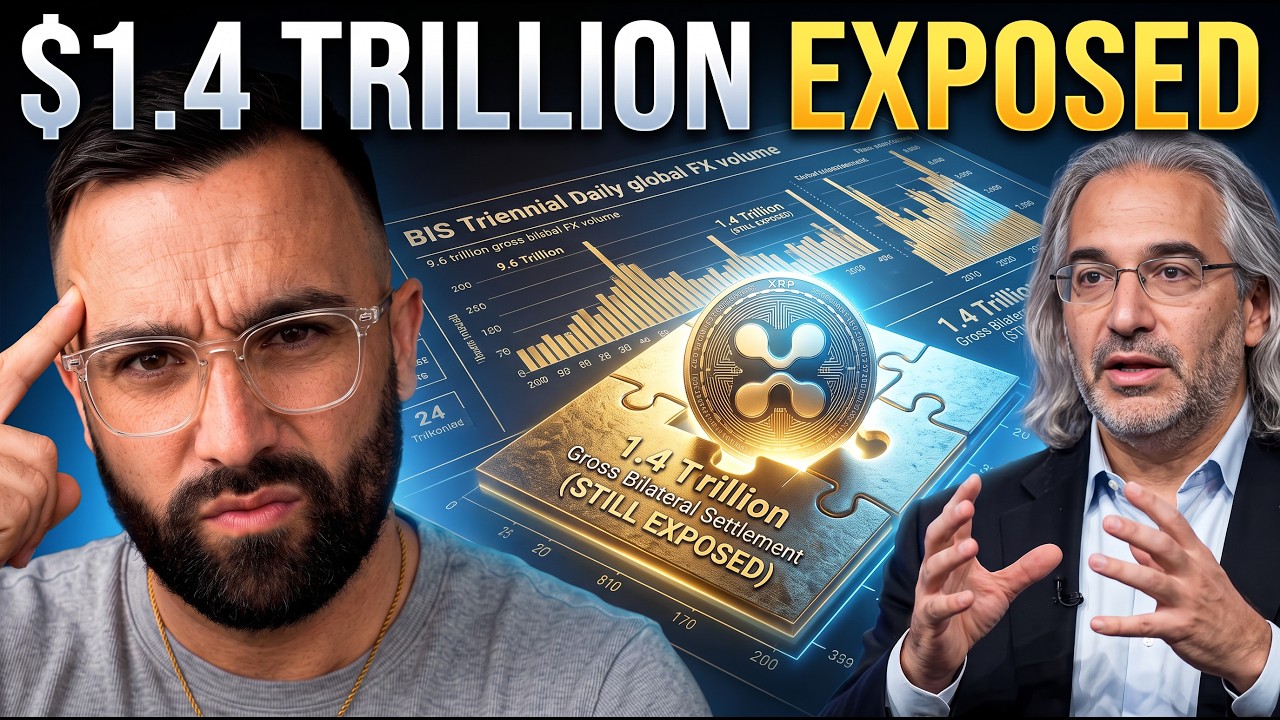
- The BIS says more than $1.4 trillion a day of FX trades still settle on a gross bilateral basis, meaning one side pays before the other.
- Atomic settlement on a blockchain settles both legs in the same instant or not at all. That is the technical idea, not proof that any particular coin captures the value.
- When you see claims that blockchain will 'replace' bank plumbing, check whether a named institution is live, which ledger it uses, and whether a native token is needed at all.
Herstatt risk is the danger that one side of a currency trade pays and the other never delivers. It is named after Bankhaus Herstatt, a German bank shut on June 26, 1974, before it paid its trading partners back. The Bank for International Settlements (BIS) says more than $1.4 trillion a day of foreign exchange still settles this way.
For crypto holders, this story sits behind a lot of the talk about tokenization and “on-chain settlement rails.” It helps to know three things: what broke in 1974, what banks built to fix it, and what is still unfixed. With that, it is easier to judge claims that blockchain will replace the old plumbing, and to see which parts of those claims are documented.
What happened to Bankhaus Herstatt in 1974?
Bankhaus Herstatt was a bank in Cologne that German regulators closed at the end of the German banking day on June 26, 1974, after it ran up losses far larger than its capital. It was the 35th largest bank in Germany. The video says it was founded in 1955 by Iwan David Herstatt.
According to the video, Herstatt had been betting on the US dollar for two years and getting it wrong. By June 1974 it had losses of 470 million Deutsche marks against capital of 44 million marks. The video says regulators revoked its license at 3:30 p.m. Frankfurt time.
The timing is the key detail. 3:30 p.m. in Germany was 10:30 a.m. in New York, where the business day was still under way.
Why did the counterparties lose their money?
The counterparties lost money because they had already paid their side of the trade and were still waiting for the other side. In a currency swap, each bank sends one currency and receives another. Earlier that day, banks had sent Deutsche marks to Herstatt and were due dollars back later in New York.
Chase Manhattan was Herstatt’s correspondent bank in New York, meaning it handled Herstatt’s dollar payments. According to the video, once news of the closure arrived, Chase froze all outgoing dollar payments from the Herstatt account. The banks that had already paid marks received nothing, and hundreds of millions of dollars were stranded.
The damage spread beyond the direct losses. The video says FX trading between continents froze for days, because no bank wanted to send its side first without trusting the other side to deliver.
What did regulators and banks do about it?
Regulators responded by creating the Basel Committee on Banking Supervision. Central bank governors from the G10 countries set it up at the end of 1974. The industry’s technical fix took much longer. CLS Bank went live in 2002, 28 years after Herstatt failed.
CLS stands for Continuous Linked Settlement. In a clip shown in the video, Bridget Meyer of Redbridge Debt & Treasury Advisory explains how CLS works:
- It settles both sides of an FX transaction at the same time.
- It makes sure both parties are funded before the trade is finalized.
- It cancels the whole transaction if one party fails to pay.
This approach is called payment-versus-payment: both legs land together or neither does.
The video says CLS settles over $6 trillion a day and calls it the largest multi-currency settlement system in the world. CLS’s own 2025 annual report gives a higher figure: a daily average of $8.11 trillion in 2025, counting both sides of each trade.
Why is $1.4 trillion a day still exposed?
More than $1.4 trillion a day is still exposed because a large share of FX trading never goes through CLS or a similar system. The video cites the BIS Triennial Survey, the central banks’ FX study, which covers 52 jurisdictions and more than 1,100 banks. The survey and later BIS analysis found:
- Global FX turnover reached $9.6 trillion a day in 2025, up 28% from $7.5 trillion in the 2022 survey.
- More than $1.4 trillion a day, about 10% of daily FX settlement, is still settled on a gross bilateral basis. That figure comes from the BIS’s June 2026 Quarterly Review, based on April 2025 data.
“Gross bilateral” means two banks settle directly with each other, trade by trade, with one side often paying before the other. Each bank is exposed for the full value of the trade. That is the same structure that failed in 1974.
The video gives three reasons trades fall outside CLS:
- CLS covers only 18 currencies, so many emerging-market currencies are excluded.
- If one leg of a trade is in a currency CLS does not support, the trade cannot settle through CLS.
- If a counterparty is not a CLS member, the video says the trade is shut out too.
BIS data suggests these limits are not the whole story. About $347 billion a day could have used a payment-versus-payment system like CLS and did not.
The video also multiplies $1.4 trillion by 250 trading days to reach $350 trillion a year. That figure is the video’s own arithmetic, not a BIS number.
Settlement methods compared
The three approaches differ mainly in whether both legs of a trade are tied together.
| Method | How the two legs settle | Herstatt risk | Main limits |
|---|---|---|---|
| Gross bilateral | Separately, often in different time zones | Yes | More than $1.4 trillion a day still uses it, per the BIS |
| CLS (payment-versus-payment) | At the same time, only if both sides are funded | Removed for trades it settles | 18 currencies, members only |
| Atomic settlement on a ledger | Same instant, same ledger, all or nothing | Removed by design | Both assets must be on the same ledger |
What is atomic settlement, and who is talking about it?
Atomic settlement means both sides of a trade settle in the same instant on the same ledger. If one leg cannot complete, nothing completes. The video presents this as a cleaner fix than CLS because it removes the time zone gap entirely.
The video uses three sources to argue that the industry sees the problem:
- A Bloomberg interview. The video identifies the speaker as Franklin Templeton’s head of crypto, without naming him. He said he was on the floor of Lehman Brothers when it went bankrupt. He cautioned the IMF that the real risk is usually liquidity risk. He then asked whether markets will prefer an asset class that settles in real time or “the one that’s asleep on the weekend.” In his view, “it’s the old system that’s the risk.”
- David Schwartz, Ripple’s former chief technology officer, in a clip the video says comes from a CB Insights event. Schwartz stepped down as CTO at the end of 2025 and is now CTO Emeritus and a Ripple board member. In the clip, which predates that change, he says the existing banking plumbing “was so bad” and “dates back to batch computing days.” He says improving the messaging alone was a product that banks and non-bank financial institutions “would be interested in.”
- Larry Fink, BlackRock’s CEO, has called tokenization the next great financial revolution, according to the video.
The video also says Franklin Templeton, BlackRock, Fidelity and Morgan Stanley are building on-chain settlement rails. It predicts the next 12 to 24 months will look very different from the last four years. That is the host’s forecast, not something the BIS or these firms said.
One gap is worth noting. None of the quotes say a particular token, including XRP, will be used to settle FX trades. Schwartz’s comment is about bank messaging, not XRP. A fix for Herstatt risk built on tokenized deposits or stablecoins could work without any native coin at all. Bullrunners has covered this distinction in why a Ripple win isn’t automatically an XRP win and in whether Ripple’s customers actually use XRP.
How to judge claims that blockchain will fix settlement
The Herstatt story is a good test case for tokenization headlines. When a video or post says the old system is being replaced, these questions help separate the documented part from the forecast:
- Is the problem real and measured? Here it is. Herstatt risk is a standard finance term, and the BIS has published the size of the exposure.
- Is the fix live or in a pilot? Ask whether a named bank or asset manager is settling real trades, or whether it is a test or a speech.
- Which ledger and which asset? Atomic settlement needs both legs on the same ledger. Check what the ledger is and what money moves on it.
- Does the token you hold play a required role? A bank can settle tokenized deposits atomically without buying a separate coin.
- Who said it, and where? Separate a regulator’s data, an executive’s opinion and a YouTube host’s prediction.
Central banks are testing their own versions of this idea, as covered in Bullrunners’ explainer on Project Agora and tokenized settlement among central banks.
What to watch next
The most useful signals are concrete ones:
- Future BIS data showing whether the $1.4 trillion of gross bilateral settlement shrinks.
- CLS adding currencies or members.
- Announcements that name specific banks, ledgers and assets used to settle FX trades atomically in production, not just in pilots.
Until those details appear, the 1974 lesson stands on its own. Settlement risk comes from paying first and trusting the other side to follow. Any new rail, on-chain or not, should be judged on whether it removes that gap for real trades.
Frequently asked questions
What is Herstatt risk?
Herstatt risk is settlement risk in currency trades: one party delivers its currency and the other side fails before delivering. It is named after Bankhaus Herstatt, the German bank shut at the end of the German banking day on June 26, 1974. Counterparties had already paid it Deutsche marks, but it had not yet paid out dollars in New York.
How does CLS stop settlement risk?
CLS (Continuous Linked Settlement) settles both sides of an FX trade at the same time, and only once both parties are funded. If one side fails to pay, the whole transaction is canceled. CLS's 2025 annual report gives a daily average of $8.11 trillion settled in 2025, counting both sides of each trade, across 18 currencies.
How much FX trading is still exposed to Herstatt risk?
The BIS reported in its June 2026 Quarterly Review that more than $1.4 trillion a day of FX trades is still settled on a gross bilateral basis, using April 2025 data. In that setup one side pays first and the other later, outside a system like CLS.
What is atomic settlement?
Atomic settlement means both legs of a trade settle in the same instant on the same ledger. If one leg cannot complete, neither does, so there is no window where one party has paid and the other has not.
Does atomic settlement mean banks will use XRP?
The video does not show that. It argues that blockchain-based atomic settlement is the fix and says asset managers are building on-chain rails. Whether any specific token is used is a separate question.
Full video transcript
From the video's captions, lightly formatted. Captions can mishear names and numbers, so check figures against the article above.
So, one afternoon in 1974, one German bank in Cologne, hundreds of millions of dollars just vanished out of Chase Manhattan at 10:30 in the morning, New York time. New York counterparties had already paid Deutsche marks wired that same morning, dollars owed back by lunch, but they got nothing. And here is what should actually make your blood boil. 52 years later, nothing has changed. The Bank for International Settlements just confirmed it in June. $1.4 trillion a day still exposed to the same trick that bled Chase Manhattan in 1974.
Same plumbing, same time zone trap. And the head of crypto at $2 trillion asset manager just said the quiet part out loud on live in Bloomberg. The guy who was literally on the floor of Lehman Brothers when it exploded. Just listen to this.
I would caution the IMF. The real risk here, I was at Lehman Brothers, I was on the floor of Lehman Brothers when it went bankrupt. And the real risk is liquidity risk typically. So, which asset class are you going to want to use? The one that settles in real time?
Or the one that's asleep on the weekend? That's the risk. It's the old system that's the risk.
So, that is the head of crypto at $2 trillion asset manager. The guy who was on the floor on Lehman Brothers telling the IMF to its face that the old banking system is the real danger. And the only working fix left on the planet already runs on blockchain. Now, look, by the end of this video, you are going to see exactly why one afternoon in 1974 is still bleeding the biggest FX market on earth right now. Why the BIS itself just put a dollar figure on the hole.
And why the smart money is quietly rerouting around the old rail while the mainstream crypto media is pretending nothing is happening. So, if you're feeling bullish, like this video. And if you're going to become the first millionaire in your family tree, confirm it right now by subscribing to the channel and commenting 777 below. And drop an amen in the comments if you're feeling blessed. But let's jump straight into it.
[music]
All right, Bull Runners, welcome back to the channel. So, let me walk you through exactly what happened on June 26th, 1974. Because this is one of the cleanest financial crime scenes in modern banking history. And honestly, almost nobody in crypto media connects it to the $1.4 trillion hole still bleeding out today. So, there is a bank in Cologne, Germany.
Not a huge bank, the 35th largest in the country, called Bankhaus Herstatt, founded by a guy named Iwan David Herstatt back in 1955. And this bank had a problem. Herstatt had been gambling on the US dollar for two full years, betting the complete wrong way the whole time. And by June of '74, they had piled up 470 million Deutsche Marks in losses against the total capital of 44 million. They were cooked, buried, done.
The German regulators knew it. So, at 3:30 p.m. Frankfurt time on June 26th, those regulators pulled the trigger. License revoked, doors shut. Game over for Herstatt.
But here is where this gets wild. Because 3:30 p.m. in Germany is 10:30 a.m. in New York. And New York was wide open. Can you see how that works? That same morning counterparty banks had already wired Herstatt their Deutsche Marks.
And that is how a currency swap works. You send one leg and you wait for the other. Dollars for Marks, Marks for Dollars. And now, earlier that day, those banks sent their Marks to Herstatt in Frankfurt, and they were waiting for their Dollars. And at 10:30 New York time, those Dollars just never came.
Chase Manhattan was Herstatt's corresponding bank in New York. The second the news hit that Herstatt was shut, Chase froze every single outgoing Dollar payment on the Herstatt account. Just done. Now, the counterparty banks had already paid. They were never getting paid back.
And hundreds of millions of Dollars just stranded in Frankfurt, completely gone. And that is literally the entire disaster in two sentences, but it didn't stop at the direct losses. In the back FX trading between continents froze for days. Everybody just stopped paying anybody because obviously if you can't trust the other side to deliver, you don't want to send yours. And that incident has a name now, Herstatt risk.
It is in every finance textbook on the planet. The Basel Committee on Banking Supervision, born out of this exact disaster, it was formed at the end of 1974 and it was a direct response to Herstatt. So the world knew the problem was obvious. Different time zones, different settlement systems, one side pays and the other side vanishes. And it took the banking industry, now you ready for this, 28 years to build a fix.
In 2002, something called CLS Bank went live, continuous linked settlement. And here is Bridget Mayar from Redbridge Debt and Treasury Advisory walking through exactly how CLS works under the hood. Just watch this.
CLS [music] works by simultaneously settling payments on both sides of an FX transaction, ensuring that both [music] parties are funded before a trade is finalized. If one party [music] fails to pay, the entire transaction is canceled to protect [music] the other party.
So that is the fix the banks finally bolted onto the system three decades after Herstatt vaporized Chase Manhattan. Both legs land at the same time or neither one does. There's no time zone trap and no stranded payments. 1974 problem, 2002 solution. So CLS today settles over six trillion dollars a day in FX transactions.
That's the biggest multi-currency settlement system on Earth. And you would think problem solved. Everybody uses CLS, nobody loses money anymore, case closed, we will go home. Because the Bank for International Settlements just dropped the receipts. And what they found should actually wake you up.
The BIS, based in Basel, Switzerland, the central bank of central banks, every three years they run a survey called the Triennial. Biggest FX study on the planet, 52 jurisdictions and over a thousand banks included. They just published the 2025 numbers in June of this year. And here is the headline straight from the BIS official rollout video. Take a look.
Trading in FX markets grew nearly 30%
[music]
compared to the last survey in 2022. Reaching 9.6 trillion dollars in turnover per day.
So, that is 9.6 trillion dollars a day flowing through the biggest market on the planet, up 30% in 3 years. And the BIS just buried the number that actually matters inside the same report. 1.4 trillion dollars a day is still settled on a gross bilateral basis, which is just a finance textbook term for the exact same setup that bled Chase Manhattan in 1974. One side pays first and the other side pays later. Different time zones, different systems, but full exposure.
And 52 years and 6 trillion dollars of CLS later, and the system is still leaving 1.4 trillion a day sitting completely exposed. But why? Because CLS only covers 18 major currencies. If you are trading an emerging market currency, forget it. If one leg of your trade is not on CLS, forget it.
If the counterparty is not a CLS member, forget it. The gaps are everywhere. And honestly, this is not just an emerging market story, this is a right now story. So, that post, not 1974 talk, that is from this year. The receiving party transferred funds and the paying party just never delivered.
Right now, today, 2026. And here is the part that make you shake your head. There is already a technology that fixes this cleaner than CLS ever did. It is called atomic settlement and it runs on the blockchain. And here is David Schwartz, the chief technical officer at Ripple and one of the original architects of the XRP ledger.
He is literally the guy who built one of the first blockchain settlement rails on Earth. Just listen to how he describes what the big banks are actually stuck with under the hood. Take a listen.
The existing plumbing was so bad. I mean it dates back to batch computing days um that just improving that messaging was a product. That was something that banks and non-bank financial institutions would be interested in.
So the Ripple CTO just confirmed on stage at CB Insights that the global banking system is running trillions of dollars a day on code from the same decade that killed Herstatt. Batch computing days. And here is what atomic settlement actually does. Both sides of a trade settle in the same instant on the same ledger, in the same block, with the same timestamp. No delay, no time zone.
So if one leg does not fire, then nothing fires. The problem solved at the physics level. And the biggest asset managers on the planet are waking up to it. Franklin Templeton, BlackRock, Fidelity, Morgan Stanley, you name it. Every single one of them is building on-chain settlement rails right now.
Larry Fink could straight up said tokenization is the next great financial revolution. $14 trillion of BlackRock fiduciary assets eventually moving on chain. Now that is not a conspiracy talk, guys. That is Davos statement from the CEO of the biggest asset manager on Earth. And this time it is not a $470 million hole we are talking about. It is $1.4 trillion a day of exposure.
Now multiply that by 250 trading days a year and you have $350 trillion running through a system that is still breakable the same way Herstatt broke in '74. Every bank, every regulator, every asset manager now knows the fix, atomic settlement on a blockchain. Now that is not me saying it, that is the Ripple CTO on tape at CB Insights. And that is the head of Franklin Crypto on tape at Bloomberg. That is the BIS itself in black and white in the June 2026 quarterly review.
The question isn't if, it's when. And the when just got a lot closer. Because when the BIS itself publishes the exact dollar figure of the hole 52 years later, the game is up. And this is why the digital asset rails are being built right now. This is why the next 12 to 24 months are going to look nothing like the last 4 years.
The old plumbing is finally getting replaced. So, what are the chances the world's biggest FX market quietly keeps running on batch computing rails from the same decade that killed Herstatt, right as every major asset manager on Earth is building the replacement? Now, you decide and let me know down in the comments. Look, now you've been watching the smart money quietly root around the old settlement rail for the last couple of years while every mainstream finance show on YouTube pretended nothing was happening. You're tired of finding out about the real plumbing shift 3 years after it already got built.
I get it. I've been that guy staring at the charts, hearing about the next revolution in finance, never sure which piece was actually the one to actually position for before it priced in. So, let me show you what happens when somebody stops watching from the sidelines and actually walks through the door before it closes on them. Now, one of our accelerator members walked in last year with a mid-six-figure crypto bag and the exact same question you are staring at right now. He had read about Ripple's OCC bank charter filing.
He had seen the Larry Fink tokenization headlines. He knew that on-chain settlement rails were coming. He just couldn't turn that thesis into an actual portfolio decision on his own. But, he didn't fold. He sat down with the team, used the Great Reset positioning framework, rebuilt his allocation around the atomic settlement pieces before the BIS even published this year's triennial survey.
And he became the first millionaire in his family tree on the trades on the other side. And that is the structure thesis working in real life in a real member's bank account. Now, results aren't typical, so don't be typical, but inside the accelerator right now, you've got Wall Street operators who left the fund, retired guys protecting what they built, and people who found crypto 3 months ago trying to do this right the first time. Weekly calls with the research team, one-on-one coaching, and a group chat where the conversation is the actual signal. So, click on the first link in the description.
It takes you to a 15-minute call with our team. And if you have over $50,000 or more in crypto sitting idle, we will walk you through your portfolio and tell you exactly whether the accelerator fits where you are right now. And if you're already positioned to survive what the next 12 weeks throws at us, we'll tell you that, too. But you don't find out by sitting on the sidelines. You find out by booking a call.
Now, crypto carries risk and past performance doesn't guarantee future results. This is education, not financial advice. I'll see you in the next video and I'll see you at the top. As always, you know what to do. Stay bullish.
[music] [music] [music] [music]
Education and commentary only, not financial advice. Crypto is volatile and you can lose money. Do your own research and speak to a qualified advisor before making investment decisions. Figures and quotes are as reported in the video on October 30, 2026 and may have changed since.