ICP Crash Explained: What Happened to the Internet Computer?
How ICP went from a top-ten coin to a 95% drop in weeks, what the courts did and didn't decide, and what the Internet Computer has built since 2021.
Key takeaways
- ICP launched on May 10, 2021 and, according to reports cited in the video, was about 95% below its peak within roughly seven weeks.
- The insider-dumping claim was never proven in court, and it was never proven false either. The rulings decided what could be said, not who sold what.
- A launch price is not a verdict on a project. Hype, timing and a lack of trading history can push a new coin up and down.
- Mission 70, a plan to cut ICP's net inflation by at least 70% by the end of 2026, passed with about 27% of voting power for it and about 26% against.
- Judge a project by what gets built, how it handles problems and how holders vote, not by its chart.
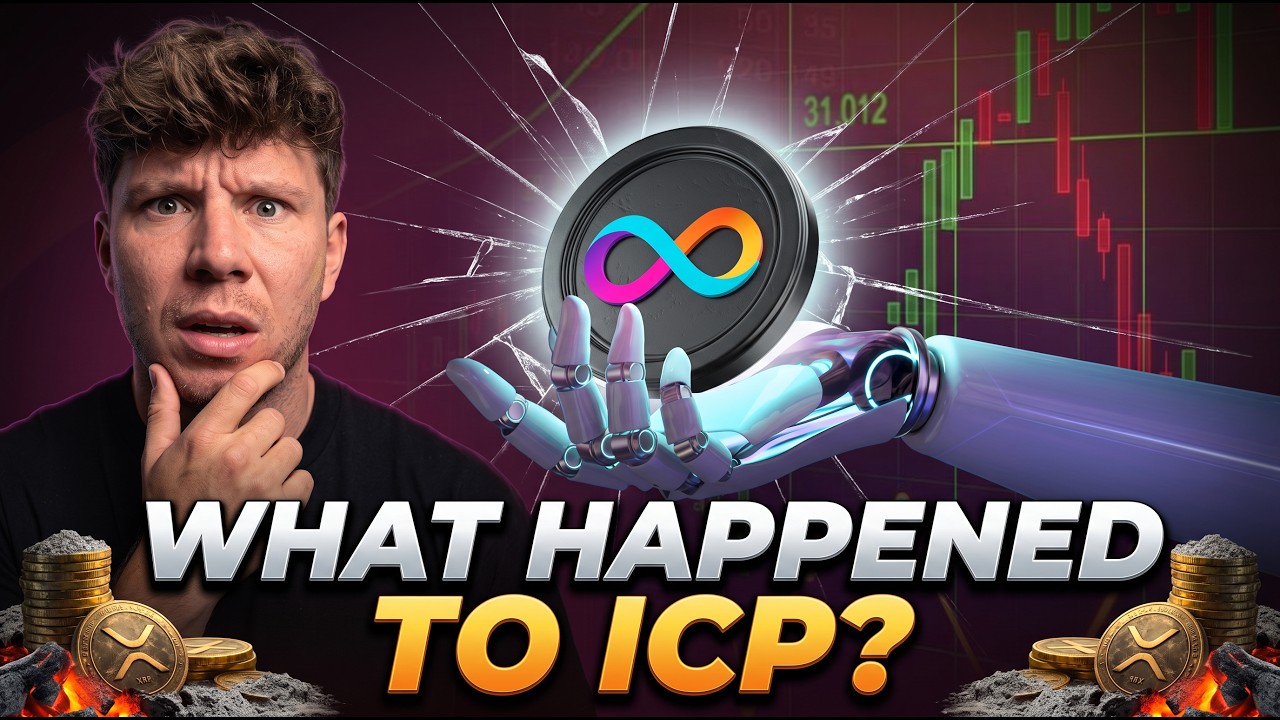
In May 2021, a new token called ICP went from launch to the eighth-largest cryptocurrency in about two days, according to reports from the time. Within roughly seven weeks it was down about 95% from its peak. The New York Times then ran a story asking whether insiders had dumped their tokens, and the company behind the project sued.
For years afterwards, much of the crypto world called ICP dead. A Bullrunners video hosted by George Lee goes back through the story: what the Internet Computer is, what happened at launch, how the legal fights ended and what the project has built since. Whatever you hold, it is a case study in how a launch can shape a coin’s reputation for years.
What is the Internet Computer?
The Internet Computer is a blockchain network meant to run whole websites and apps, not just tokens. It was created by Dominic Williams, a British entrepreneur who founded DFINITY, a Swiss not-for-profit foundation.
The pitch is aimed at what Williams calls platform risk. Most apps, including many crypto apps, run on servers rented from a few large tech firms. If one of those firms changes its rules or switches a customer off, the app can disappear. Williams gave the example of Zynga, a social games company that built on Facebook. After Facebook changed the tools Zynga relied on, Zynga lost 85% of its value within months.
Williams also points to a gap in many decentralized apps. Their code may live on a blockchain, but their website often sits on a normal cloud server that someone can still shut down. The Internet Computer is meant to host both.
A few design points make it different from most blockchains:
- Canisters. Smart contracts on the network are called canisters. They can store data and serve web pages straight to a browser.
- Reverse gas model. Users don’t pay a fee for each action. Developers top up their canisters in advance, a bit like a prepaid phone. The goal is apps that feel like normal websites, with no wallet pop-ups.
- Network Nervous System. ICP holders lock up tokens to vote on upgrades and changes, and the network carries out whatever passes. Per the video, many holders set their votes to automatically follow larger voters, including DFINITY.
In August 2018, TechCrunch reported that DFINITY had raised $102 million in a round co-led by Andreessen Horowitz and Polychain Capital. The project was pitched as a rival to Amazon’s cloud.
What happened at the ICP launch?
The network went live on May 10, 2021, in an event DFINITY called Genesis. ICP was listed on large exchanges, including Coinbase, on day one, so a wave of buyers could pile in at once.
The price shot up, then fell hard. On June 24, 2021, CoinDesk reported ICP was down 95% in less than two months. One analysis CoinDesk cited said the technology was largely unproven, with little evidence of developers building on it. Because ICP was brand new, there was almost no trading history to judge the price against.
Did insiders dump ICP?
No court has decided either way. On June 28, 2021, The New York Times published a story headlined “The dramatic crash of a buzzy cryptocurrency raises eyebrows.” It quoted a report from the blockchain analysis firm Arkham suggesting insiders had moved large amounts of ICP onto exchanges after launch. The article also carried DFINITY’s denial.
The story raised questions without proving anything. Even so, the insider-dump idea stuck to the coin for years.
In an August 2021 interview, Williams said the DFINITY Foundation did not sell a single ICP for five weeks after Genesis, and that founders and founder-level employees were locked up for the first week. He argued that futures markets had pushed the price up in the days before Genesis and that the timing was unfortunate, because the wider market turned as the network launched. Bitcoin fell sharply in the days after, and new coins with no history tend to swing the hardest.
How did the ICP lawsuits end?
DFINITY lost its defamation case and won the investor cases that courts ruled on, according to the video. None of the rulings decided who sold what.
| Case | What happened |
|---|---|
| DFINITY vs. The New York Times, its reporters and Arkham (filed 2022) | A federal judge in New York dismissed it in November 2023. The judge ruled the statements were protected opinion and that DFINITY hadn’t plausibly claimed Arkham knew its claims were false or recklessly ignored the truth. An appeals court upheld this in July 2024. |
| Federal investor class action against DFINITY | Dismissed in March 2025. The judge ruled the securities claims were filed too late and the fraud claims weren’t properly supported. The investors appealed. |
| California state case against DFINITY | DFINITY won, and an appeals court upheld that in January 2026. |
The video’s summary: the crash is real. The insider-dumping claim was never proven in court, and it was never proven false. What is clear is that ICP launched at a very high valuation, in a frothy market, with little track record. That combination has hurt plenty of other coins, with or without insider selling.
What has the Internet Computer built since 2021?
The network kept running through the legal fights, and the video highlights several developments:
- A network failure, once. In a January 2026 interview, Williams said the Network Nervous System broke about three weeks to a month after launch. The foundation, node providers and others coordinated and ran new software to fix it. Williams said the network has run without a hitch since then. The video adds that DFINITY’s own reports list later slowdowns and outages on parts of the network, including in June and December 2024, that were fixed within hours.
- A direct Bitcoin link (December 2022). Smart contracts on the Internet Computer can hold and send real Bitcoin with no bridge in the middle. Apps can use real Bitcoin or a twin token backed by Bitcoin that the network itself holds, rather than a wrapped copy held by a company. Links to Ethereum were added later and work somewhat differently.
- Caffeine (October 15, 2025). DFINITY released an AI app builder where users describe an app in plain English and AI builds it and runs it on the network. Williams calls it a “self-writing” internet. He argues that apps built this way need to resist common cyber attacks because their creators won’t have security teams. The video notes it is a crowded space, and many AI app builders don’t use a blockchain at all.
- Mission 70 (January 2026). A white paper aimed to cut ICP’s inflation, meaning new tokens created minus tokens burned, by at least 70% by the end of 2026. Part of the cut comes from paying less to stakers and to some operators of older machines. The rest depends on more usage burning more tokens. It also planned to cut the longest staking lock from eight years to two.
- A memorandum with Pakistan (February 2026). DFINITY signed a memorandum of understanding with Pakistan’s digital authority to explore a dedicated section of the network for government apps. A memorandum is an agreement to work together, not a finished product.
Why inflation matters: if a coin keeps creating new tokens every year, each existing token is a smaller slice of the pie unless demand keeps up. Mission 70 was an attempt to turn that tap down.
Holders approved Mission 70 on March 24, 2026, but only narrowly. About 27% of all voting power voted yes, about 26% voted no, and almost half didn’t vote. The changes are being rolled out step by step.
Is ICP back from the dead?
The video offers a balanced view rather than an answer.
In its favor: the network has kept running since 2021, the Bitcoin link works without a bridge, and Caffeine gives the project a story that people outside crypto can understand.
Against it:
- Trust is hard to win back after a launch like ICP’s.
- The token supply grew for years, which is what Mission 70 sets out to tackle, and the close vote shows holders are split on the fix.
- The machines on the network are run by operators approved through its own governance. Critics say that makes it less open than chains where anyone can join.
- The foundation still plays a large role in development and in proposing upgrades, even though holders vote on them.
- The 2021 outage was fixed by the foundation and node operators working together. That helps in a crisis, but it also shows how much the network relies on a known group of operators.
Big claims also deserve caution. Williams has said the network cannot be hacked and was designed to survive a nuclear strike. The video’s view is that strong security is possible, but “unhackable” is a promise no system can make with certainty.
Three lessons from the ICP story
The video closes with a framework that applies to any coin, not just ICP:
- A launch price is not a verdict. ICP opened near the top because of hype and timing, and it fell for many of the same reasons. Neither move said whether the technology worked.
- Headlines and court rulings are different things. A newspaper raising questions isn’t proof, and a dismissed lawsuit isn’t proof either. Read what a ruling actually decided before you repeat it.
- Judge a project by what gets built, how it handles problems and how holders vote. The close Mission 70 vote tells you more about where ICP stands than any price candle.
Before buying into any new launch, the host’s own lesson is to ask who holds the supply and how early holders could affect the price.
What to watch next
For ICP, the items to follow are concrete. Check whether the Mission 70 changes are rolled out as planned and whether net inflation actually falls by the end of 2026. Watch whether Caffeine gains real users, whether the Pakistan memorandum becomes a working product, and how the appeal of the federal investor case is resolved.
For any coin you hold, the video’s advice is simple. If a governance vote is coming, read the arguments on both sides before it happens.
Frequently asked questions
Why did ICP crash after launch?
According to the video, ICP launched in May 2021 at a very high valuation in a frothy market, with almost no trading history and with Bitcoin falling sharply in the days after. A CoinDesk analysis cited in the video also called the technology largely unproven at the time.
Did insiders dump ICP?
A June 2021 New York Times story citing a report from Arkham suggested insiders had moved large amounts of ICP onto exchanges, and DFINITY denied it. No court ruling settled who sold what, so the claim was neither proven nor disproven.
Who won the DFINITY lawsuit against the New York Times?
The New York Times and Arkham. A federal judge dismissed DFINITY's defamation case in November 2023, ruling the statements were protected opinion, and an appeals court upheld that in July 2024.
What is ICP's Mission 70?
Mission 70 is a white paper published in January 2026 that aims to cut ICP's net inflation by at least 70% by the end of 2026. It also proposed cutting the longest staking lock from eight years to two, and holders approved it on March 24, 2026.
What is Caffeine on the Internet Computer?
Caffeine is an app builder that DFINITY released on October 15, 2025. Users describe an app in plain English, and AI builds it and runs it on the Internet Computer.
Education and commentary only, not financial advice. Crypto is volatile and you can lose money. Do your own research and speak to a qualified advisor before making investment decisions. Figures and quotes are as reported in the video on October 7, 2026 and may have changed since.