Altcoins After the Sell-Off: Why HYPE and UNI Held Up Best
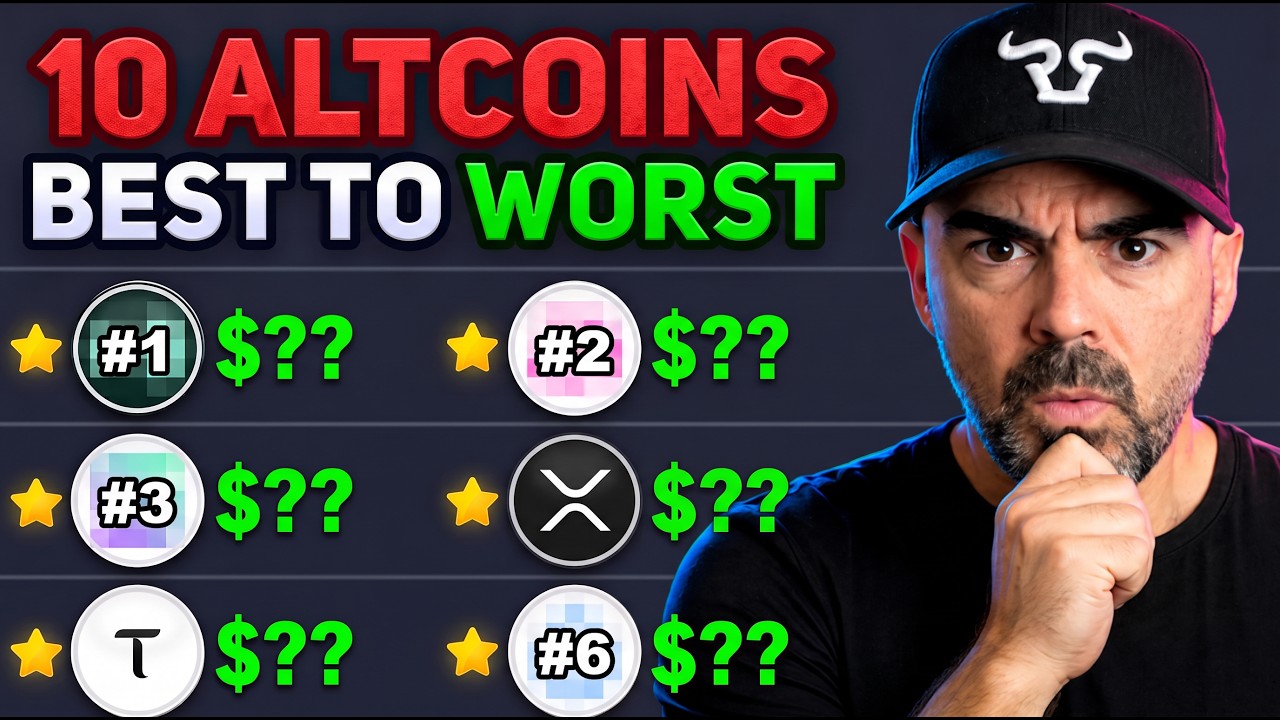
A Bullrunners video re-ranks 10 altcoins after Bitcoin's drop to about $74,000. It says HYPE and UNI held up best on buybacks and burns, while SOL and XRP fell harder.
Key takeaways
- According to the video, Hyperliquid (HYPE) and Uniswap (UNI) held up best since October 18, and both use fees to buy back or burn their own coin.
- The video argues bank news did not protect prices: it says Solana fell about 20% and XRP about 19%, roughly twice Bitcoin's drop, despite J.P. Morgan and BNY announcements.
- Supply unlocks are a risk to track. The video points to about 1.71 billion ONDO unlocking in mid-January 2027 and about 59% of SUI still locked.
- Some buybacks are conditional or paused: Ethena's starts only when USDe passes $7.5 billion, and the video says Aave's return depends on the Aavenomics 3.0 vote.
- The video's framework centers on spreading holdings across coins that earn in different ways, sizing with another 30% drop in mind, and deciding price levels before a sell-off.
Hyperliquid (HYPE) and Uniswap (UNI) held up best among 10 major altcoins in the sell-off since October 18, according to a Bullrunners video that re-ranks its October tier list. Both use their fees to buy back or burn their own coin. The video says Solana and XRP fell about twice as hard as Bitcoin, despite J.P. Morgan and BNY news.
For holders, the ranking tests one idea: when panic sellers hit the market, does a coin have anyone who has to buy it? The video’s answer helps explain why good headlines did not stop many coins from falling. It also points to dates and numbers worth tracking, from token unlocks to buyback votes.
What happened after October 18?
On October 18, Bullrunners ranked 25 of the biggest altcoins from S tier down to D tier. Since then, according to the video:
- Bitcoin fell from about $82,000 to about $74,000.
- The Nasdaq had its worst day since April 2025.
- Binance was hacked for about $6.3 billion. Bullrunners covered the Binance hack and what it means for XRP holders separately.
- XRP fell to about $1.05.
Host Ryan Huggins re-ranked the list using the same question as in October: when the network or business grows, does that create real demand for the coin? The video argues a sell-off is the hardest test of that question. When everyone is scared, it says, the only buyers left are the ones who have to buy, and a buyback is a buyer that never gets scared.
The top 10 at a glance
The table shows the video’s ranking, the approximate drop since October 18 that the video gives for each coin, and the main point the video makes about it.
| Rank | Coin | Approx. drop since Oct 18 (per the video) | Main point in the video |
|---|---|---|---|
| 1 | Hyperliquid (HYPE) | ~9% | Fees fund daily buybacks; team unlocks are the risk |
| 2 | Uniswap (UNI) | ~12% | Fee burn, but the monthly burn is slowing |
| 3 | Solana (SOL) | ~20% | Earns real fees; J.P. Morgan funds now on Solana |
| 4 | XRP | ~19% | Bank news is real, but the fee burn is tiny |
| 5 | Bittensor (TAO) | ~20% | Builder rewards far exceed customer revenue |
| 6 | Sui (SUI) | ~18% | About 59% of supply still locked |
| 7 | Ethena (ENA) | ~22% | Buyback starts only when USDe passes $7.5 billion |
| 8 | Aave (AAVE) | About the same as XRP | Buybacks paused; Aavenomics 3.0 vote pending |
| 9 | Chainlink (LINK) | ~15% | DTCC and Swift ties; DTCC system not live yet |
| 10 | Ondo (ONDO) | ~17% | About 1.71 billion ONDO unlock in mid-January 2027 |
Why did Hyperliquid and Uniswap hold up best?
According to the video, Hyperliquid and Uniswap held up best because both route fees into their own coin. Hyperliquid is a futures exchange that runs on its own blockchain. The video says most of its trading fees go into a fund that buys HYPE on the open market every day, whatever the price, and that the coins it buys are locked away for good. By the video’s figures, HYPE fell about 9% since October 18, against about 10% for Bitcoin.
On October 29, Intercontinental Exchange (ICE), the company that owns the New York Stock Exchange, took a minority stake in Trade XYZ, a platform built on Hyperliquid to bring this kind of trading to the US. The video names team supply as the main risk. It says about 9.9 million HYPE unlocks for the team every month, worth about $700 million at a price of around $72, though the team said it would take only about 180,000 in November. The video also says HYPE is still about 25% below its September high.
Uniswap is the largest decentralized exchange, which is a trading app that runs on smart contracts rather than a company’s order book. For five years, UNI holders got nothing from its fees. That changed in December 2025, when holders voted to burn UNI with part of the fees, and Uniswap burned 100 million UNI from its treasury on day one. Bullrunners has explained how Uniswap’s fee switch works.
The video flags that the burn is slowing. It says about 2.5 million UNI was burned from fees in September, and under 800,000 in the first 25 days of October. The video also puts UNI more than 80% below its 2021 high. It says that if the monthly burn keeps shrinking, UNI’s S tier case gets weaker.
Why did Solana and XRP fall harder than Bitcoin?
In the video’s view, Solana and XRP fell about twice as much as Bitcoin because bank news does not create forced buying. On October 22, J.P. Morgan Asset Management made two of its tokenized money market funds available on Solana, its second blockchain after Ethereum. The video says Solana ETFs still hold about $1.3 billion of SOL, with only a small outflow between November 2 and 6. It keeps Solana third because the network already earns real fees and large buyers are already there; in its words, the crash changed only the price. The video says SOL fell about 20% and is still about 70% below its January 2025 high.
On October 27, BNY, which looks after more than $60 trillion in assets, started holding XRP and Ripple’s RLUSD stablecoin for its institutional clients. Even so, the video says XRP fell about 19% from October 18. It calls the bank news real, which is why XRP stays fourth. But it argues that XRP’s fee burn is tiny, and that a bank holding XRP for clients does not mean anyone has to buy more of it.
The video says XRP ETF assets fell along with the price, while total inflows are still about $1.8 billion. It reads that as a sign most ETF buyers have not left. The video’s broader point is that XRP does a different job from the other coins on the list, so it argues no single coin can carry a whole plan.
Bittensor, Sui and Ethena: what are the risks?
The middle of the list holds coins where the video sees a clear structural risk.
Bittensor (TAO) is a network that pays people to build AI models. Grayscale filed an update to its Bittensor ETF on October 23, but a spot fund is not yet approved. The video says TAO fell about 20% in the same week AI stocks sold off. Its red flag: Bittensor pays builders about $300 million a year in new TAO, while money from real customers is about $70 million a year on one estimate. In the video’s view, most of the money in the system is still the token paying people.
Sui (SUI) has three spot ETFs in the US. According to the video, SUI fell about 18% to around 82 cents, and only about 41% of all SUI is in circulation. That leaves about 59% still locked and due to reach the market over the next few years. The video argues that every new coin released needs a new buyer, and it puts SUI about 84% below its January 2025 high. Bullrunners has looked at how hidden supply unlocks compare across altcoins for readers tracking this kind of risk.
Ethena (ENA) earns money from leverage traders, so its USDe stablecoin grows when markets get greedy. In September, ENA holders voted to start buying back ENA, but only once USDe supply passes $7.5 billion on a 14-day average. The video puts USDe at about $4.9 billion, which was the end-of-September figure. Around November 1, supply was closer to $4.66 billion. The video says ENA fell about 22% and sits about 90% below its high, the furthest of any coin on the list, and it calls ENA a bet on the bull market returning.
Which coins climbed out of C tier?
Aave and Ondo both moved up from C tier into the top 10. The video says each climbed on a plan rather than on how it held up in the sell-off.
Aave is the largest lending app in crypto. It bought back its own token until April, when an exploit on another protocol hit Aave’s market and buybacks were paused. According to the video, Aave’s new version passed $1 billion in deposits and began accepting a handful of tokenized stocks as collateral in late September. Aave’s team first floated Aavenomics 3.0, a plan to send revenue back to holders, earlier in 2026 and laid out more details in October. The video says Aave fell about as much as XRP, and that the pending Aavenomics 3.0 vote is the item to watch.
Ondo (ONDO) puts assets like stocks and treasuries on the blockchain. The video says its tokenized stocks passed $1 billion in May, with more than 70% of that market, and that ONDO fell about 17%, less than XRP or Solana. Two C-tier problems remain, according to the video. Holders don’t get paid from the business, and about 1.71 billion ONDO unlocks in mid-January 2027. The video describes that as 35% more than the current circulating supply, worth about $610 million at the time of recording.
Where does Chainlink fit, and why did NEAR drop out?
According to the video, Chainlink fell about 15%, the best result after Hyperliquid and Uniswap. DTCC is building its 24/7 collateral system on Chainlink, and the video says DTCC processes about $20 trillion in trades every business day. Swift also has 17 banks testing a shared ledger that Chainlink is working to connect banks to. The video says Chainlink runs a reserve that turns its earnings into LINK and now holds about 6 million LINK.
The video keeps LINK’s October caveat. It says no bank has confirmed it pays for Chainlink in production, and that DTCC’s system is not yet live. A DTCC speaker quoted in the video expects slow and gradual adoption at first.
NEAR dropped out of the top 10. The video says it fell about 29% since October 18, the worst drop among the big coins it ranked.
The video’s framework for holders after a crash
The video closes with a three-part framework. Bullrunners reports it here as the video’s approach, not as personal advice:
- Spread holdings across coins that make money in different ways. The video groups coins with buybacks, coins with bank ties and coins with other revenue sources, and argues that no single coin can carry the whole plan.
- Size positions with another fall in mind. The video suggests sizing each position so that another 30% drop would not force a sale, and notes that every coin on the list can still fall.
- Decide price levels in advance. The video suggests writing levels down before the screen turns red. For coins that fall harder than Bitcoin, it prefers spreading any purchases over several weeks to trying to pick a bottom.
The video stresses that a top 10 only shows what looks strong now. The timing, it says, is still each holder’s own decision.
What to watch next
Several dated or measurable events could change this ranking:
- Hyperliquid’s monthly team unlocks, and how much the team actually takes.
- Uniswap’s monthly fee burn, which the video says fell sharply from September to October.
- The Aavenomics 3.0 vote.
- USDe supply relative to Ethena’s $7.5 billion buyback trigger.
- The mid-January 2027 ONDO unlock.
- A decision on Grayscale’s Bittensor ETF.
- The launch of DTCC’s Chainlink-based collateral system.
- XRP and Solana ETF flows.
Sources
Frequently asked questions
Which altcoins held up best in the sell-off since October 18?
According to the video, Hyperliquid (HYPE) fell about 9% and Uniswap (UNI) about 12% since October 18, compared with roughly 10% for Bitcoin. The video puts Chainlink (LINK) next at about 15%.
Why did XRP fall more than Bitcoin despite the BNY news?
The video argues that XRP has no built-in buyer: its fee burn is tiny, and a bank holding XRP for clients does not force anyone to buy more. The video says XRP fell about 19% from October 18, to around $1.05.
When is the big ONDO token unlock?
The video says about 1.71 billion ONDO unlocks in mid-January 2027. It describes that as 35% more than the current circulating supply, worth about $610 million at the time of recording.
Why did NEAR drop out of the top 10?
According to the video, NEAR fell about 29% since October 18. The video calls that the worst drop among the big coins it ranked.
What does a 'buyer built in' mean for a crypto coin?
In the video's terms, it means a project's revenue is used to buy its own coin on the market or burn it, whatever the price. The video's examples are Hyperliquid's fee-funded HYPE purchases and Uniswap's UNI burn.
Full video transcript
From the video's captions, lightly formatted. Captions can mishear names and numbers, so check figures against the article above.
These are the top 10 altcoins after the crash, ranked best to worst, and the two that held up best both have a buyer built in. On October 18th, this channel ranked 25 of the biggest altcoins from S tier all the way down to D tier. Then the crash hit and Bitcoin went from around $82,000 that day to around $74,000. The Nasdaq had its worst day since April 2025 and Binance got hacked for around $6.3 billion. XRP fell almost twice as hard as Bitcoin, down to around $1.05.
Hyperliquid and Uniswap held up better than every other coin on this list. And what they have in common is that the money they make buys their own coin off the market. Our team flagged Hyperliquid to members in November of 2024 when it was around $5.50 and even after this crash, it's around $72. So which coins actually passed the crash and which ones got cut? This time, two coins from the C tier climbed into the top 10.
One of the biggest names dropped out after falling almost 30% and one coin in the 10 adds 35% more coins to the market in January. So if you're feeling bullish, like this video and smash subscribe. We're on our way to 400,000 subscribers and we're at 398,000 right now. We can't get there without you. And if you're going to be the first millionaire in your family tree, confirm that by commenting 777 down below.
I'm also giving away my 2026 altcoin trading strategies and altcoin research briefing to everyone who follows us on Instagram at BullRunnersHQ. The official link will be down in the description below and we have huge news. Merch drop is coming. I know you've all been asking, can I get a hat? Can I get a hat?
We are finally going to be getting hats and other attire, sweatshirts. So be on the lookout for the drop coming soon. Let's run it.
[music]
All right, Bull Runners. I'm Ryan Huggins, aka at winwithryan. Welcome back to the channel. The October list judged every coin on one question. When the network or the business grows, does that create real demand for the coin?
Ethereum carries more stable coins than any other chain, and America's biggest banks picked Quant, but neither made the S tier because the project growing and a coin growing are two different things. A crash is the hardest test of that question because when everybody's scared, the only buyers left are the ones who have to buy. And a coin with a buyback has a buyer that never gets scared. Hyperliquid's fees go into a fund that buys Hype on the open market every single day, whatever the price. And the coins it buys are locked away for good.
So when the panic sellers hit the market in November, Hype and Uni [music] met a buyer, and most of the other coins didn't. That's why the coin at the top of the new list is the one with the biggest buyer of all, Hyperliquid. It's an exchange for trading futures that runs fully on its own blockchain, and most of its trading fees go into that fund. The fund has now bought around 1.43 billion of Hype, and while it kept buying, Hype fell around 9% since October 18th against around a 10% for Bitcoin. And Wall Street just bought into the platform around it because on October 29th, the company that owns the New York Stock Exchange took a stake in Trade XYZ, a platform built on Hyperliquid to bring this kind of trading to the US.
Isis founder says the idea came to him standing next to President Trump at a press conference, reading the notes in front of the president.
I looked over there and I saw uh that it said we're going to bring Hyperliquid to the United States and regulate them. And I walked out of there and said, okay, um we should do that.
The risk is the
team's coins because around 9.9 million Hype unlocked for the team every month, worth around 700 million at around $72. Although the team said it would only take around 180,000 of them in November. So Hype stays number one, and with it still around 25% below its September high. The coaches post levels that they'd buy at and split the buys up rather than going all in at once. The coin that held up second best works the same way, except it took Uniswap five years to switch it on.
Uniswap is the biggest decentralized exchange in all of crypto. And for five years, Uni holders got nothing from the fees that it made. That changed in December of 2025 when holders voted to burn Uni with part of the fees. And Uniswap burned 100 million Uni from its treasury on day one. Uni has fell around 12% since October 18th, close to Bitcoin and second only to Hype in this 10.
But the burn is slowing down. In September around 2.5 million Uni got burned from fees. And in the first 25 days of October, it was under 800,000. So the burn moves a lot from month to month and Uni is still more than 80% below its 2021 high. Uni is this channel's own call from October rather than a coach pick.
So size it a bit smaller position and then check the monthly burn because if it keeps shrinking, the S tier case gets weaker. Now every other coin on this list fell at least 15% and that includes the chain JP Morgan picked in October. Solana fell around 20% since October 18th, twice as much as Bitcoin. So the fair question is, why is it still in the top three? Because on October 22nd, JP Morgan made two of its tokenized money market funds available on Solana, the second blockchain it picked after Ethereum.
And the Solana ETF still hold around $1.3 billion of real SOL with only around 26 million leaving between November 2nd and 6th.
And so what you see with tokenization is you see the process of actually bringing traditional assets from the traditional finance world on chain, making them accessible to who? To literally five and a half billion people on the internet.
In October, Solana made the S tier because it already earns real fees and the big buyers were already there and the crash didn't change either of those, only the [music] price. It's still around 70% below its January 2025 high. So for a coin that falls harder than Bitcoin [music] in a crash, the move is to spread your buys across a few weeks instead of trying to pick up the bottom. And JP Morgan wasn't the only big bank to pick a coin on this list in October because five days later, the biggest custodian bank in the world added XRP. On October 27th, BNY started holding XRP and RLUSD for its institutional clients and BNY looks after more than $60 trillion in assets.
How central is XRP to Ripple anymore? Because Ripple is expanding into various other business ventures as Scarlett highlighted earlier. It seems like XRP doesn't seem to be a big focus.
You know, anyone who doesn't think that XRP is at the heart of everything Ripple does is kind of missing the big picture.
And yet XRP fell around 19% from October 18th, almost twice as much as Bitcoin. A lot of holders believe that if they hold XRP long enough, the bank news turns into price and the bank news is real, which is why XRP is still in the top four. But in the crash, the coins that held up were the ones with a buyer built in and XRP doesn't have them because its fee burn is tiny and a bank holding XRP for its clients doesn't mean anyone has to buy more of it. The ETF money held up better because the XRP ETF's asset dropped with the price to around $124 billion, but the total that's flowed in is still around $1.8 billion. So most of those buyers haven't left.
So XRP stays the core position for a lot of people watching and it still can't be the whole plan because the other nine coins on this list do jobs XRP doesn't do. If XRP is most of your bag, the move after a crash like this is to size it as one position and build the rest of the bag from coins that make money in other ways. And one of those is the trade Wall Street piled into all year, which is AI. Bittensor is a network that pays people to build AI models. And it's the coin most people reach for when they want crypto that rides on AI.
And that matters because AI agents can't open bank accounts. So if they ever pay each other, they'll need crypto to do it. Grayscale filed an update to its Bittensor ETF on October 23rd. So a spot fund is getting closer, but it still isn't approved. TAO fell around 20% in the same week AI stocks sold off, and the red flag from October is still there.
Bittensor pays its builders around $300 million a year in new TAO, while the money coming in from real customers is around $70 million a year on one estimate. So most of the money in the system is still the token paying people. So TAO stays second tier and stays a smaller position until real customer money closes that gap. And an ETF approval is the event to watch for. The next coin has the same kind of problem, only it's about supply instead of rewards.
Sui has three spot ETFs in the United States, and Sui fell around 18% since October 18th [music] to around 82 cents. But only around 41% of all Sui is in circulation now. So around 59% is still locked up and coming onto the market over the next few years. Every new coin that comes out needs a new buyer, and Sui is already around 84% below its January 2025 high. So Sui stays in the 10 as a high risk, high upside position.
And before you add more, check how much supply unlocks next. And the next coin actually has a buy back. It just hasn't switched on yet. Athena makes its money from leverage traders. So when the market gets greedy, its stable coin USDE grows.
In September, ENA holders voted to start buying back ENA, but only once USDE passes $7.5 billion and right now it's around $4.9 billion. ENA fell around 22% and it's around 90% below its high, the furthest of any coin on this list. So ENA is a bet on the bull market coming back. If USDE climbs towards $7.5 billion, the buyback switch is on and until then it's a small position that you size like a trade. And the next coin shows that a buyback can switch off just as fast as it switches on.
Aave is the biggest lending app in crypto and it bought back its own token until April when an exploit on another protocol hit Aave's market and the buybacks got paused. So in October we put it in C tier because the business was strong and the token wasn't getting any of it. Aave's new version had already passed $1 billion in deposits by then. In late September it started taking a handful of tokenized stocks as collateral and in October its team proposed a new plan called Aavenomics 3.0 that would send revenue back to the holders. Aave didn't hold up any better than XRP in the crash, [music] so it climbs into the 10 on a plan rather than a result and it's one of the coins on our team's pick sheet.
The vote on Aavenomics 3.0 is the thing to watch because if it passes the reason Aave sat in the C tier goes away. And the coin with the deepest Wall Street ties held up better than both Aave and XRP. Chainlink only fell around 15% to the best of any coin on the list after Hyperliquid and Uniswap. DTCC, which processes around $20 trillion in trades every business day, is building its 24/7 collateral system on Chainlink and Swift has 17 banks testing a shared ledger that Chainlink is working to connect banks to. And the DTCC itself expects this to start slowly.
I think we will get slow and gradual adoption, and I think that's a good thing, but then ultimately it will begin to [music] accelerate and ramp up. I don't know if that's in two years, three years.
Chainlink also runs a reserve that turns what it earns into Link, and it now holds around 6 million Link. In October, it was B tier because no bank had confirmed it pays for Chainlink in production yet, and DTCC's system still isn't live. So Link is the steadier Wall Street coin on the list, a coin to add to in pieces while you wait. And DTCC's launch is the moment it partners start to show up in real usage. And the last coin is the other coin that climbed out of the C tier with its red flag already on the calendar.
Ondo puts things like stocks and treasuries on the blockchain, and it's tokenized stocks past $1 billion in May with more than 70% of that market. Ondo fell around 17%, less than XRP or Solana. And back in July, our team flagged Ondo to members as the strongest chart, the one that hardly flinched. But in October, it sat in the C tier for two reasons, and both are still here. Holders don't get paid from that business, and in mid January, around 1.71 billion Ondo will unlock, which is 35% more than what's in circulation now, and that's worth about $610 million.
So if you hold Ondo, plan around mid January 2027 because that's when buying in pieces matters the most. And the coin that didn't make the 10 at all was one of the biggest names on the October list. Near drops out after falling around 29% since October 18th, the worst of the big coins we ranked. In this top 10, the two that held up best both buy back or burn their own coin with real fees, so the October test passed in real time. Even those two still fell and XRP fell almost twice as much as Bitcoin.
Every coin on this list can still drop and a top 10 only tells you what's strong while the timing is still your call. So spread your bag across the coins that win in different ways, size every position so another 30% drop wouldn't force you to sell and write your buy levels down before the screen turns red. I still believe in XRP long term, but I diversify because the crash showed me that one coin can't carry the whole plan and keeping up is the part that most people can't do on their own because burns, unlocks, buybacks on 10 coins change every single month. And if your bag fell harder than Bitcoin since October 18th, it's usually because nobody showed you which coins had a buyer built in before the crash did. In November of 2024, our team put Hyperliquid in front of our members at $5.50 and even after this crash, it's around $72.
Inside our private intelligence network, research like that lands to our members months before a coin shows up on a tier list. Members actually see the pick sheet with every level that our team is watching. So they learn how to size a position and when to take profit and they also get to get on weekly calls with the coaches and go through those exact coins. So when the next unlock or buyback hits a coin that you hold, you've already decided what you would do about it. We only take on a handful of serious investors each month so the coaches get real time with each one of our clients.
Click the first link in the description. It's real simple to get started. Watch the free briefing. If it makes sense, book a call and then we'll look at what you hold and if it's a good fit, then we'll go forward. If not, no big deal.
As always, you know what to do. Stay bullish.
Education and commentary only, not financial advice. Crypto is volatile and you can lose money. Do your own research and speak to a qualified advisor before making investment decisions. Figures and quotes are as reported in the video on November 18, 2026 and may have changed since.